punktiert and bRigid
2012–2014 · researchTwo Processing libraries for particle systems and rigid-body physics, written for teaching, 2012 to 2014
- year
- 2012–2014
- type
- research
- status
- open source on GitHub, tested with Processing 1.5 and 2.0
- credit
- Daniel Koehler. punktiert extends the physics code of Karsten Schmidt's toxiclibs; bRigid wraps jBullet, Martin Dvorak's Java port of Erwin Coumans's Bullet library, after the Processing examples of Giulio Piacentino and Richard Brauer. The GPU integration of Gonthine 03 and 04 was made with Christoph Zimmel
- with
- Christoph Zimmel (Gonthine 03 and 04, GPU integration)
- program
- Early work
- instrument
- Java libraries for Processing 1.5 and 2.0: particle springs and behaviors, rigid-body collision through jBullet, PShape geometry with DXF export, a GPU path through Rootbeer
- no.
- 007
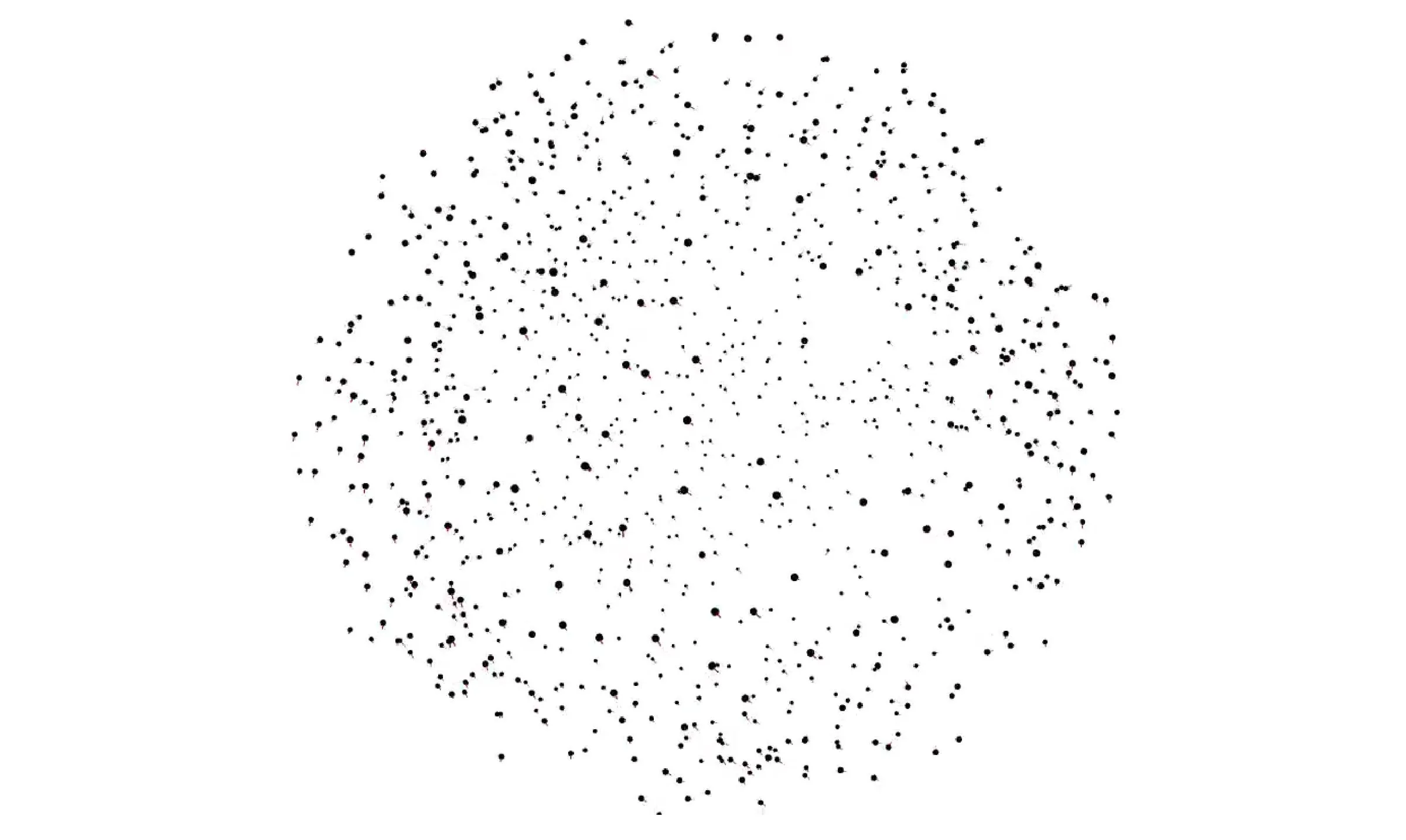
Before the lab worked with generative models, it worked with particles. Between 2012 and 2014 I wrote two libraries for Processing, the Java environment of my workshops at the Vilnius Academy of Arts, and released both as open source. They were written for teaching: each class in them answers a question that had come up at a student’s screen, and each example is a small architectural situation rather than a demonstration of the engine.
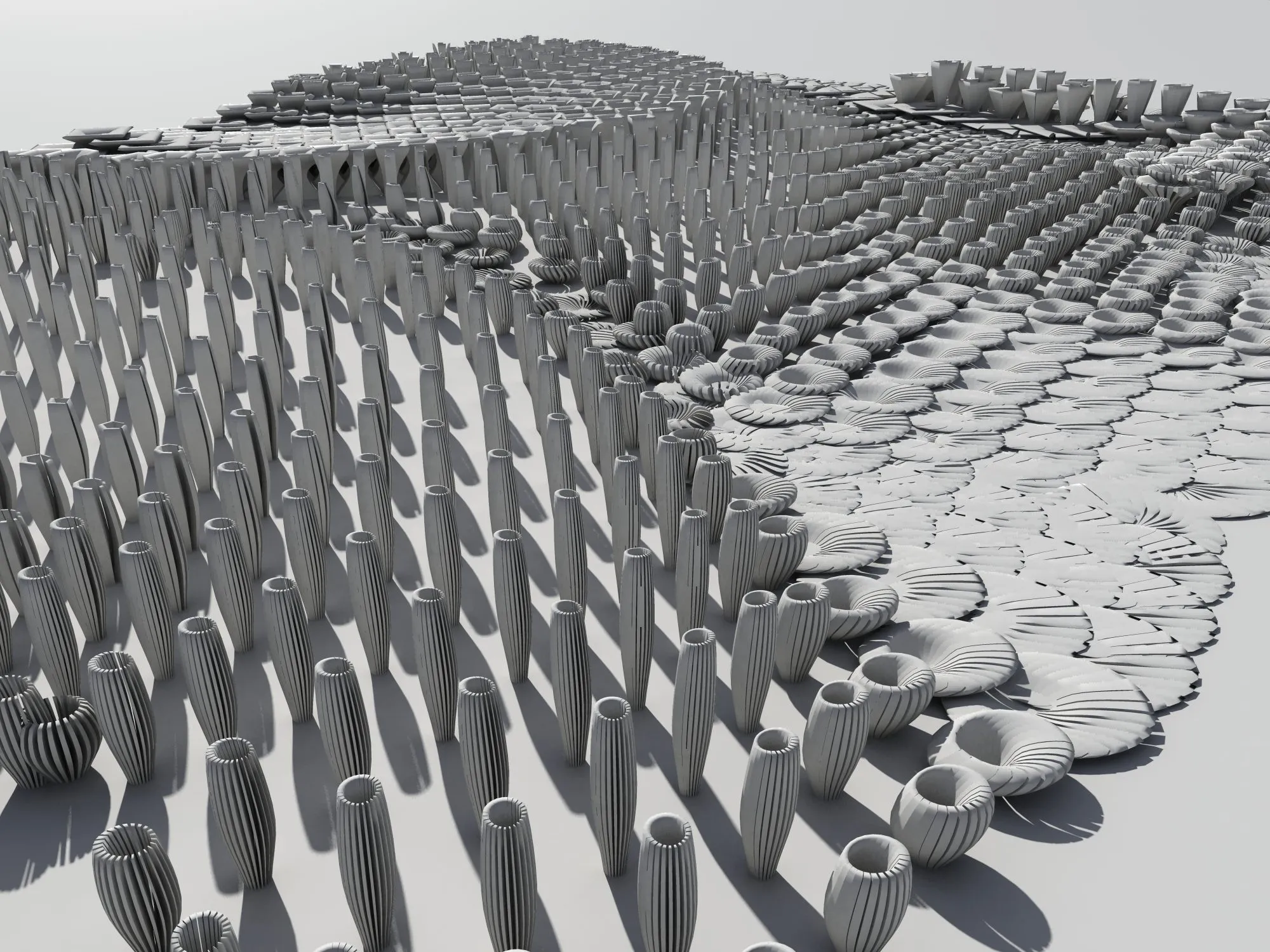
punktiert is a particle engine, built as an extension of the physics code in Karsten Schmidt’s toxiclibs and optimized for the local negotiation between particles. It allows hierarchies between several particle groups, makes no difference between two and three dimensions, and adds behaviors beyond attraction and repulsion. Larger populations can run on the graphics card through Rootbeer. The name comes from social science: punctualization describes the point at which an assembly of elements is perceived as one whole. Read that way, an architectural element is defined by its autopoietic condition and by what it does in an environment, and the threshold between the disposition of an object and its assembly becomes a design decision rather than a given.
bRigid brings rigid-body physics to Processing. It wraps jBullet, Martin Dvorak’s Java port of Erwin Coumans’s Bullet library, in classes that can be handled inside a sketch: bodies fall, collide, stack, and settle in three dimensions. Their shapes are built with Processing’s PShape class, so that a simulation can be displayed and exported as DXF for drawing and fabrication. The library owes its start to the jBullet examples of Giulio Piacentino and Richard Brauer.
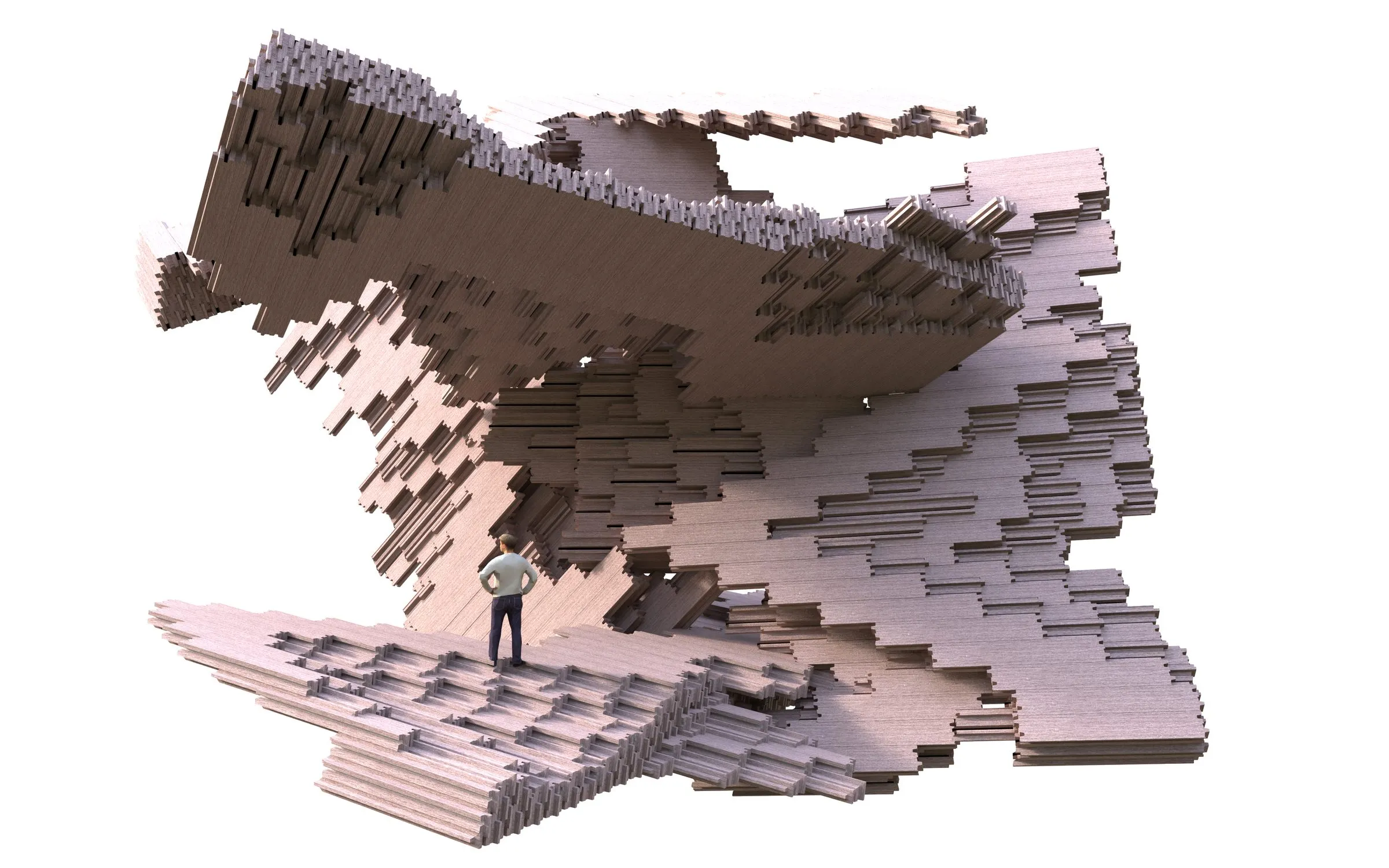
The films show what the libraries were for. Gonthine, a series of sketches from 2012 to 2014, thinks of modeling as work on several nested objects at once: a line as the relation between two points, characterized by stiffness, strength, and distance, and a mesh as the result of lines overlapping, crossing, and netting each other. Point, line, surface, and volume formed the descriptive hierarchy of the Bauhaus courses in elementary design, and that hierarchy is still inherent to every CAD package. Drawn by hand it ran one way, and an element once defined was fixed. A computational object is not. Gonthine 01 and 03 take up Frei Otto’s wool-thread models and their reading in Lars Spuybroek’s The Sympathy of Things, and Gonthine 03 and 04 run punktiert on the graphics card, an integration made with Christoph Zimmel. Butterflies, made with bRigid in 2013, drops heaps of fifty plates, each folded at one identical angle, and lets the collisions decide the pile.
Gallery
13 plates · click to enlarge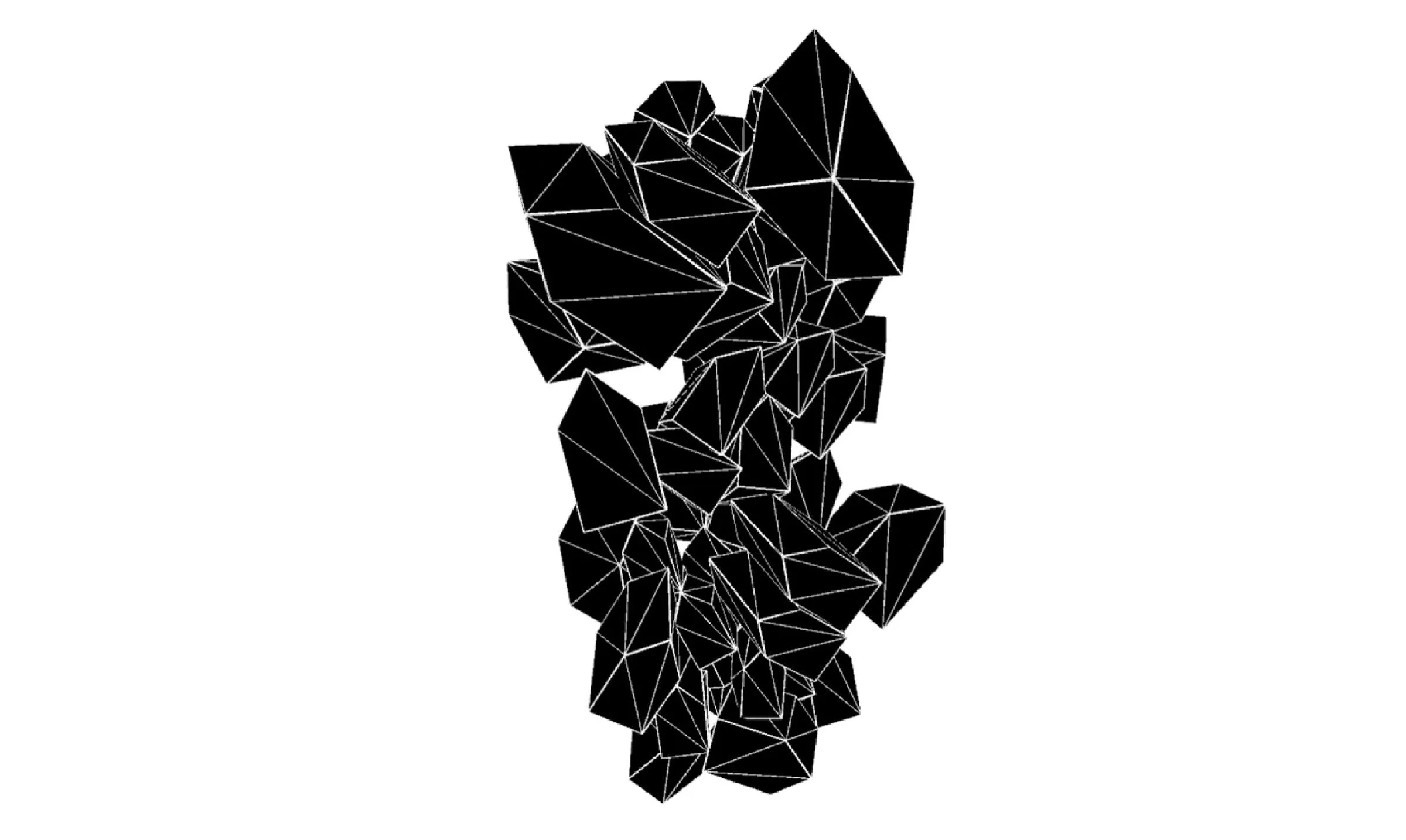
bRigid: convex bodies settling into a heap, collisions computed by jBullet · screen capture · 2013 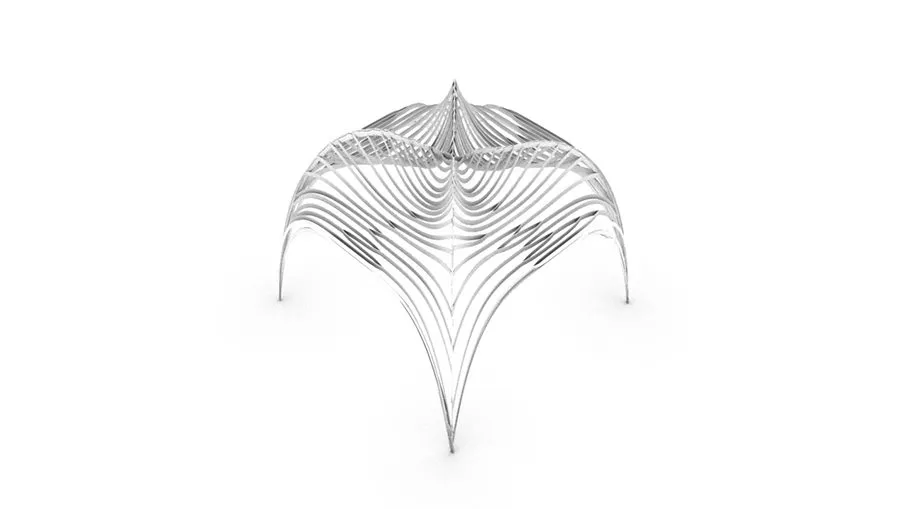
Gonthine: a vault of parallel lines settling on four supports · render from the Processing sketch · 2012 to 2014 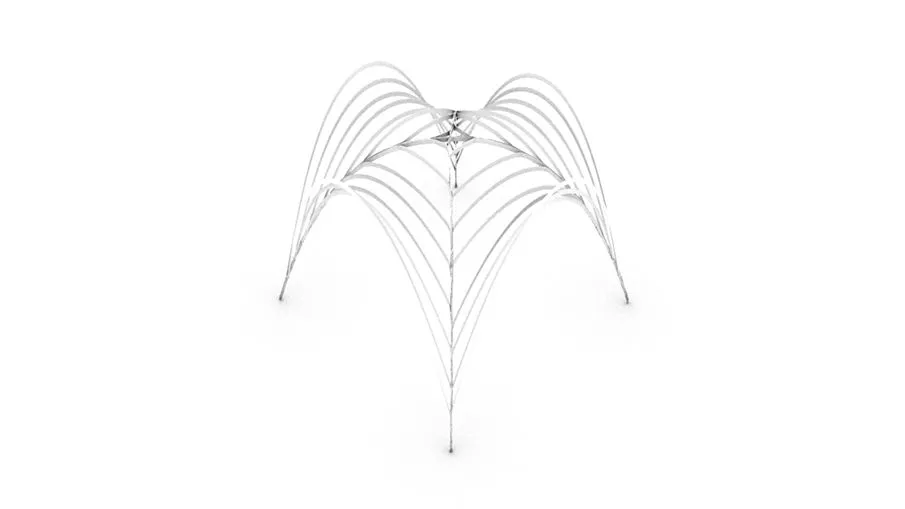
Gonthine: a canopy of line bundles meeting at a peak · render from the Processing sketch · 2012 to 2014 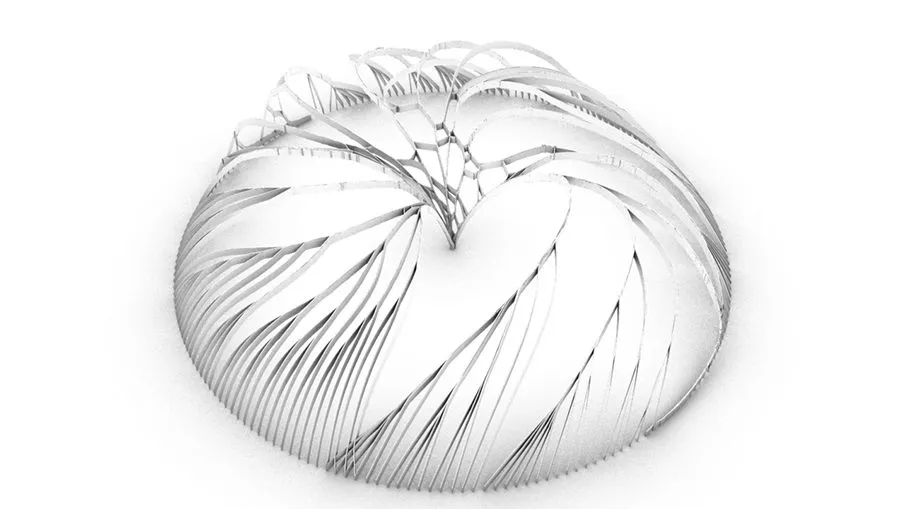
Gonthine: a shell of spiralling bands · render from the Processing sketch · 2012 to 2014 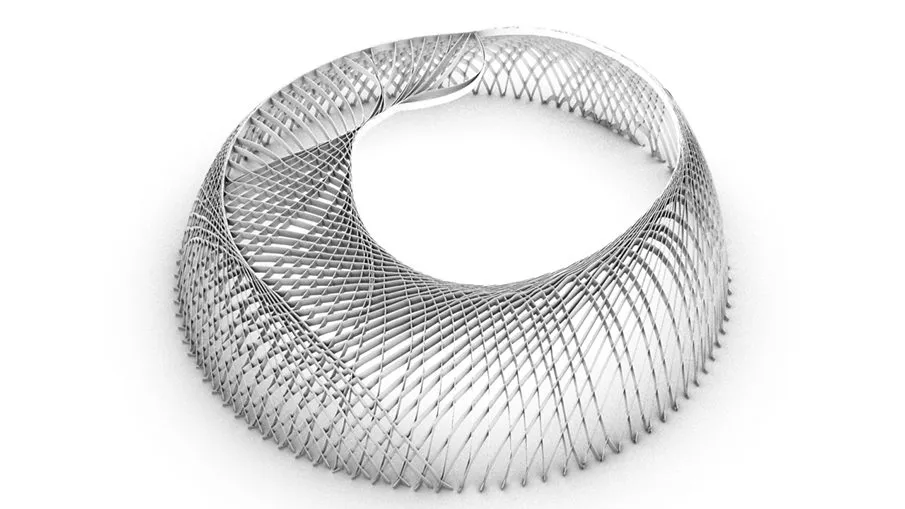
Gonthine: a woven ring of line elements · render from the Processing sketch · 2012 to 2014 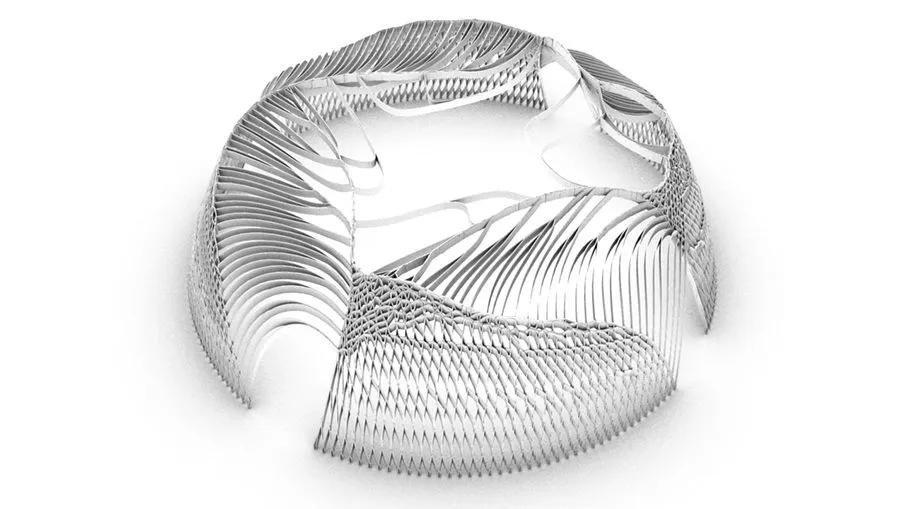
Gonthine: a drum of parallel lines opened by two cuts · render from the Processing sketch · 2012 to 2014 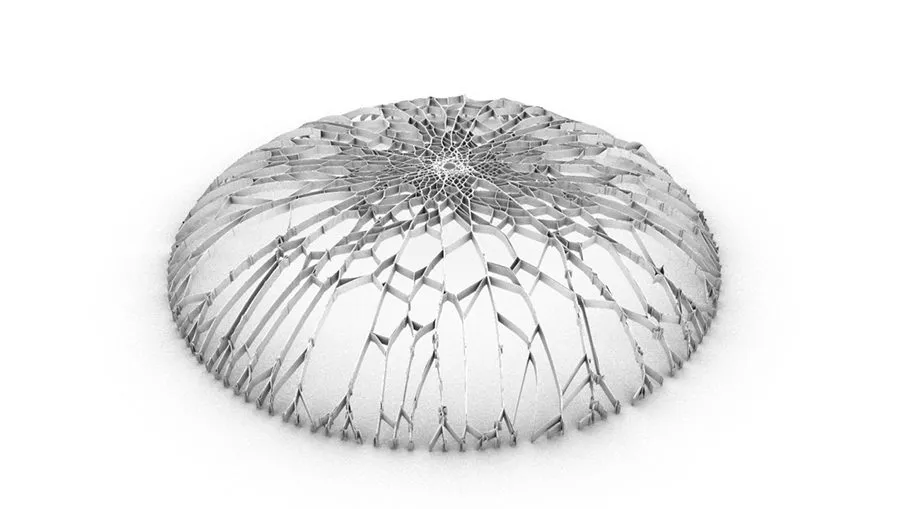
Gonthine: a shallow dome of cellular ribs · render from the Processing sketch · 2012 to 2014 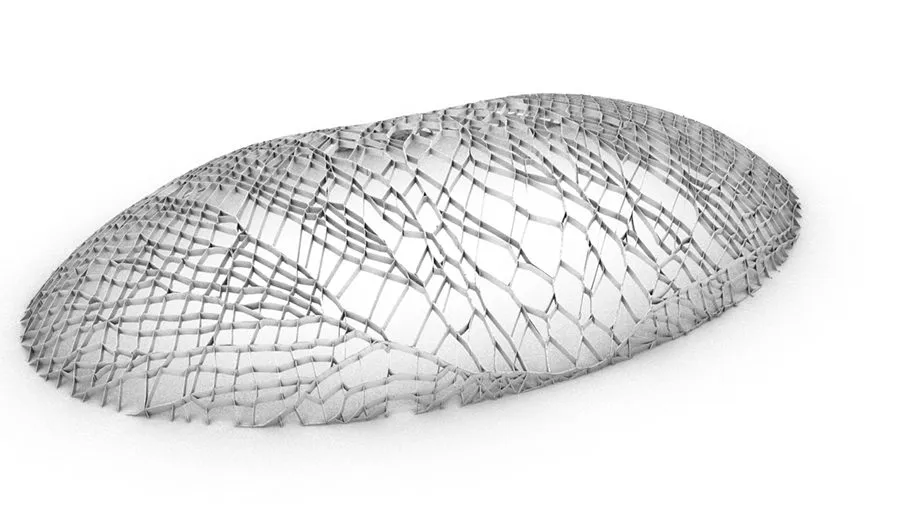
Gonthine: an elongated pod of cellular mesh · render from the Processing sketch · 2012 to 2014 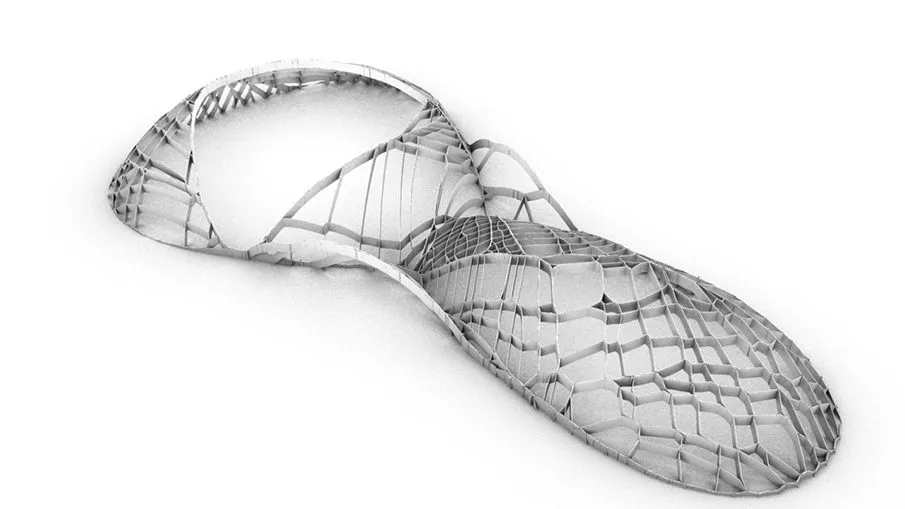
Gonthine: a cellular shell grown from a mesh of lines · render from the Processing sketch · 2012 to 2014 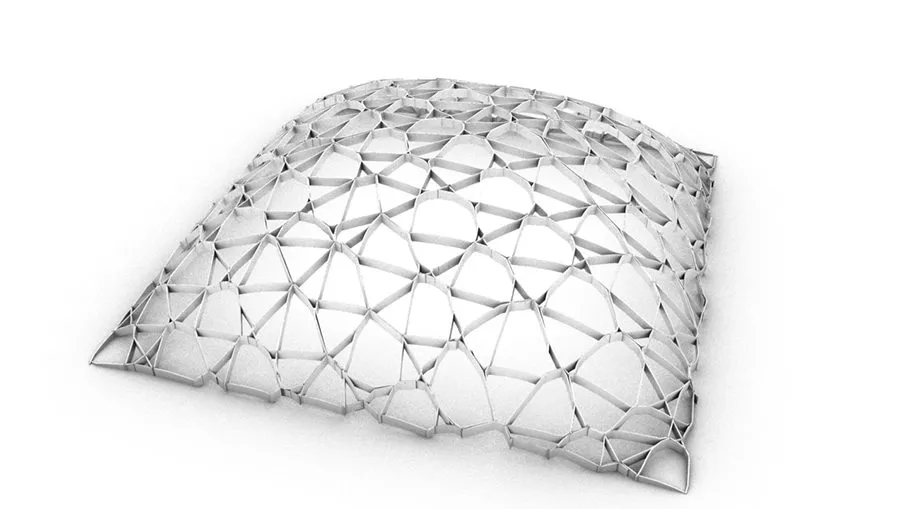
Gonthine: a square canopy of cells · render from the Processing sketch · 2012 to 2014 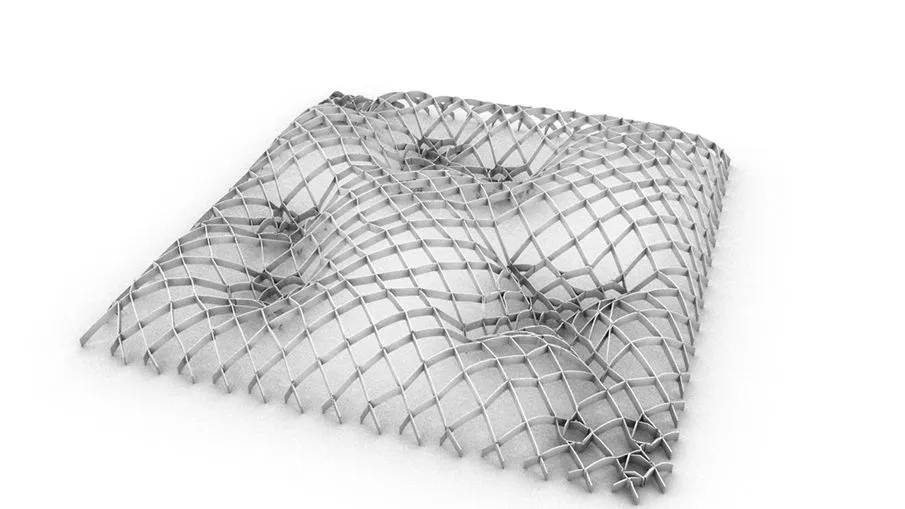
Gonthine: a net surface pulled down at four points · render from the Processing sketch · 2012 to 2014 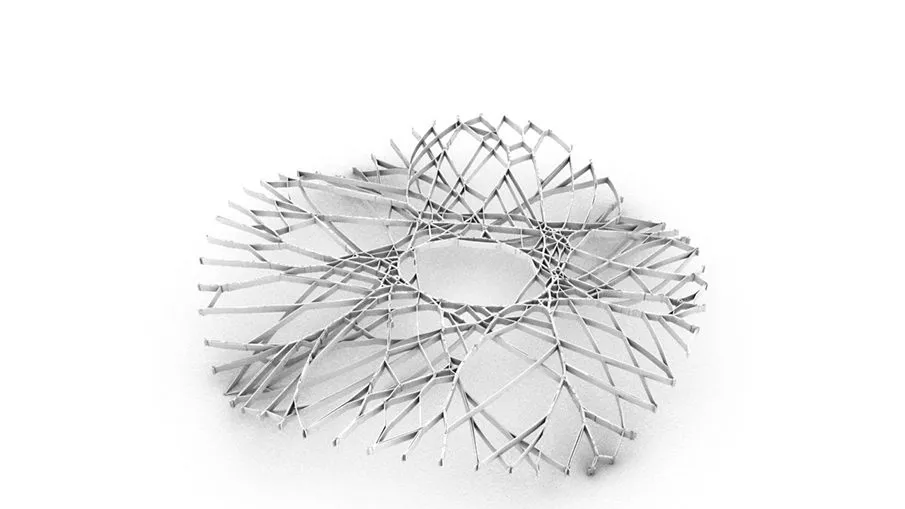
Gonthine: a rosette of crossing bands · render from the Processing sketch · 2012 to 2014 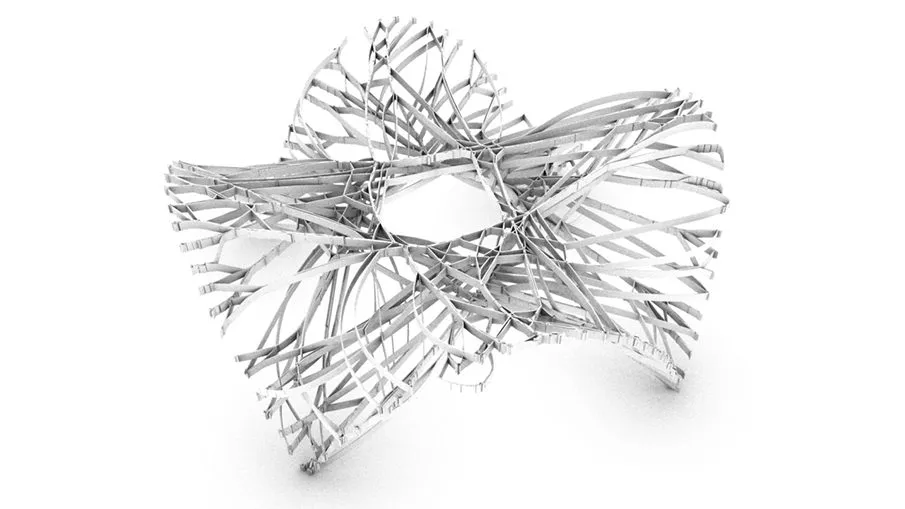
Gonthine: a woven knot of bands with openings · render from the Processing sketch · 2012 to 2014
Related
2 entries
More work
34 entries