Fe₄Nb₁₈S₁₂
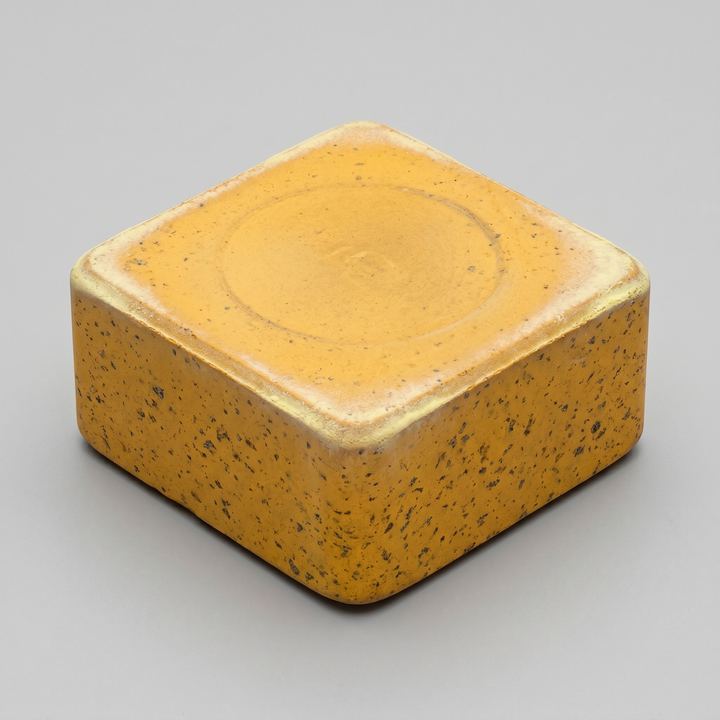
sulfide metal composite · sulfide low tempFe4Nb18S12 is a sulfide metal composite suitable as sulfide low temp. Color: yellow-orange. Fired at 130°C from 3 precursors (Nb2O5, S, Fe2O3). Workshop batch: 300g at €63.53. Compressive strength ~250 MPa; estimated 0.09 kg CO₂/kg (-89% vs Portland cement). Notable: forms without a kiln. Confidence: medium.
- forms at
- 130 °C · hotplate · no kiln
- replaces
- portland cement
- CO₂
- 89.1% lower than Portland cement (0.09 vs 0.83 kg CO₂/kg)
- energy
- 89.1% lower than Portland cement (0.60 vs 5.50 MJ/kg)
- compressive
- 250 MPa
- density
- 5.96 g/cm³
- crystal
- hexagonal
- band gap
- 0.01 eV
- cost
- €211.77/kg · €63.53 / 300 g batch
- confidence
- medium (synthesis route)
- potential
- 0.73 · env 1.00 · novel 1.00 · struct 0.50 · lineage 0.50 · supply 0.23
- flags
- zero kiln: Forming happens without firing — the material cures through chemistry at ambient or hotplate temperature. At building scale this removes the kiln from the supply chain: on-site casting, regional workshops, cold-country fabrication all become available.
Architectural potential
A niobium-heavy cast sulfide that reaches 250 MPa of compression without ever seeing a kiln — built up from solution at 130 °C on a hotplate, then drop-cast or pressed from gel. At eighty-nine per cent less embodied CO₂ than Portland cement the argument for specification is environmental first, structural second. The geometry envelope is generous for a detail-scale material: up to a kilogram per batch, so thick inlaid floor tiles in gallery vestibules, threshold plates in timber-frame retrofit, cast acoustic panels in recording studios, and site-poured apron pieces around service cores all sit within reach. Because forming happens below the boiling point of water, inclusions that a kiln would destroy — waxed papers, dyed textiles, temperature-sensitive pigments — can be cast in place, so the architectural register runs between serious structural mass and collage. Against cement the trade is legible to a client: the same slow weight, the same compressive presence, with no flue, no firing schedule, no kiln yard. The caveat is cost and odour. At €63.53 per 300 g batch the unit rate stays firmly in the detail register, and the workshop needs forced ventilation during saw-cutting because niobium-rich sulfides release residual sulphide gas when the kerf heats.
Material character
The slab reads a warm yellow-orange across the face, the niobium sulfide dominating the matrix colour with iron lending a faint rust cast in the shadow relief. At 5.96 g/cm³ in a 70×70×34 mm block the piece is decisively two-handed — heavier in the palm than an equivalent fired-brick tile of the same footprint. Surface cast mold-matte with a clear meniscus sheen along the top face, the edges as-cast and slightly reflective where the mould wall left its print. A fine α-sulfur bloom crystallises in the shallow cast pits. Against the copper-red polysulfide siblings this body sits further toward amber and, weight for weight, firmer and denser in the hand.
Recipe
300 g batch · peak 130 °C| element | precursor | formula | mass | safety |
|---|---|---|---|---|
| Fe | iron(III) oxide (red) | Fe2O3 | 11.78 g | safe |
| Nb | niobium pentoxide | Nb2O5 | 88.22 g | moderate |
- Pre-heatHotplate to 150 °C
- MeltSulfur liquefies at 115 °C; full liquid at 130 °C
- CastPour at 140–145 °C
- SetRoom temperature 30 min (firm) → 24 h (full strength)
Zero-kiln process — 130 °C hotplate cast only