Synthetic Types Atlas, Vol. I
2026 · publicationResearch Papers: Generated Materials, Induced into a Type
- year
- 2026
- type
- publication
- credit
- Daniel Koehler, with a multi-agent pipeline of orchestrator, retrieval, critique and verification agents designed for the atlas
- program
- Synthetic Types
- links
- Download the atlas (Zenodo, DOI 10.5281/zenodo.22070424) · Vol. II, the Recipe Atlas, on this site
- instrument
- Generative Matter V3 · multi-agent research pipeline with adversarial verification; 40 to 60 checked sources per case study
- no.
- 056
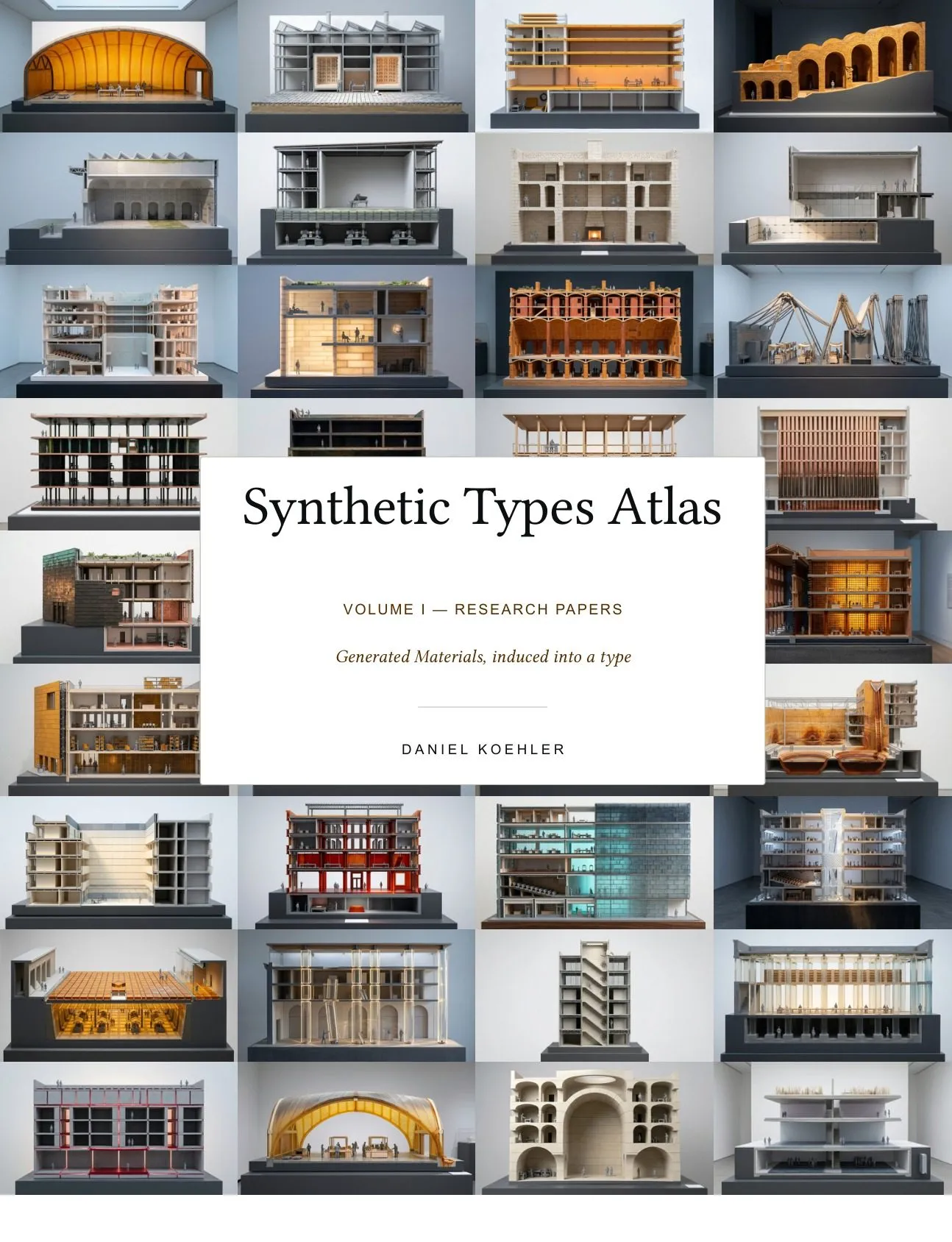
Every technological epoch has induced its building types: the elevator its tower, the car its mall. The Synthetic Types Atlas asks which types a new material induces, and it asks it for materials that did not exist a few years ago. Each of its thirty-six case studies begins with a compound predicted by AI, follows it through a synthesis route that an ordinary workshop can run, derives the tectonic disposition the material affords, and ends with the building type that disposition makes possible: a hall under an amber vault, a stepped arcade, a block whose facade is a grid of glowing bays.
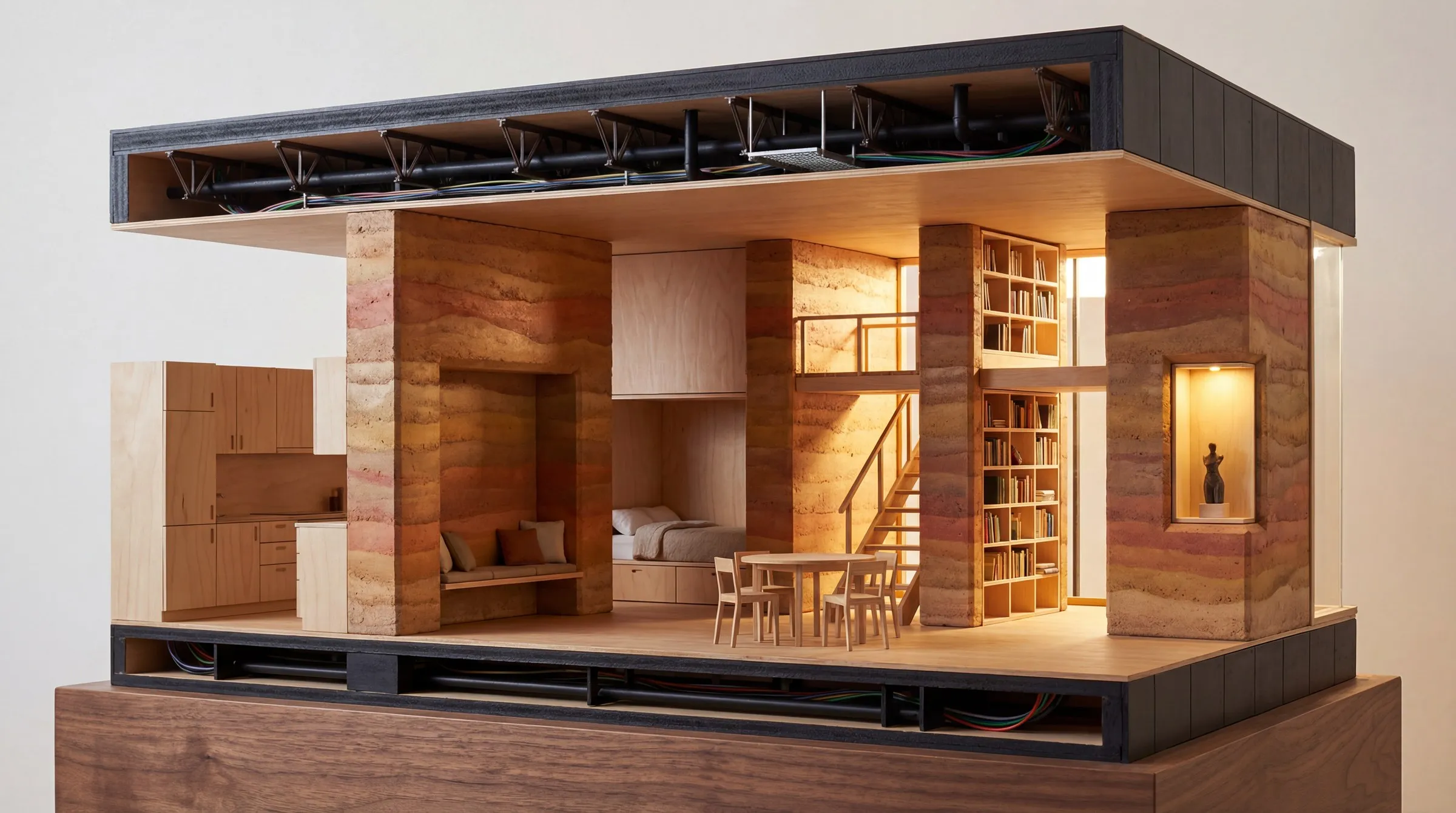
A case study is a research paper with a fixed anatomy. It traces the material’s genealogy, the compounds and crafts it descends from; its agency, what it does that its analog cannot; its lifecycle, from the sourcing of precursors to reuse; its construction, the joints and spans it permits; its transpositions into other scales and trades; its readings across domains, cultural and computational; and, last, the induced type, drawn as a section model and inhabited in synthetic photographs. The drawings are generated, and the atlas says so on every plate: they are the hypothesis a material makes about a building, not a building.
The two volumes were researched, written, and fact-checked by a multi-agent pipeline I designed for this purpose: an orchestrator, retrieval and critique agents, and an adversarial verifier that checks every claim against forty to sixty sources per case and, on occasion, catches the atlas’s own errors. I regard the pipeline as equal parts research method and publication instrument, and the atlas as its first public test. What survives the verifier goes to the kiln: the materials the atlas rates highest are the ones students at the Academy of Fine Arts Stuttgart set out to make in 2026.
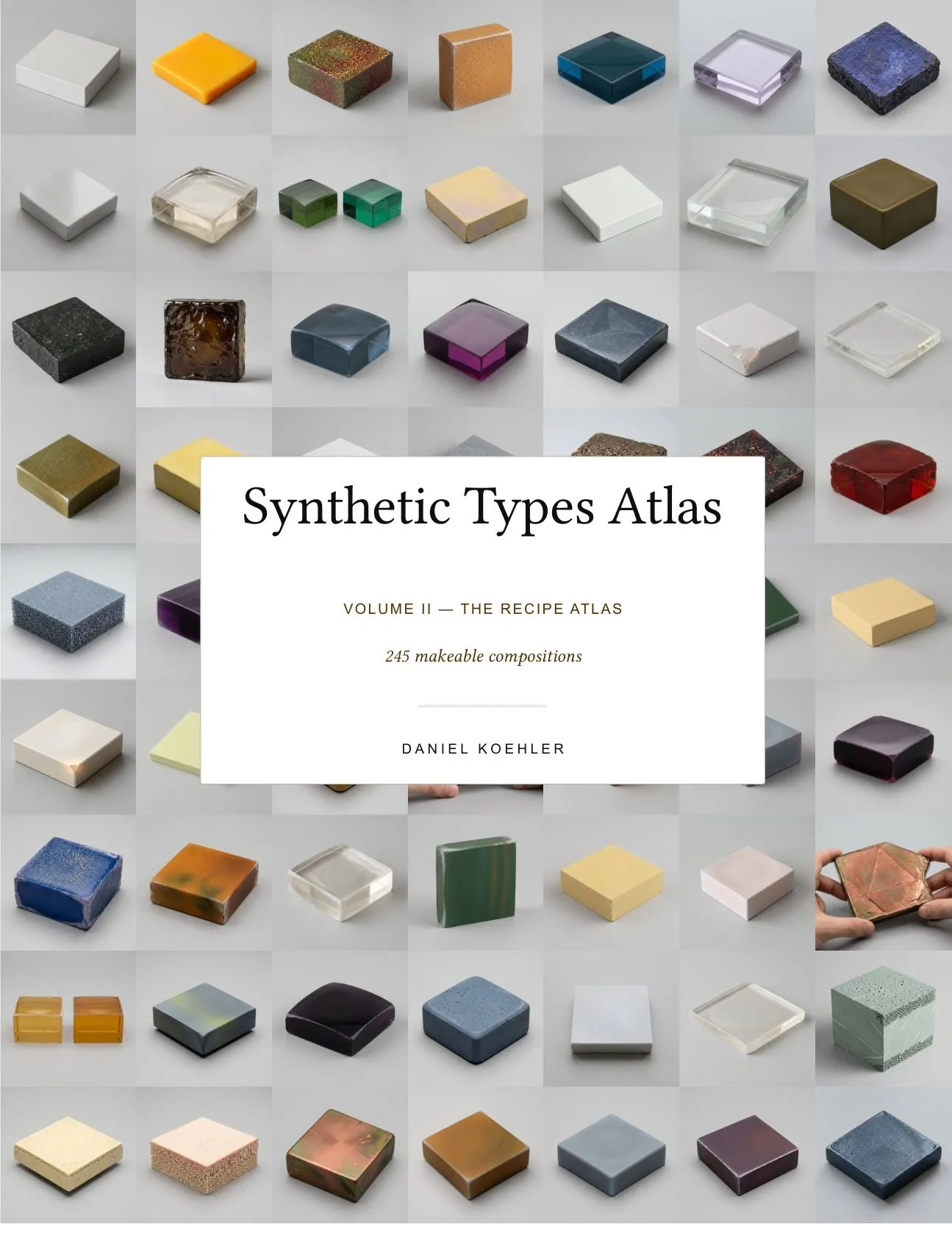
Synthetic Types Atlas, Vol. I: Research Papers. Generated Materials, Induced into a Type has 489 pages (ISBN 979-8-1844-3884-9) and was published in 2026. Its companion, Vol. II: The Recipe Atlas, gives the recipes for 245 makeable compositions; the underlying database, Generative Matter V3, is open. The building types of Vol. I are the Synthetic Types program’s next entries: design studies, one type per material, to be added to this site as they are drawn and built.
Gallery
12 plates · click to enlarge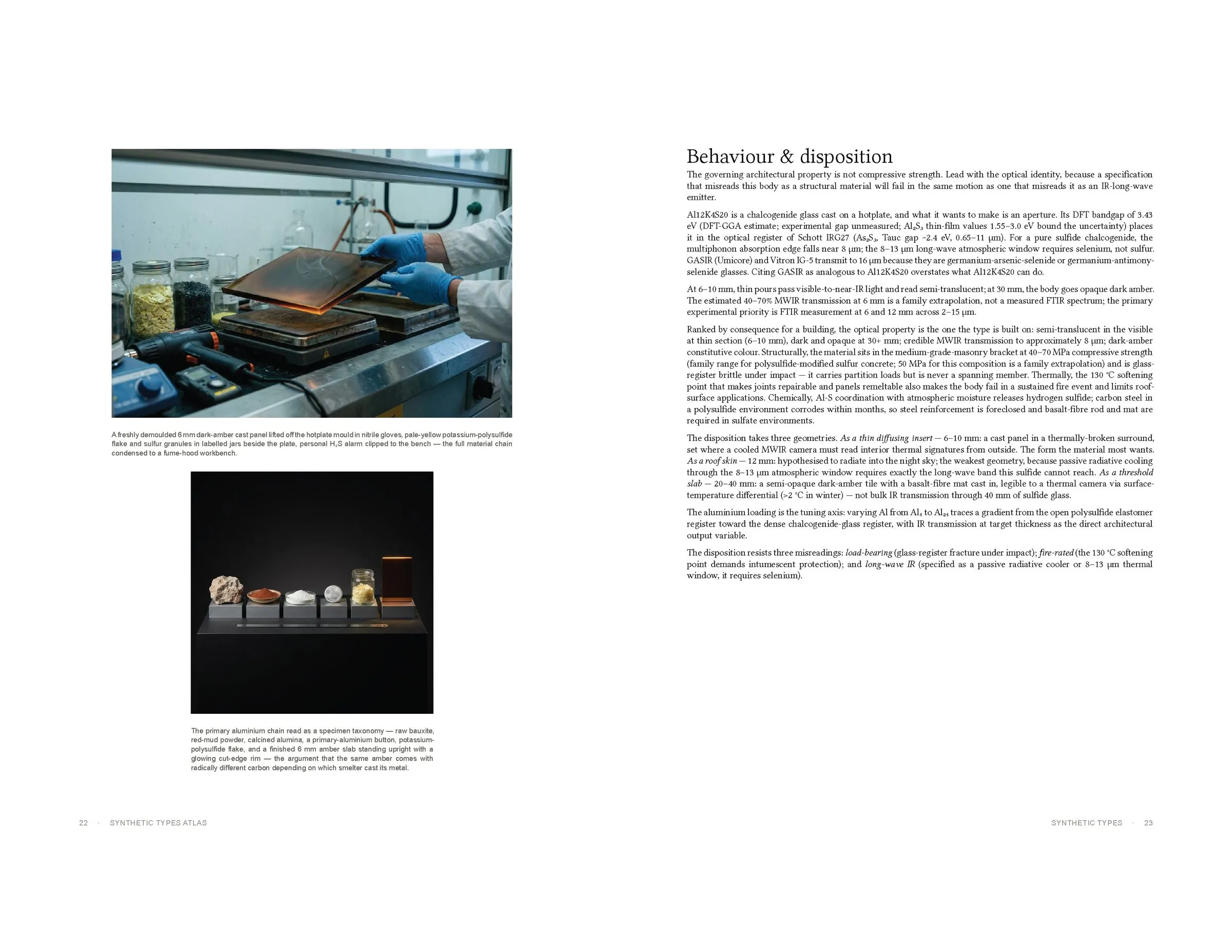
Daniel koehler synthetic types vol1 research papers spreads page 013 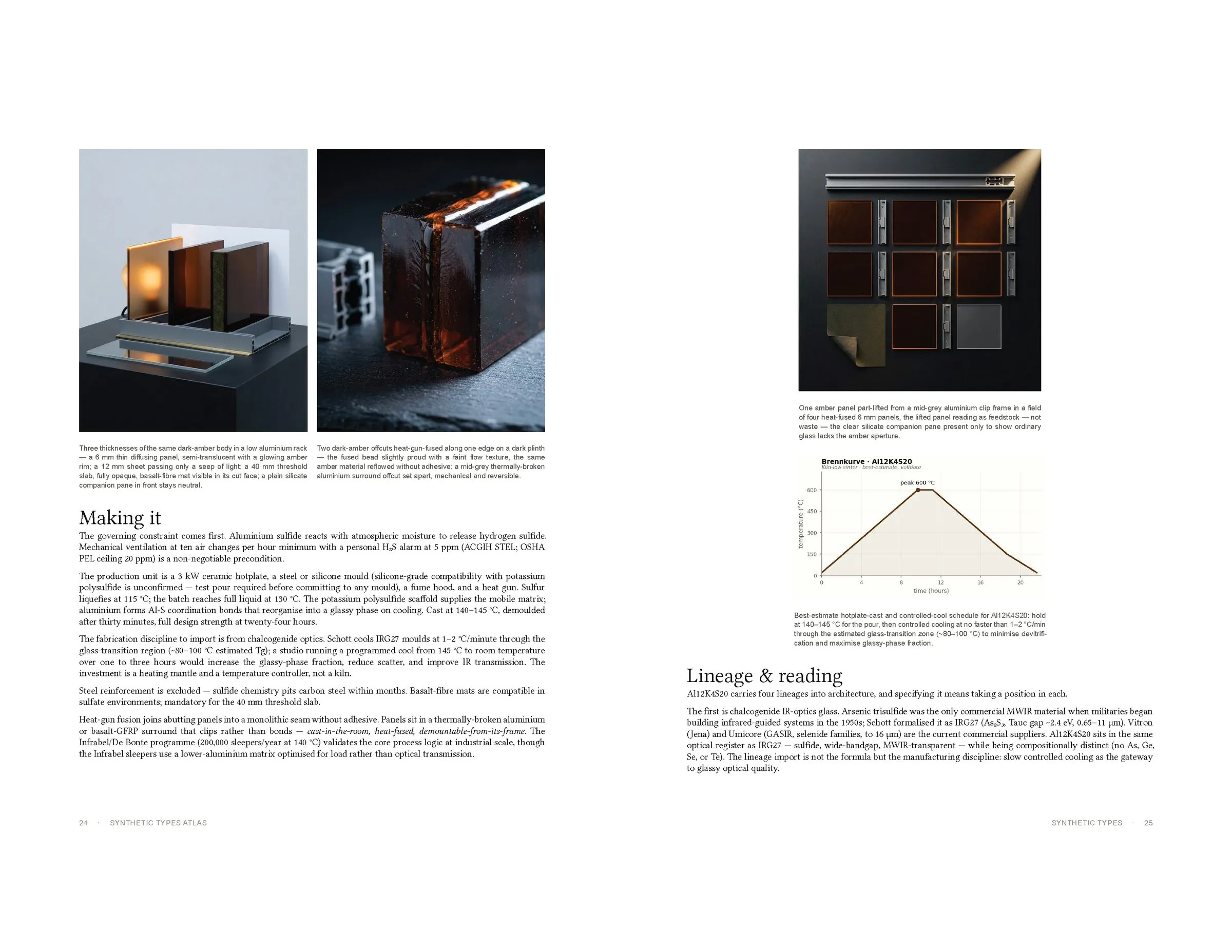
Daniel koehler synthetic types vol1 research papers spreads page 014 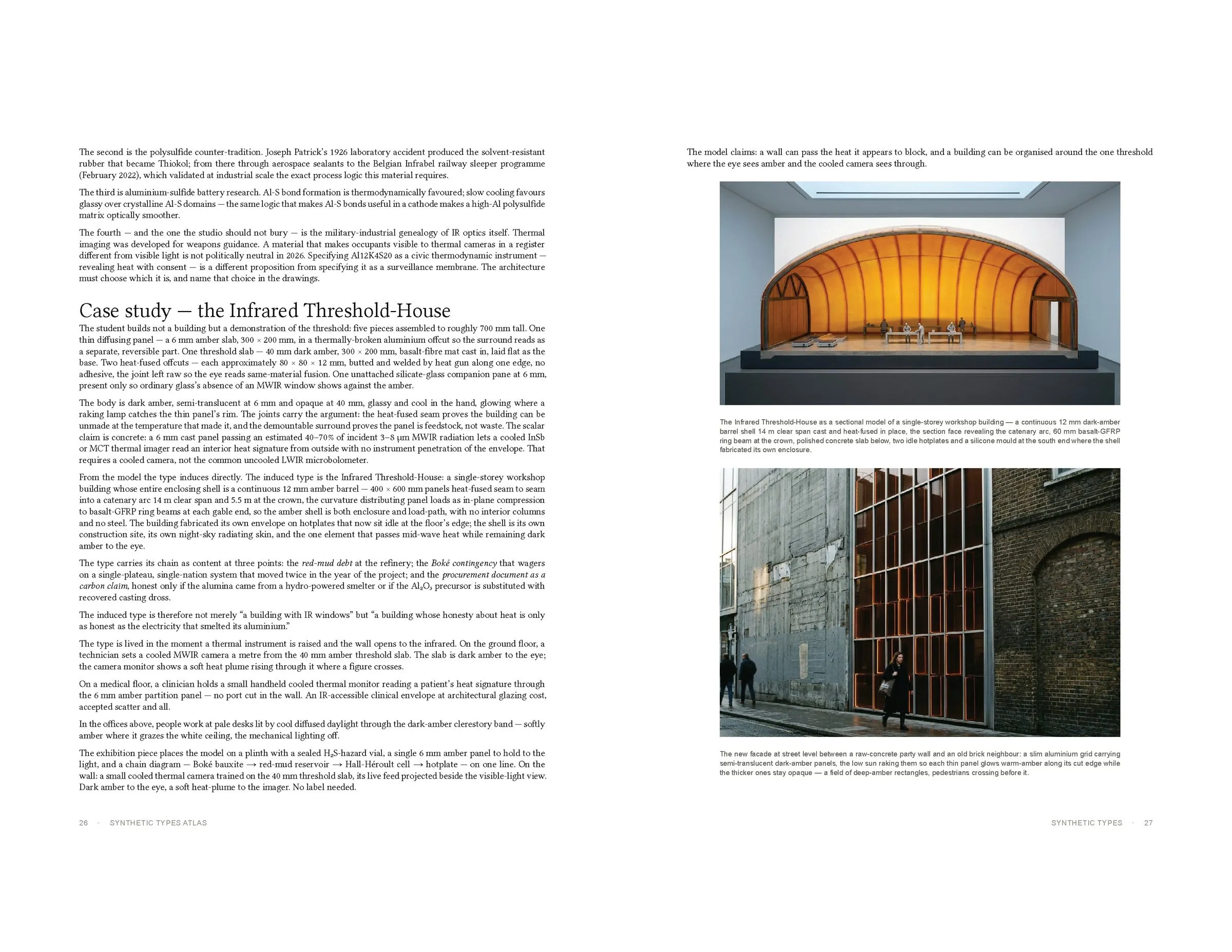
Daniel koehler synthetic types vol1 research papers spreads page 015 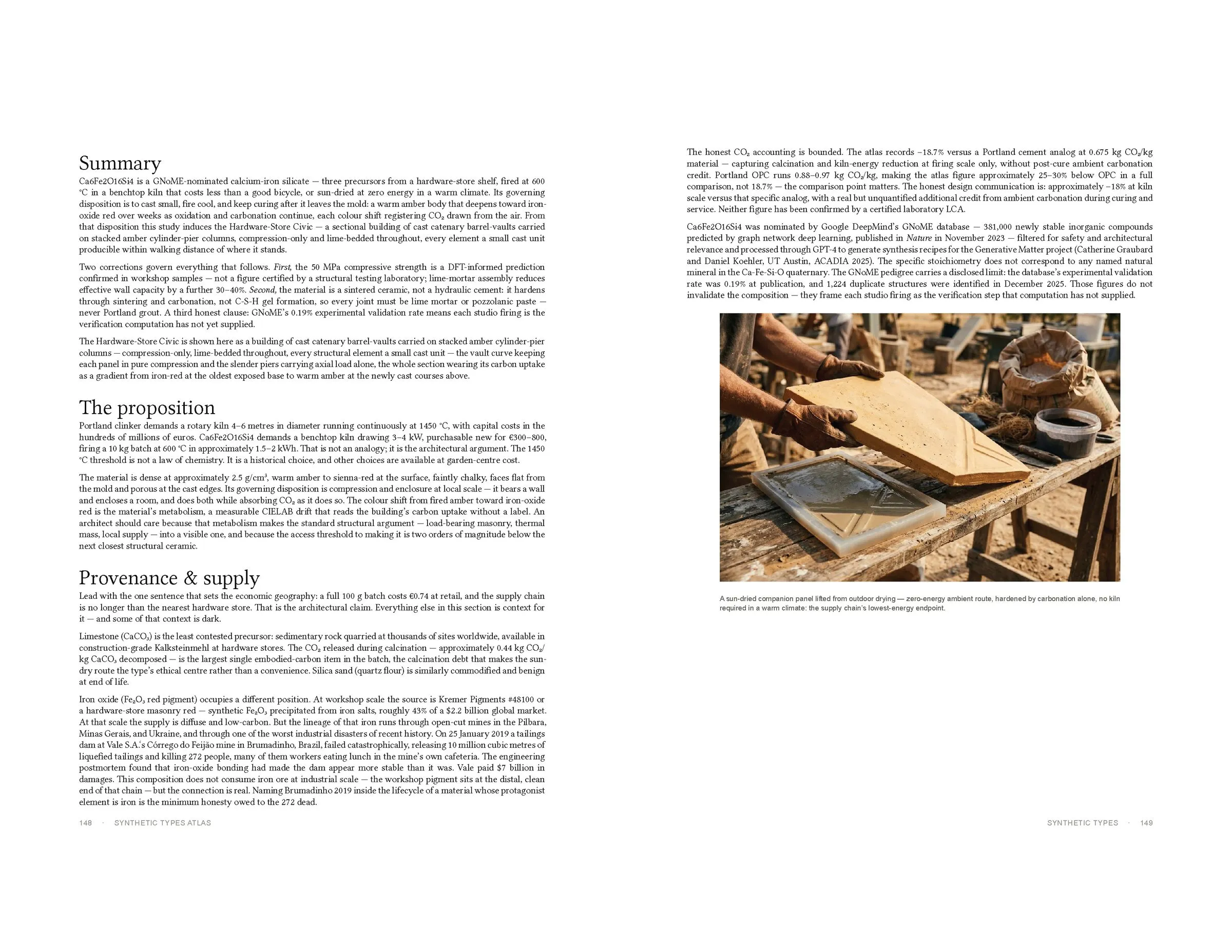
Daniel koehler synthetic types vol1 research papers spreads page 076 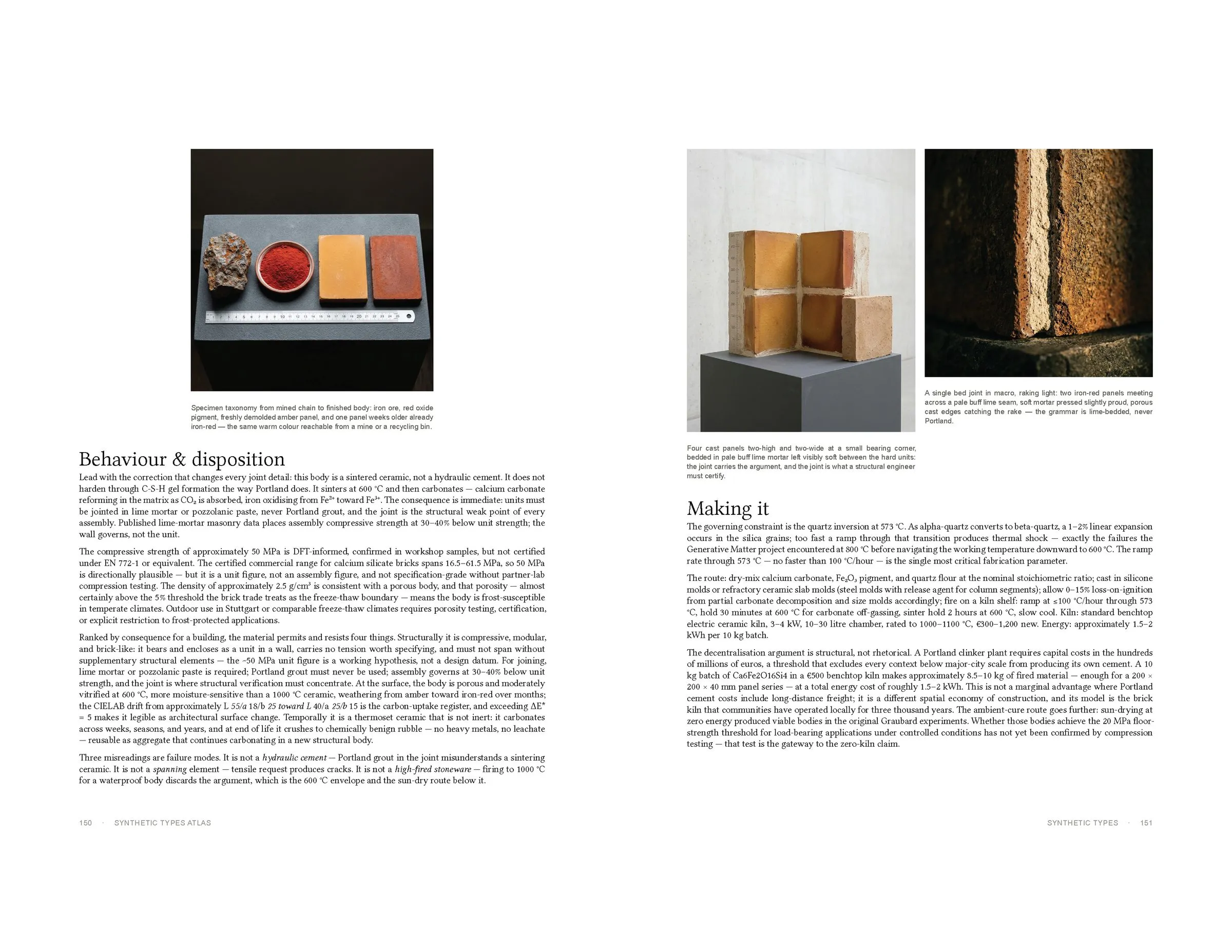
Daniel koehler synthetic types vol1 research papers spreads page 077 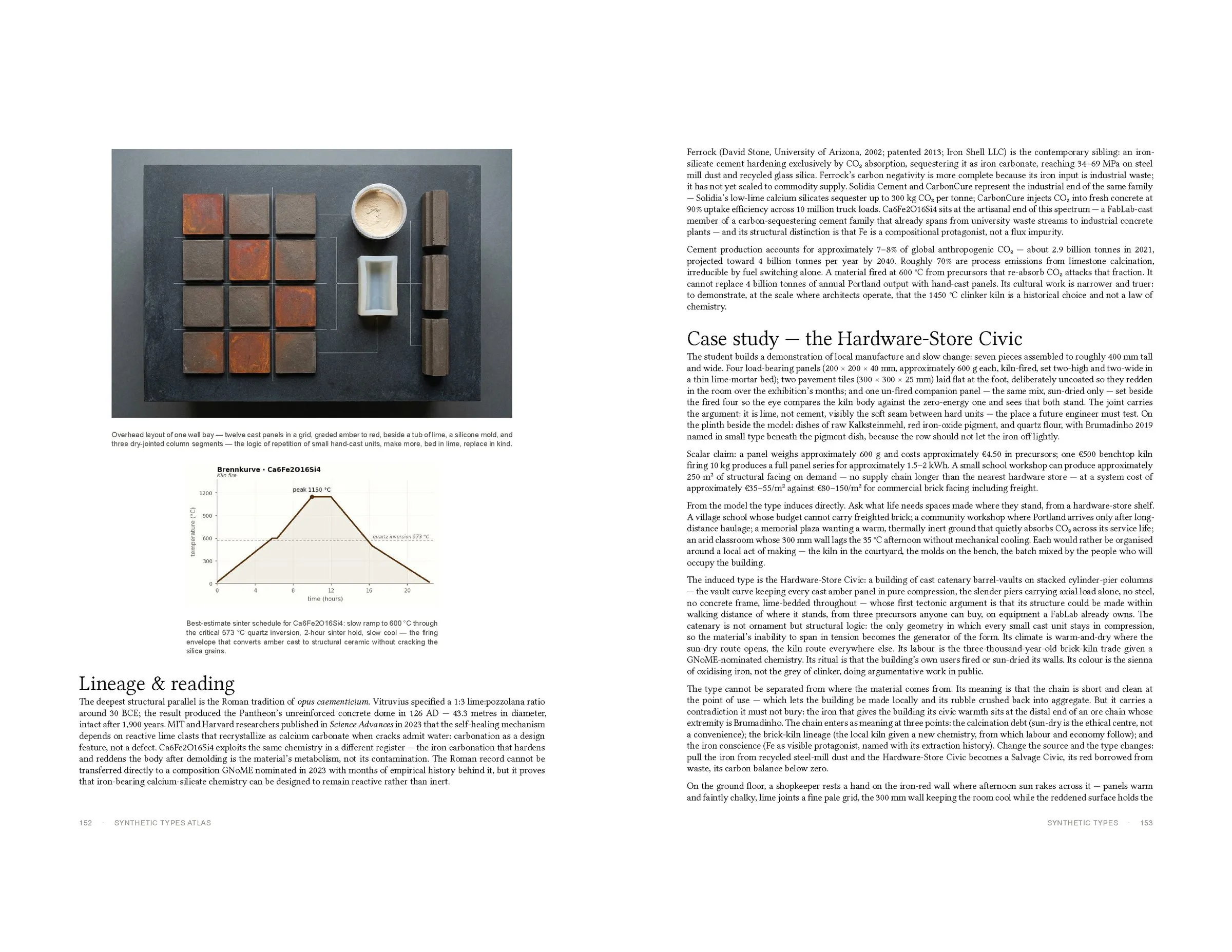
Daniel koehler synthetic types vol1 research papers spreads page 078 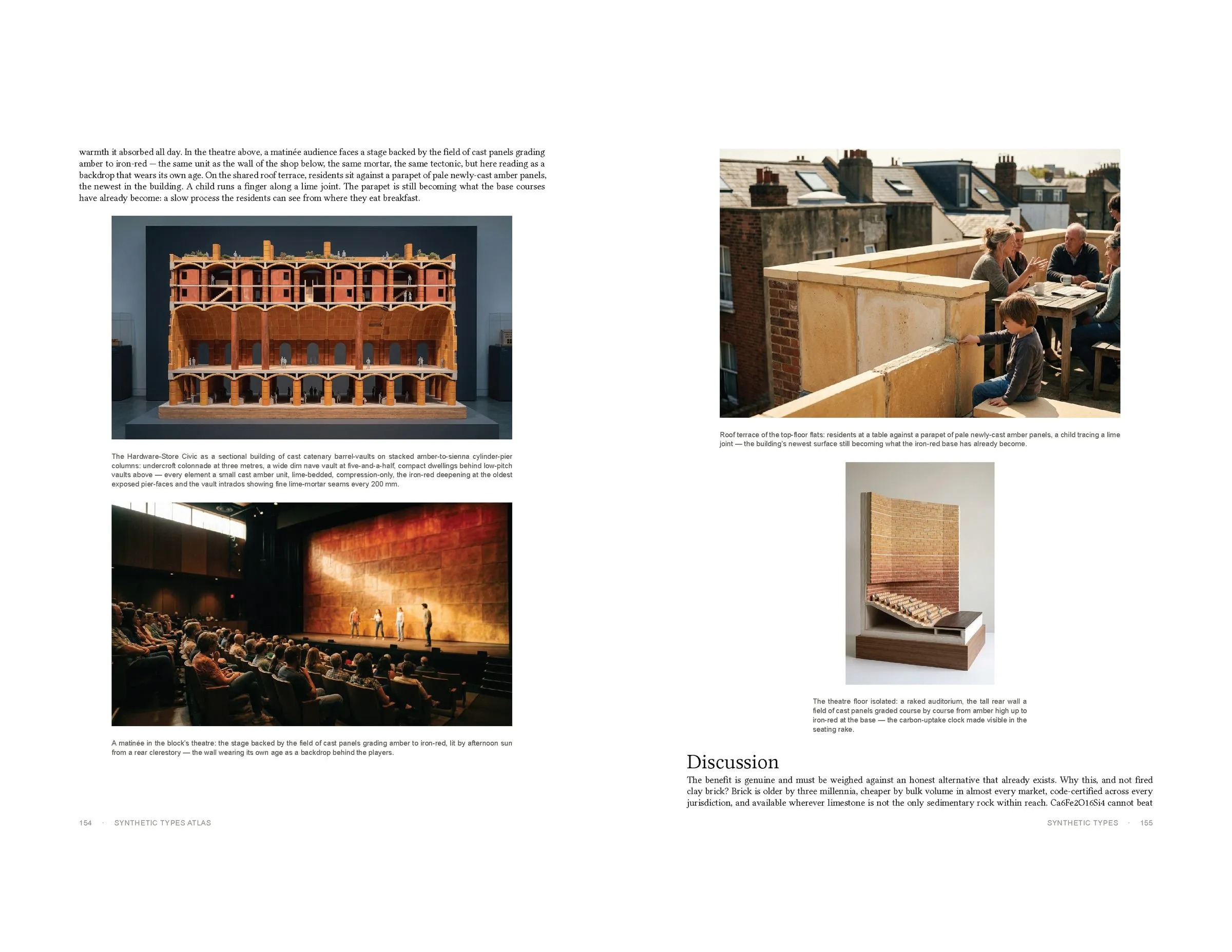
Daniel koehler synthetic types vol1 research papers spreads page 079 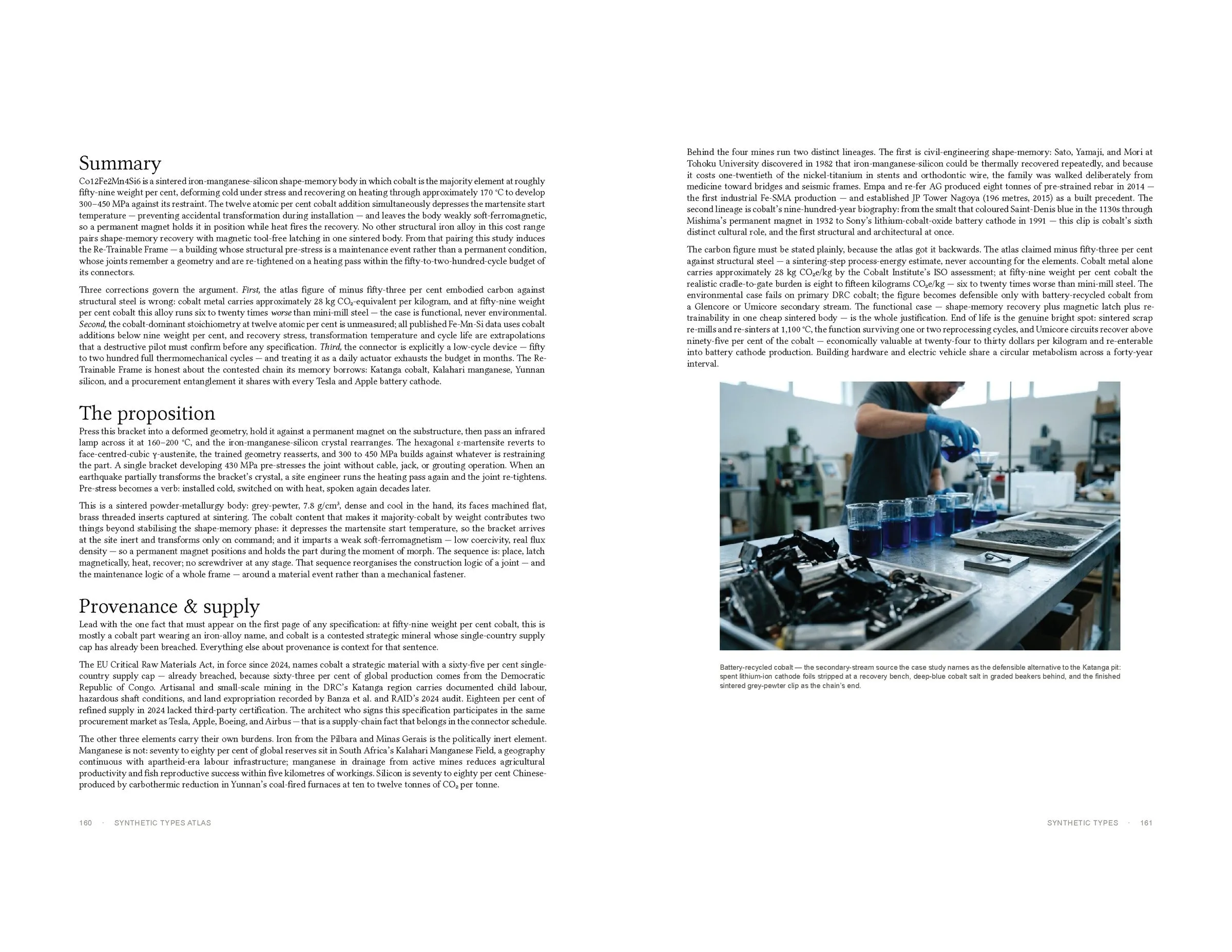
Daniel koehler synthetic types vol1 research papers spreads page 082 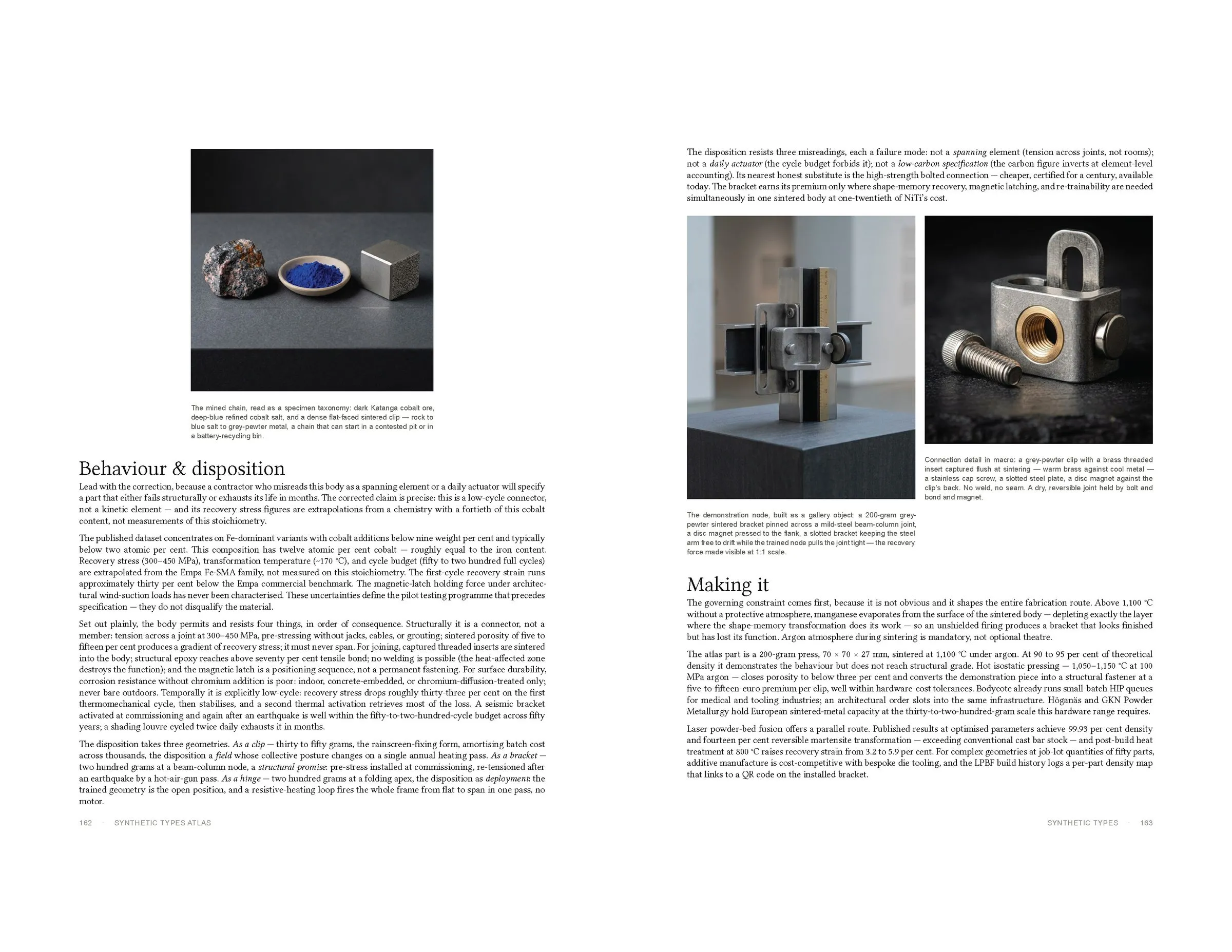
Daniel koehler synthetic types vol1 research papers spreads page 083 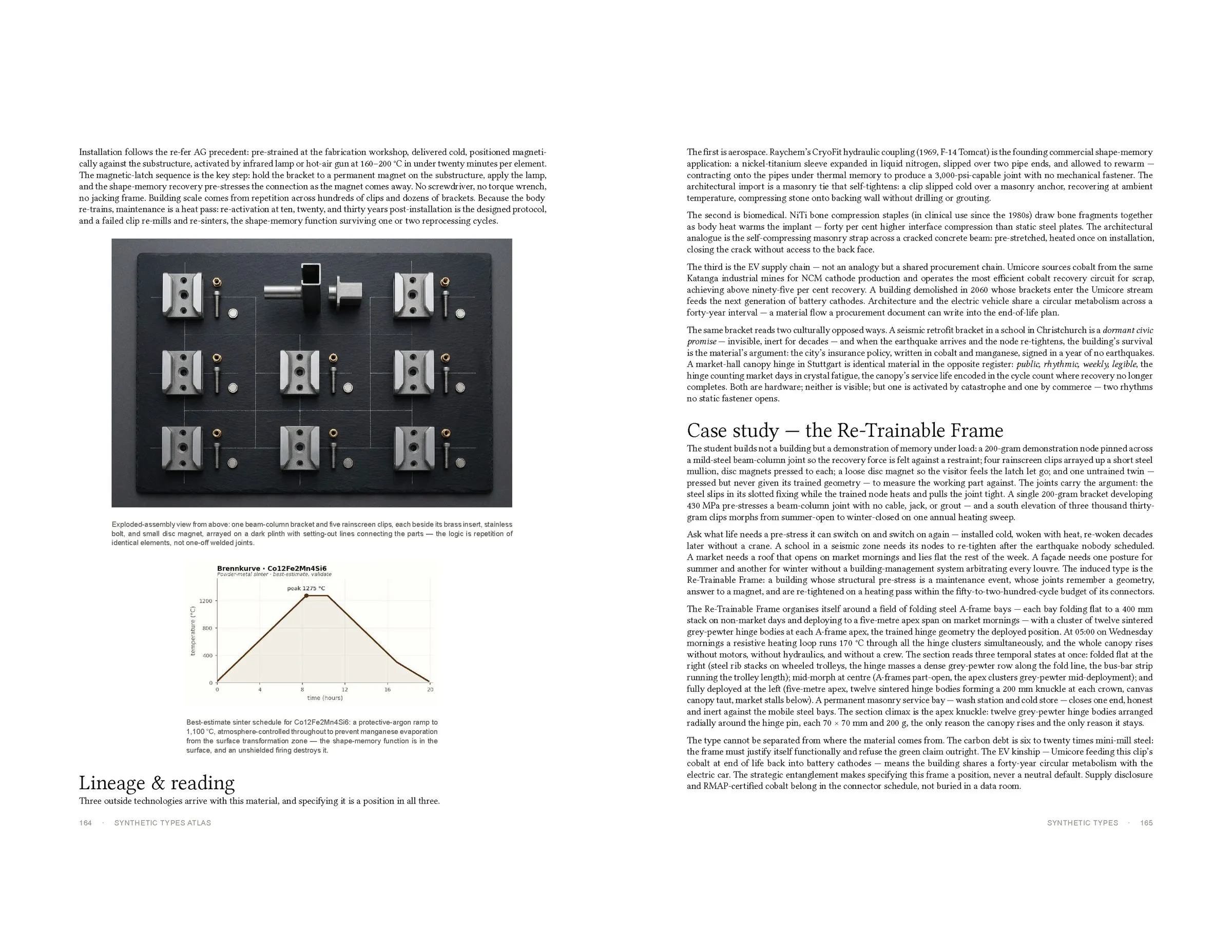
Daniel koehler synthetic types vol1 research papers spreads page 084 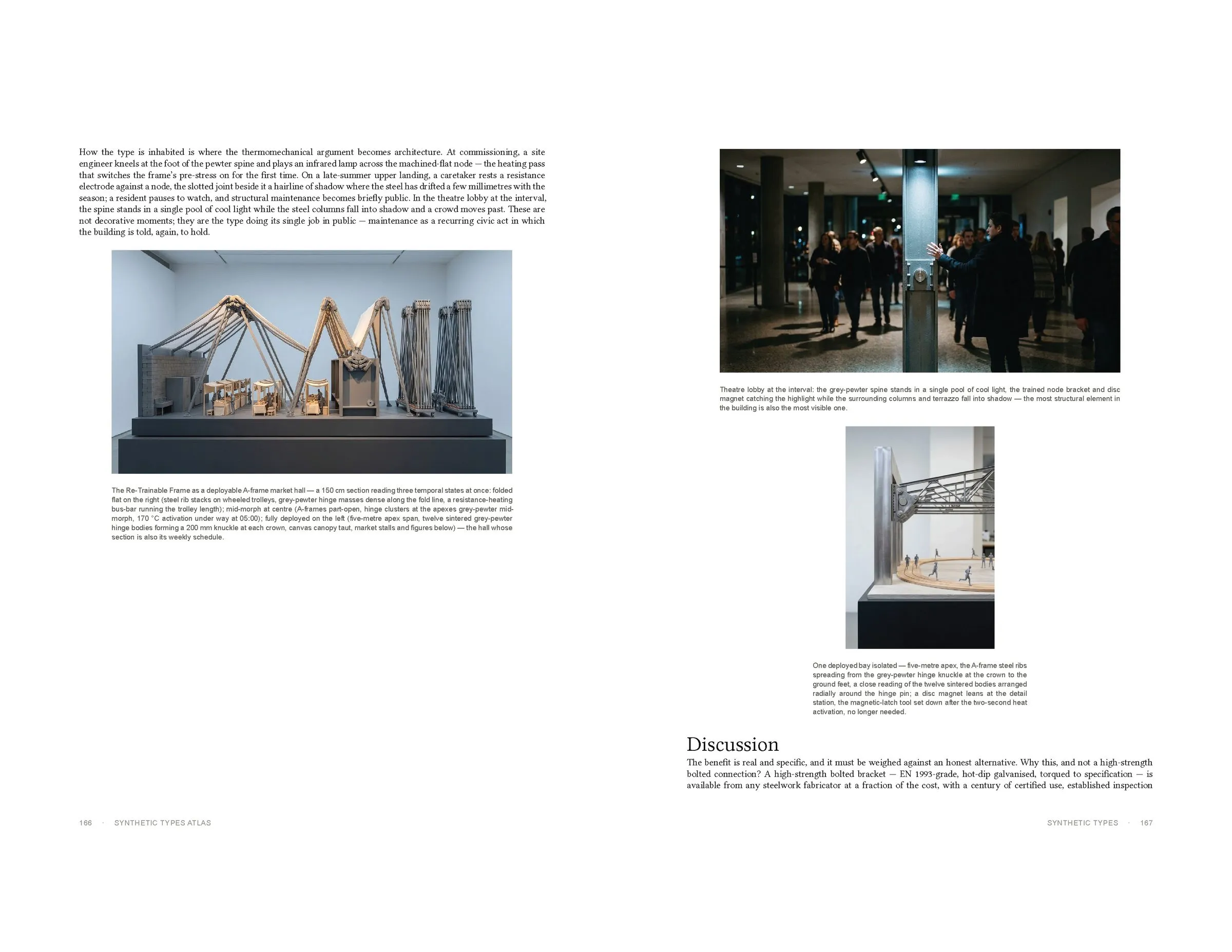
Daniel koehler synthetic types vol1 research papers spreads page 085 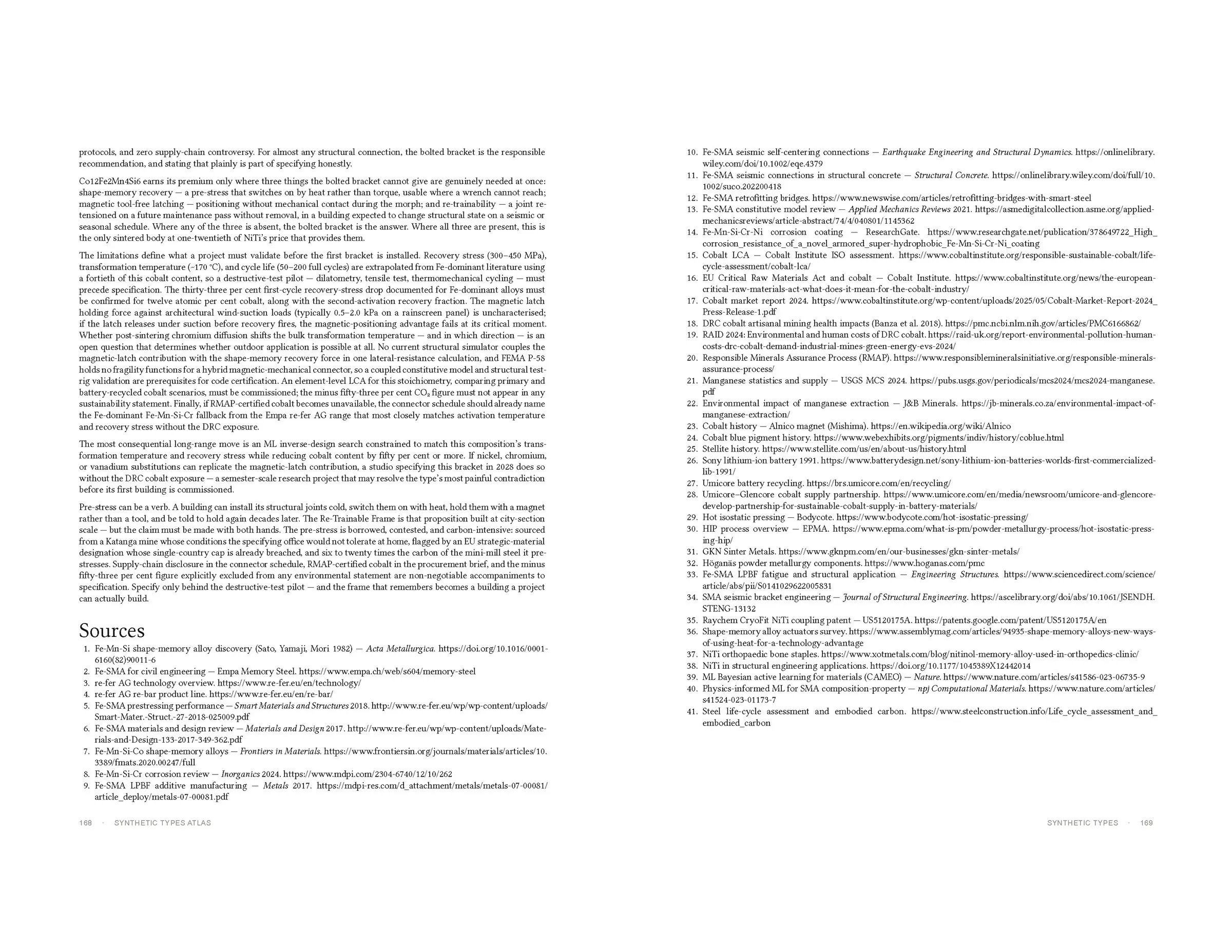
Daniel koehler synthetic types vol1 research papers spreads page 086
Related
4 entries