Generative Matter
2023–2025 · researchLLM-guided discovery and low-tech prototyping of synthetic building materials
- year
- 2023–2025
- type
- research
- status
- ACADIA 2025 Vanguard Paper Award
- credit
- Catherine Graubart and Daniel Koehler (ACADIA 2025 paper, Graubart first author); Generative Matter V3 database by Daniel Koehler; continued at Academy of Fine Arts Stuttgart, summer 2026
- with
- Catherine Graubart
- program
- Synthetic Types
- where
- The University of Texas at Austin · Academy of Fine Arts Stuttgart
- links
- Generative Matter V3 on Zenodo, DOI 10.5281/zenodo.20929663 · Generative Matter V3 (GitHub, open database) · Generative Matter V2 (GitHub) · Materials browser on this site · ACADIA 2025 Vanguard Paper Award
- instrument
- GNoME (380 000 predicted compounds) → Generative Matter V2, V3 · LLM-guided filtering to 13 638 candidates; structured synthesis protocols; prototyping with kilns, molds, and the sun
- no.
- 037
In 2023 DeepMind’s GNoME predicted 380,000 stable inorganic materials and left them stranded: no discipline owns the translation from crystal structure to real-world use. Generative Matter builds that translation for the built environment, and it builds it for the workshops architects actually have. A language-model pipeline reads each predicted compound for what architecture needs to know, the availability of its elements, its toxicity, the temperature at which it forms, what it could replace, and filters the prediction down to 13,638 candidate substitutes for steel, glass, concrete, and plastic, each with a structured synthesis protocol that an ordinary workshop can follow.
The pipeline
The filtering runs in two passes. The first removes what no workshop should touch: explosive, radioactive, or exceptionally rare components, which leaves roughly 120,000 stable and safe compositions. The second maps physical properties, density, band gap, formation and decomposition energy, onto architectural criteria, stability, transparency, insulation, durability, and asks of each composition what it could replace. The answer is uneven in a telling way: 12,958 candidates could substitute for steel, 611 for glass, 59 for concrete, 10 for plastic, and none for wood. For every candidate a language model then writes a recipe in six sections, materials in grams, sourcing, preparation, heating, cooling, and post-processing, and matches it to a fabrication pathway, molding, extrusion, calendaring, or weaving, that a FabLab, a textile workshop, or a university studio can run. Three hundred of the most promising candidates were visualized in three formats, as raw material in a petri dish, as a two-inch sheet, and as a brick, and compiled with their recipes into the Generative Matter Recipe Book.
Making
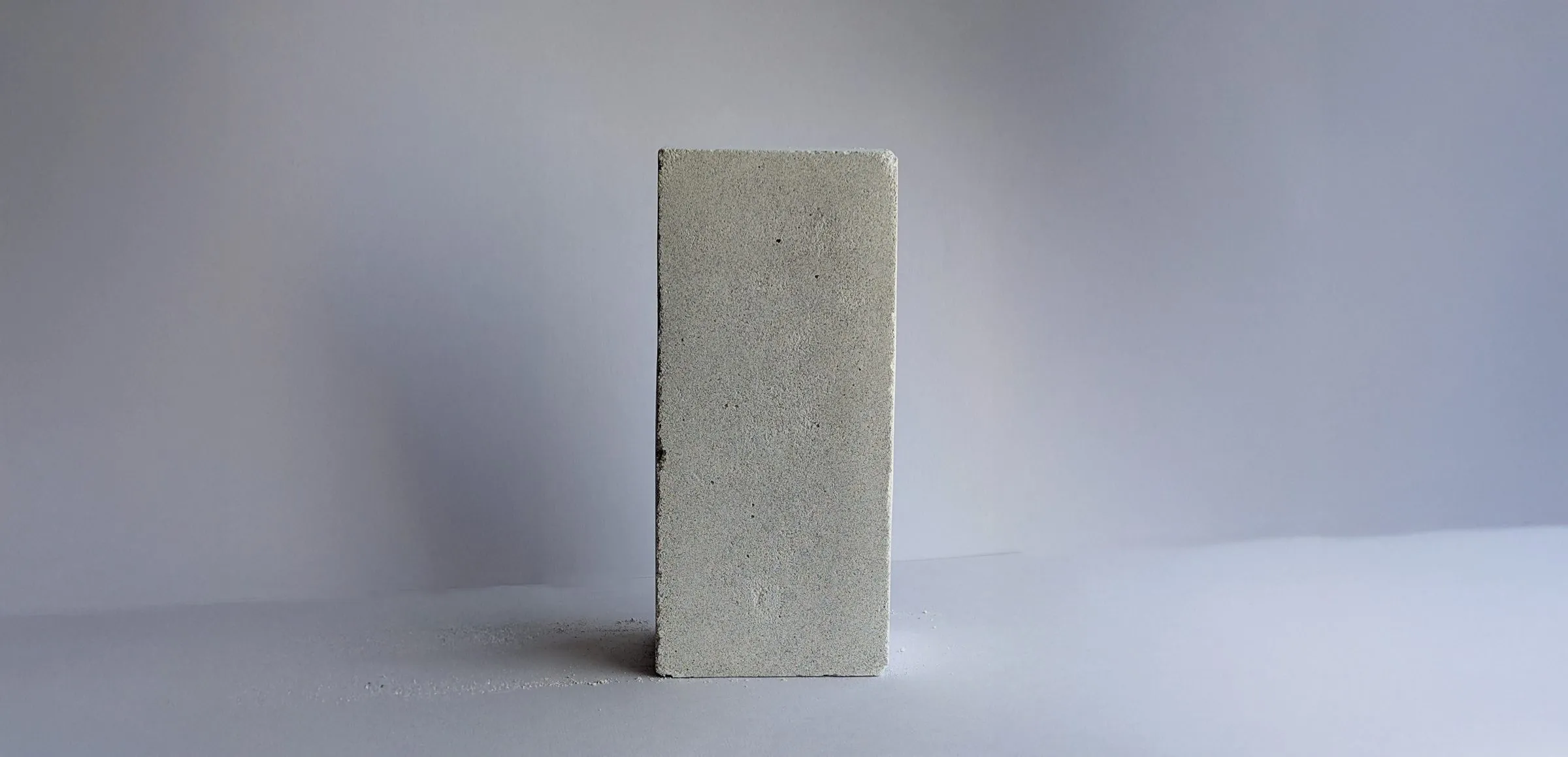
The test of the pipeline is physical. A predicted material either forms, or it does not. The first composition to be made was a calcium silicate, Ca₆Fe₂O₁₆Si₄, chosen for the availability of its precursors, its chemical stability, and its compatibility with a kitchen scale, a mortar and pestle, silicone molds, and a benchtop kiln. Small crucible samples were fired to 800 °C; a brick-sized sample with fifteen percent water was air-dried only; further batches varied the water ratio and compared kiln firing with drying in the sun. The sun-dried bricks dried evenly and held their form, and the pipeline had its proof of concept in the least energetic way possible: a synthetic brick cured by daylight in Austin, Texas.
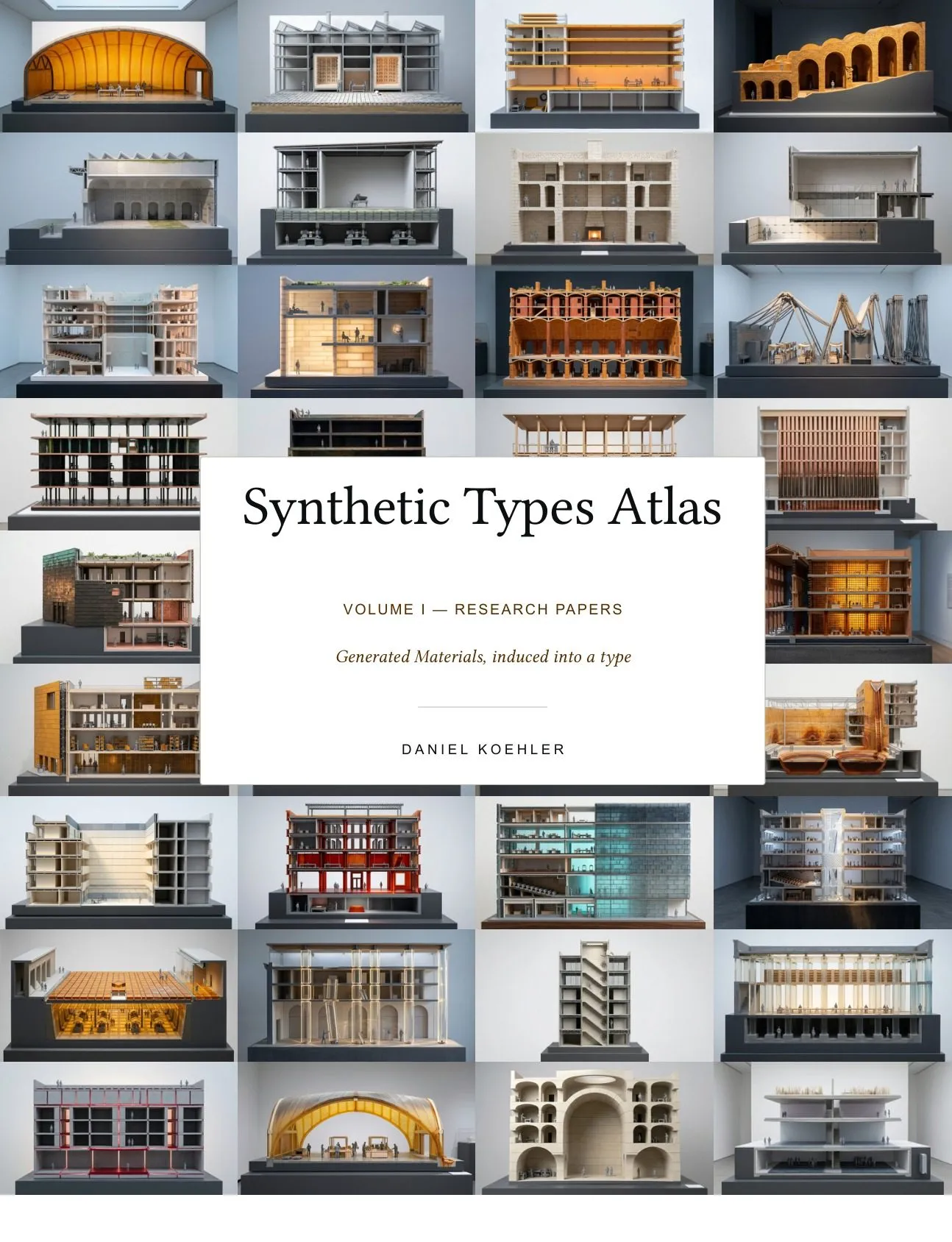
With Catherine Graubart, who developed the pipeline with me as a student and stands first on the paper, the method was published at ACADIA 2025 and received the Vanguard Paper Award. The database was reworked as Generative Matter V3, released with a DOI so that the filtering can be repeated against the next prediction, and read once more for architecture in the two volumes of the Synthetic Types Atlas.
What the studio fires
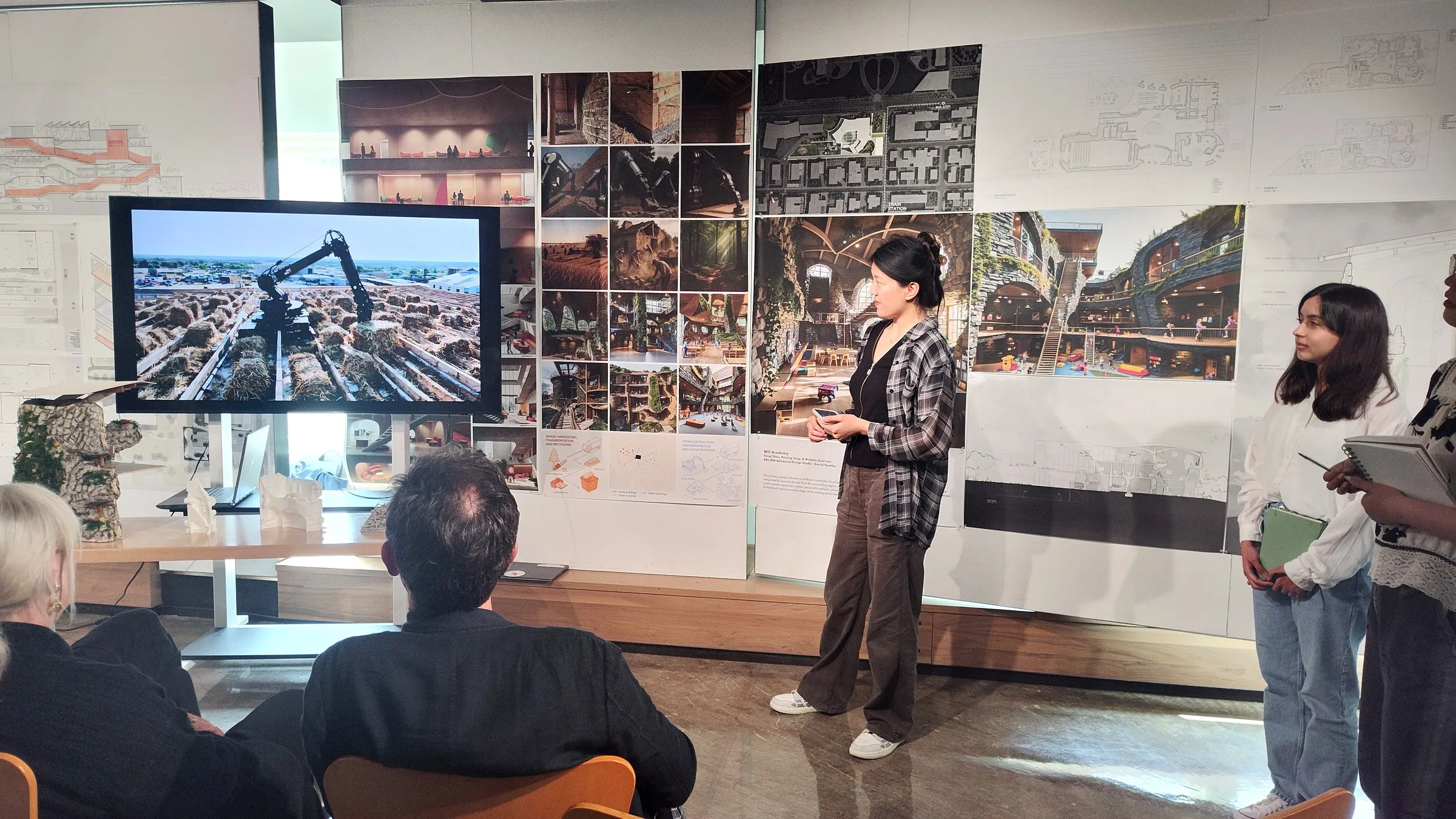
In the summer of 2026 the research moved into the workshops of the Academy of Fine Arts Stuttgart, where students of the studio Synthetische Typen / Modelling Models synthesized compositions from the database. The studio’s shortlist names six candidates it means to make, each with a 100-gram recipe, a firing curve, and a safety check: three silicates that range from a plain cast glass to a high-index glass that gathers light, a ferroelectric perovskite that brushes against computation, and two calcium silicates that invite comparison with cement; a seventh, an iron-potash oxide, is the one chosen for kiln-casting in the academy’s open 900 °C kiln. Every one of them is an unmade candidate until it comes out of the kiln, which is the point: the first firing of a predicted material is an experiment, and the studio treats it as one, with kilns, molds, and the sun.
Gallery
6 plates · click to enlarge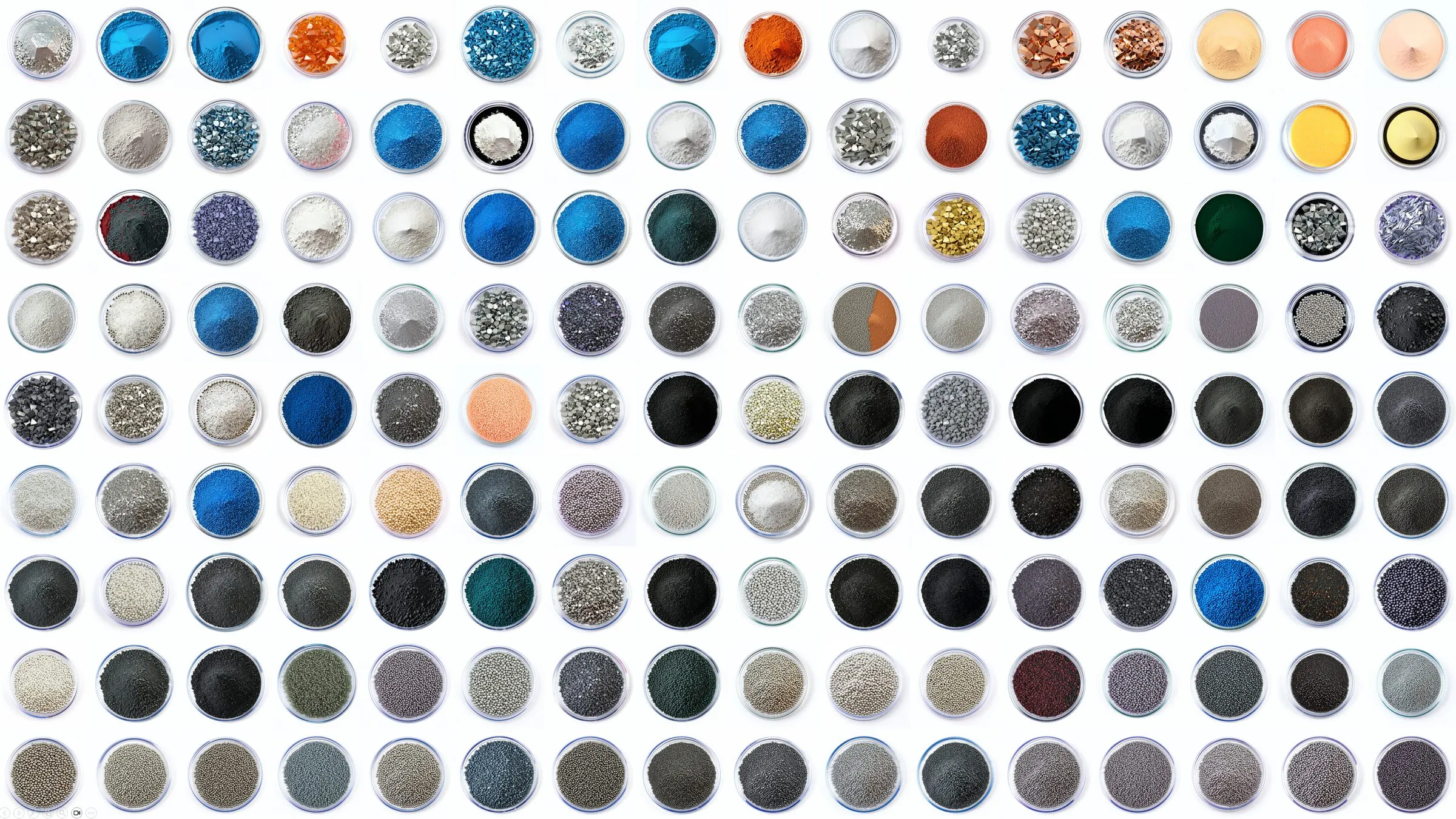
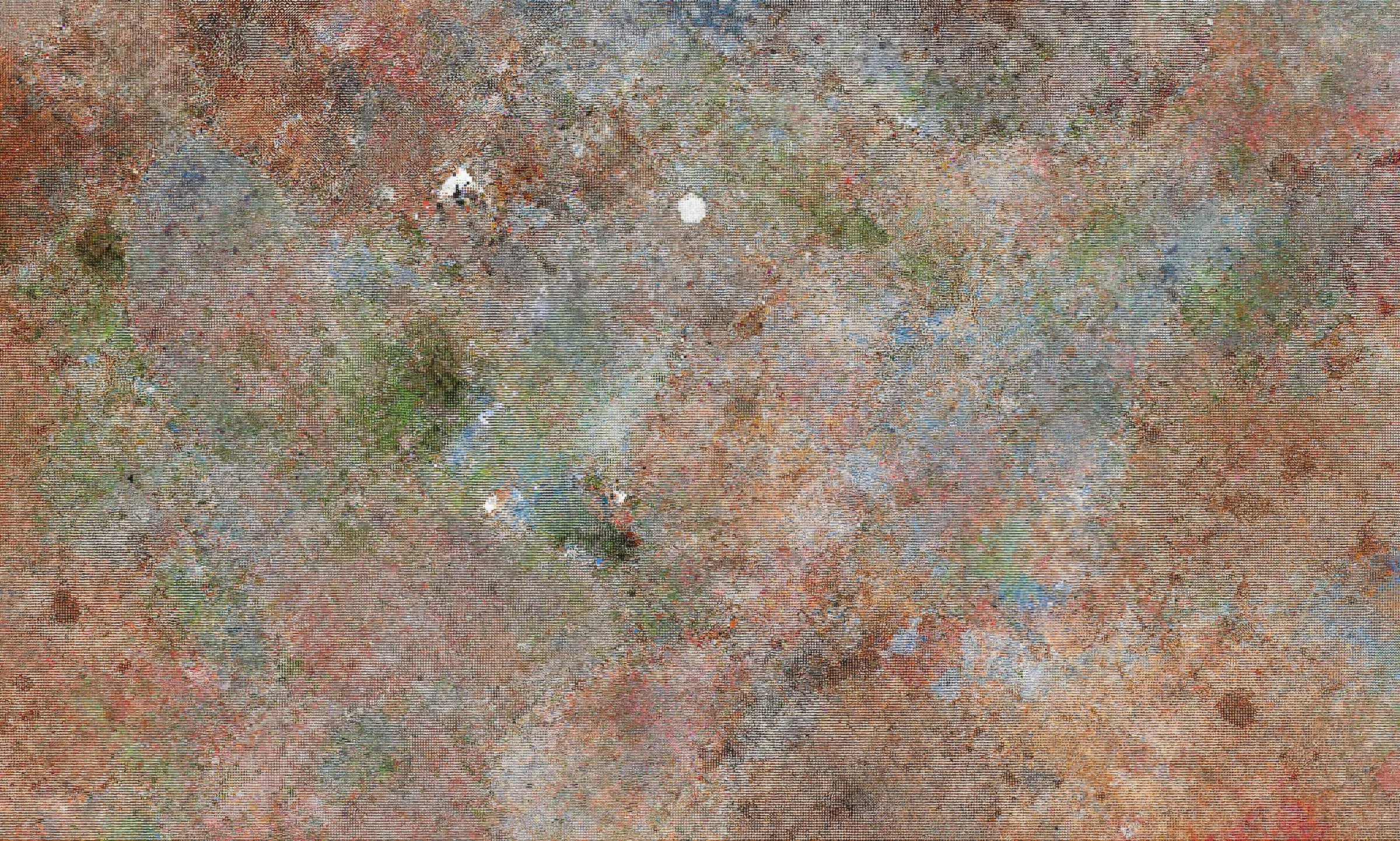
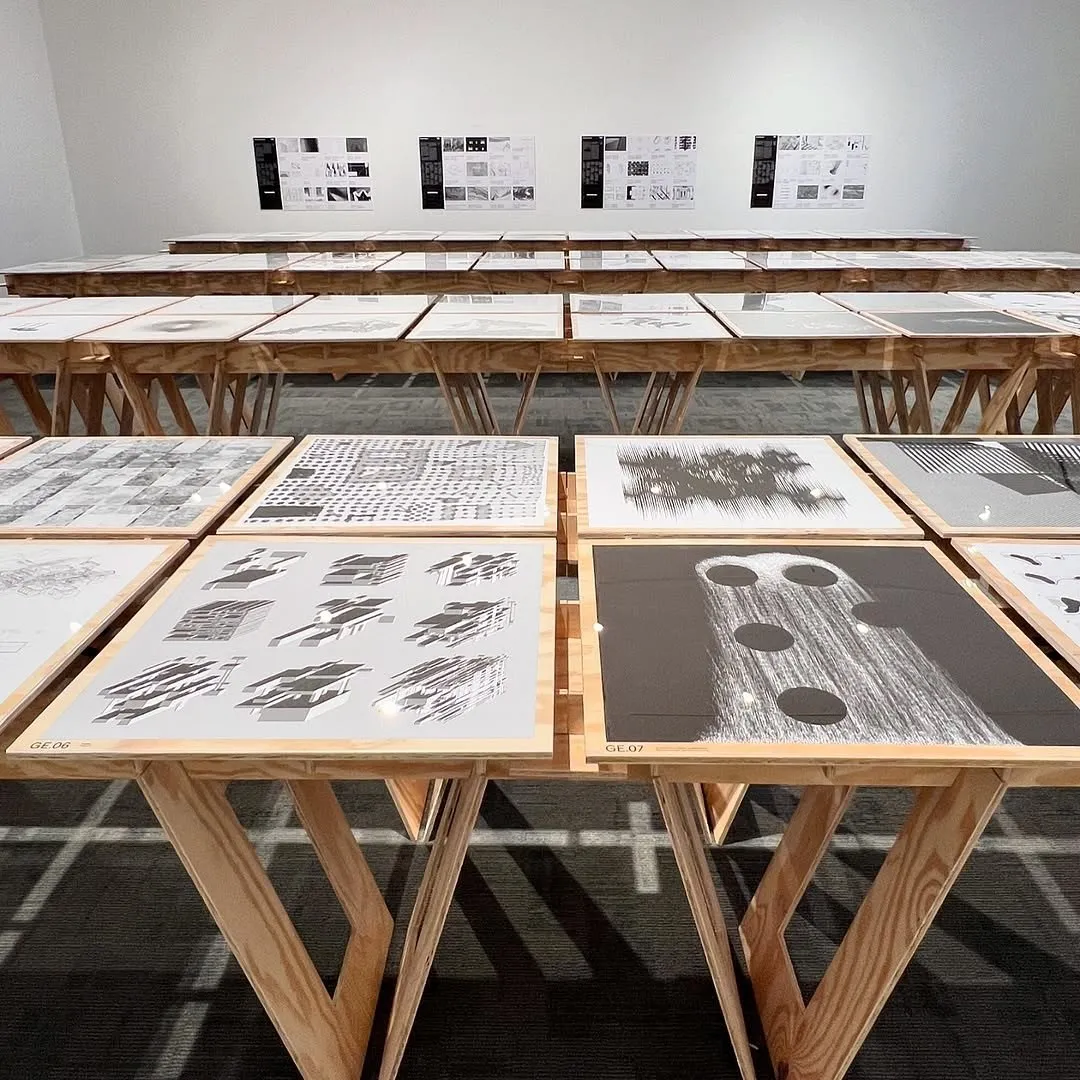
Contact sheet of the generated materials · rendered plates · Generative Matter V3 · 2026 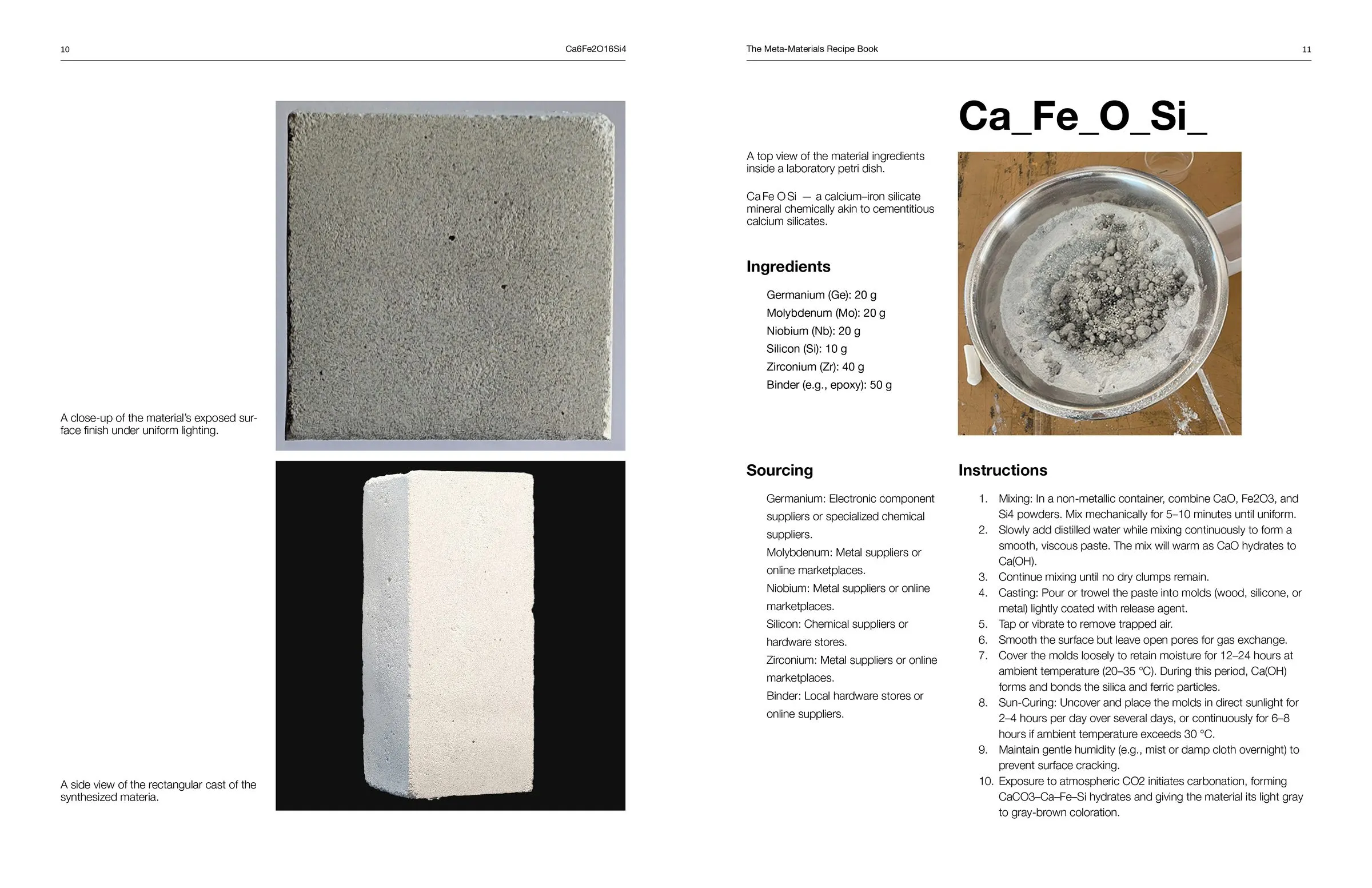
Left: physical materials samples; right: generated material recipe · 2025 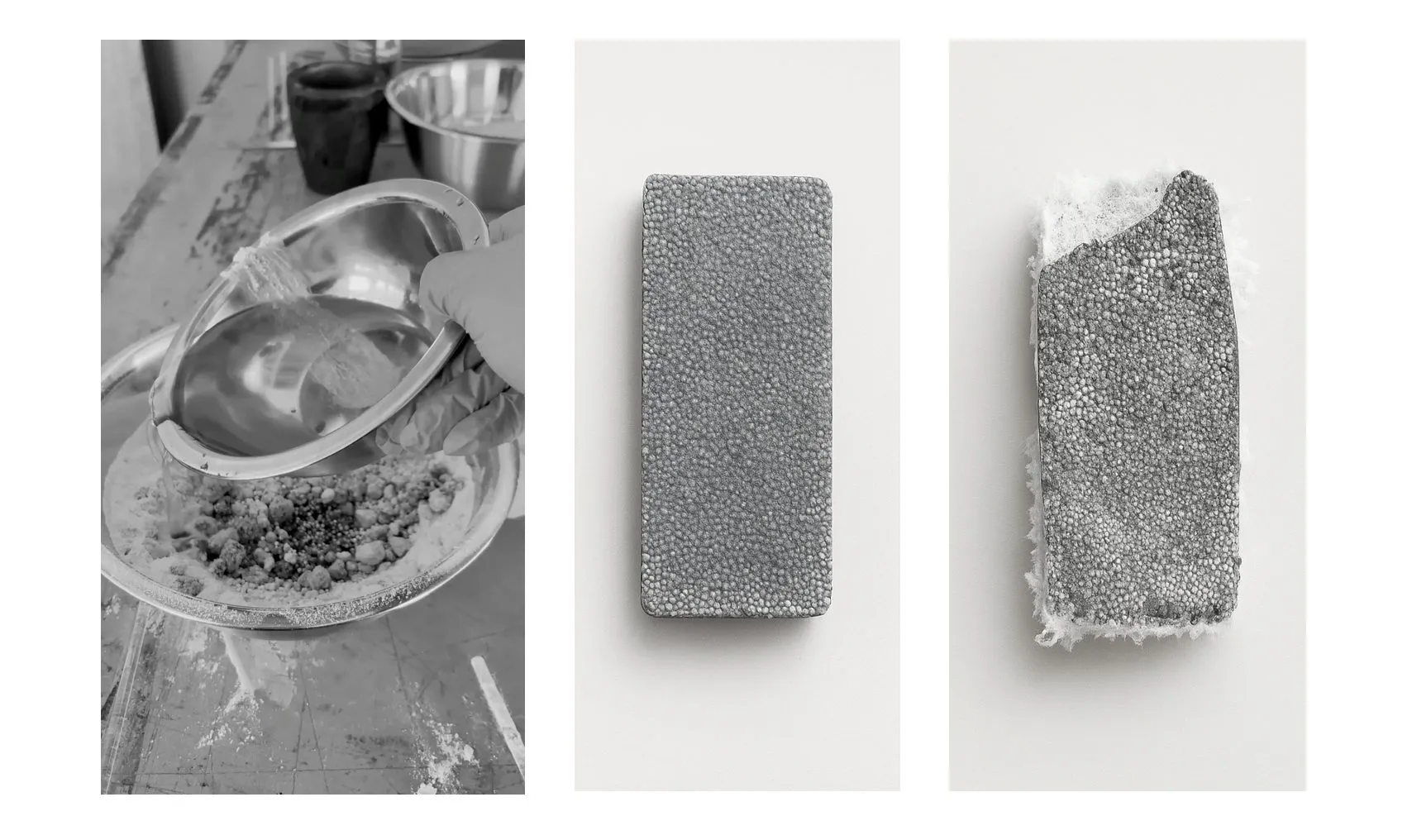
Fired sample · photograph by Catherine Graubart 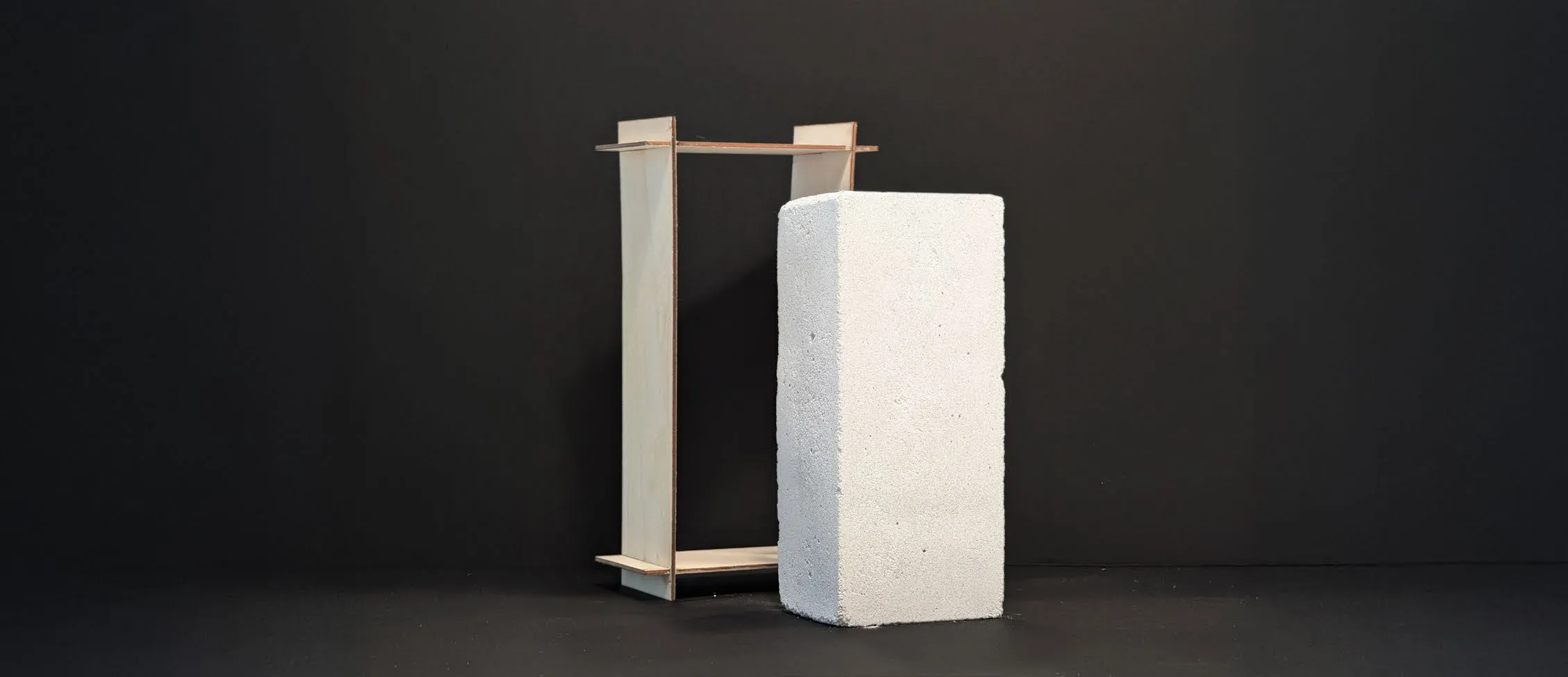
Ca₆Fe₂O₁₆Si₄ · synthetic air-dried brick, the first physical result of the pipeline · photograph by Catherine Graubart · 2025 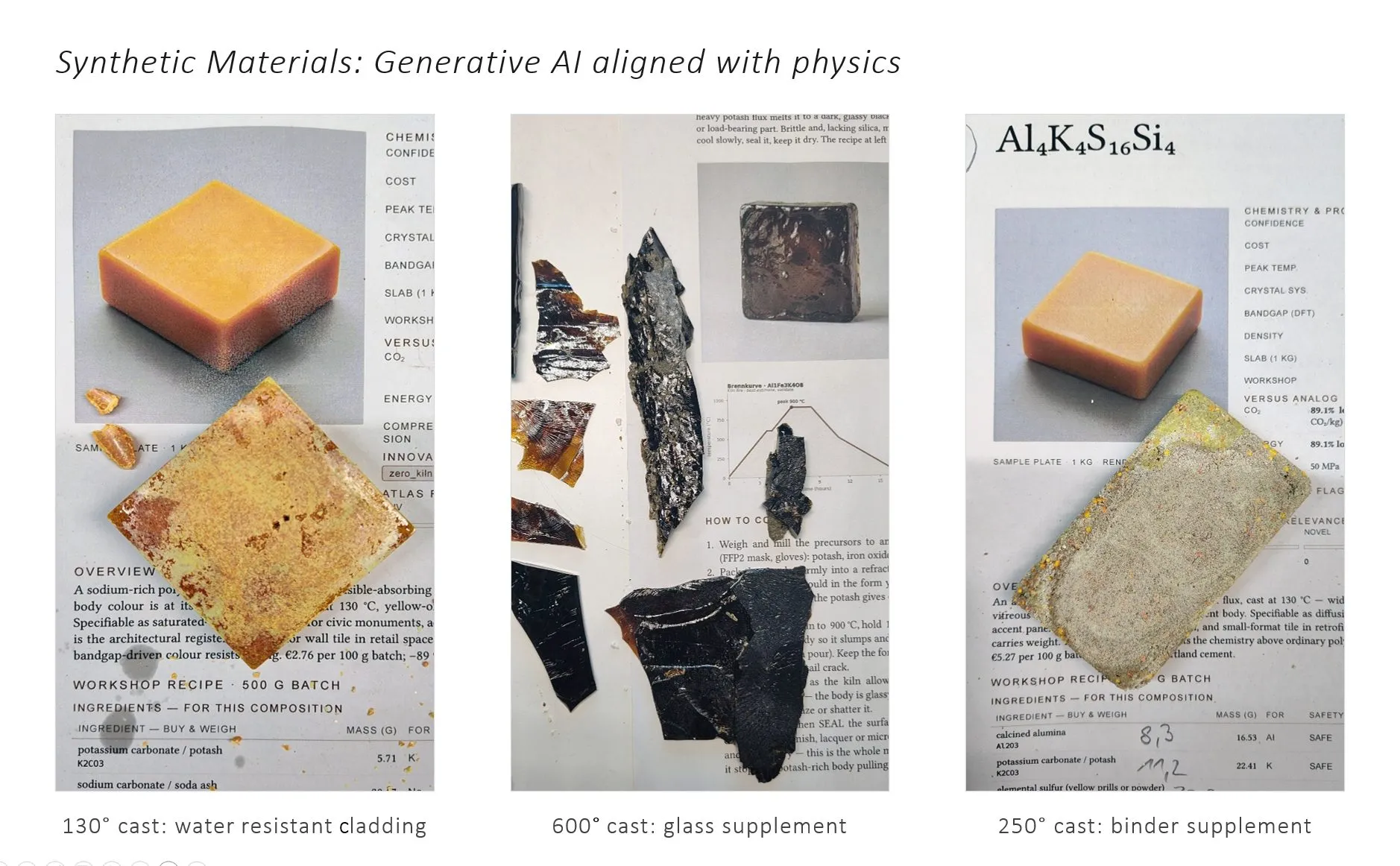
Three fired samples on their recipe pages: a 130 °C cladding cast, a 600 °C glass supplement, a 250 °C binder supplement · photograph · 2026 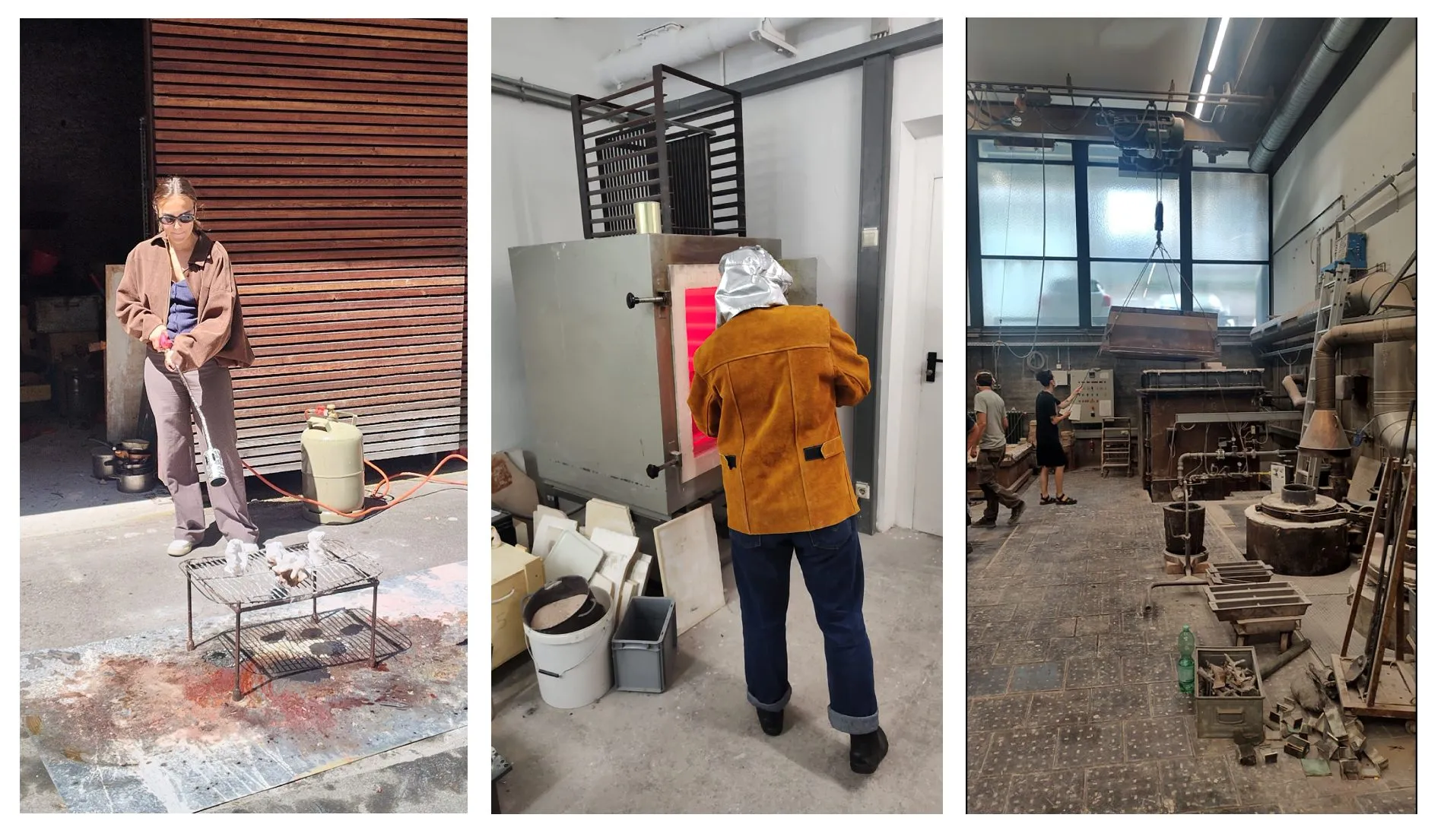
At the kiln · photographs · Academy of Fine Arts Stuttgart · 2026
Related
4 entries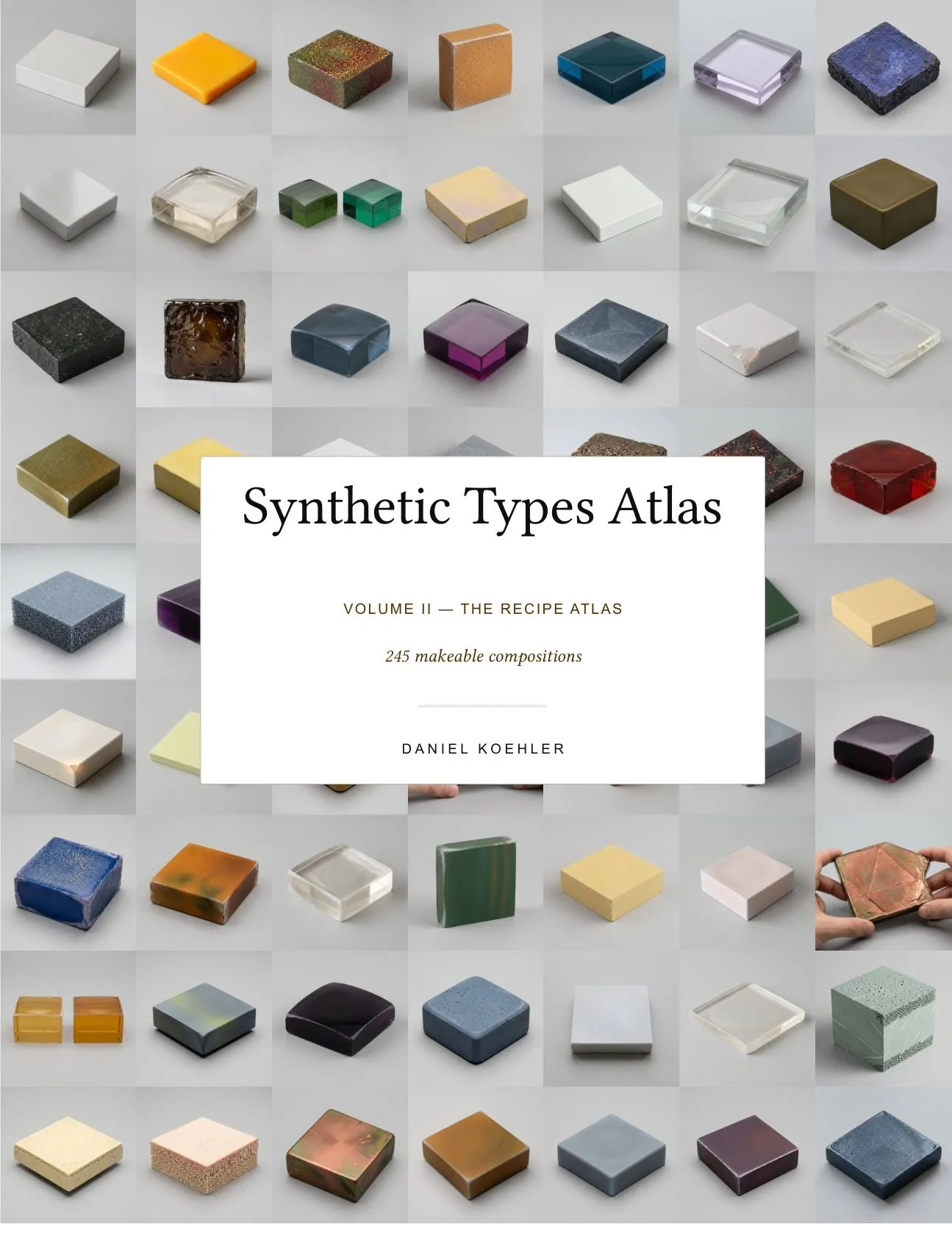
More work
34 entries