The Mereological City
2016 · publicationA reading of the works of Ludwig Hilberseimer: the first book (transcript, 2016)
- year
- 2016
- type
- publication
- credit
- Daniel Koehler
- program
- Large City Architecture
- where
- University of Innsbruck · Innsbruck
- links
- The Mereological City at transcript · DOI 10.14361/9783839434666
- no.
- 011
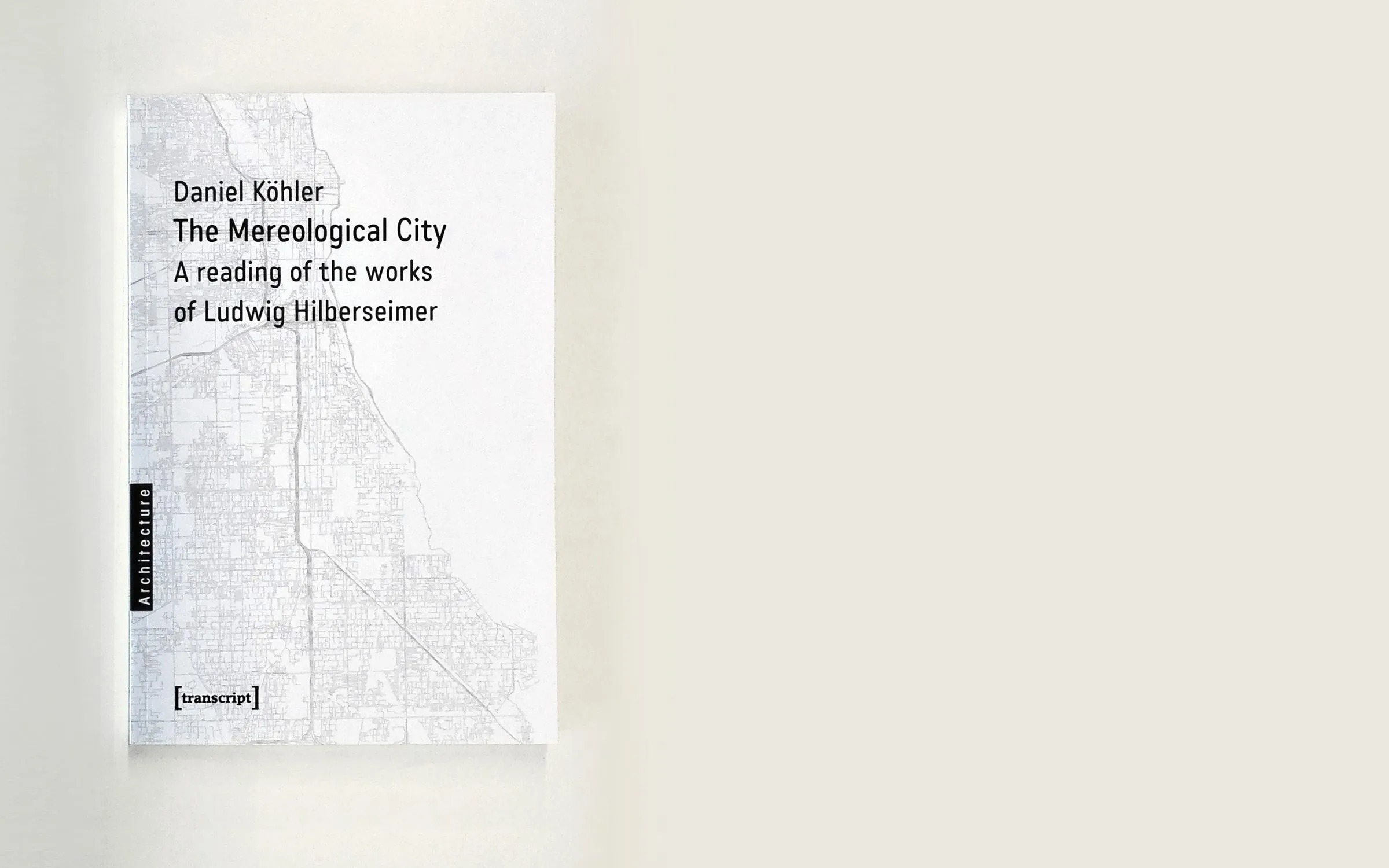
The Mereological City is my first book: published in April 2016 by transcript, in cooperation with Columbia University Press for North America, 257 pages, ISBN 978-3-8376-3466-2. It grew out of the doctoral thesis at the University of Innsbruck, passed with distinction in 2015, and kept its object: Ludwig Hilberseimer’s Großstadtarchitektur, read simply as Large City Architecture.
With that reading the description of the city changes from a notion of political intervention to one of quantitative examination. When the urban is defined as being situated in a city, urbanism can be extended with schemata for the design of the city itself: the resonance of its parts, its mereological compositions. The book departs from Hilberseimer because he developed the scheme of the design of an epoch that has to be overcome. Through his sources in the writings of the art historian Alois Riegl and the influence of Nietzsche’s philosophy at the turn of the twentieth century, the book unfolds an understanding of architectural elements that depends on particular rather than universal abstractions: the modernist schema as a form of composition from parts.
The argument runs through the digital as well. An examination of the city by its parts, based on quantitative methods, opens an interface to the technical representations of places and buildings known as Building Information Modeling, which are themselves abstractions of part relations. Those models, however, describe only the internal organization of one object and not its assembly: they advance the tectonics of built form while constricting the articulation of places to standardized part relations. Read as a condition of parts, architecture instead anticipates specific possibilities in an environment. Against the habit of judging the ecological integrity of buildings and cities by extra-disciplinary artifacts, the book asks whether there is a form of knowledge in architecture that can itself be called ecological.
Its method places a theory from the reading of designs instead of preceding design with a theory. This makes the reading independent of style or any meta-language, allows historically different architectural objects to be drawn coherently, and combines history and design so that histories can be looked at as if they were algorithmic and digital. In one sentence: the book describes architecture as a compositional tension, realized with a multiplicity of buildings, with the city itself.
The book was released at the Eco Meta Discrete Parts Symposium in Innsbruck on 23 June 2016, after presentations at reseArch in Bratislava in December 2015, at Plexus 23 at the Bartlett in London and at the Titanikum in Vilnius in February 2016, and at the Graz Architecture Lecture Day at TU Graz in May 2016. The design work behind it, the Vertical City reliefs, the Chicago drawings and the House of Frames, has its own entries.
Related
4 entries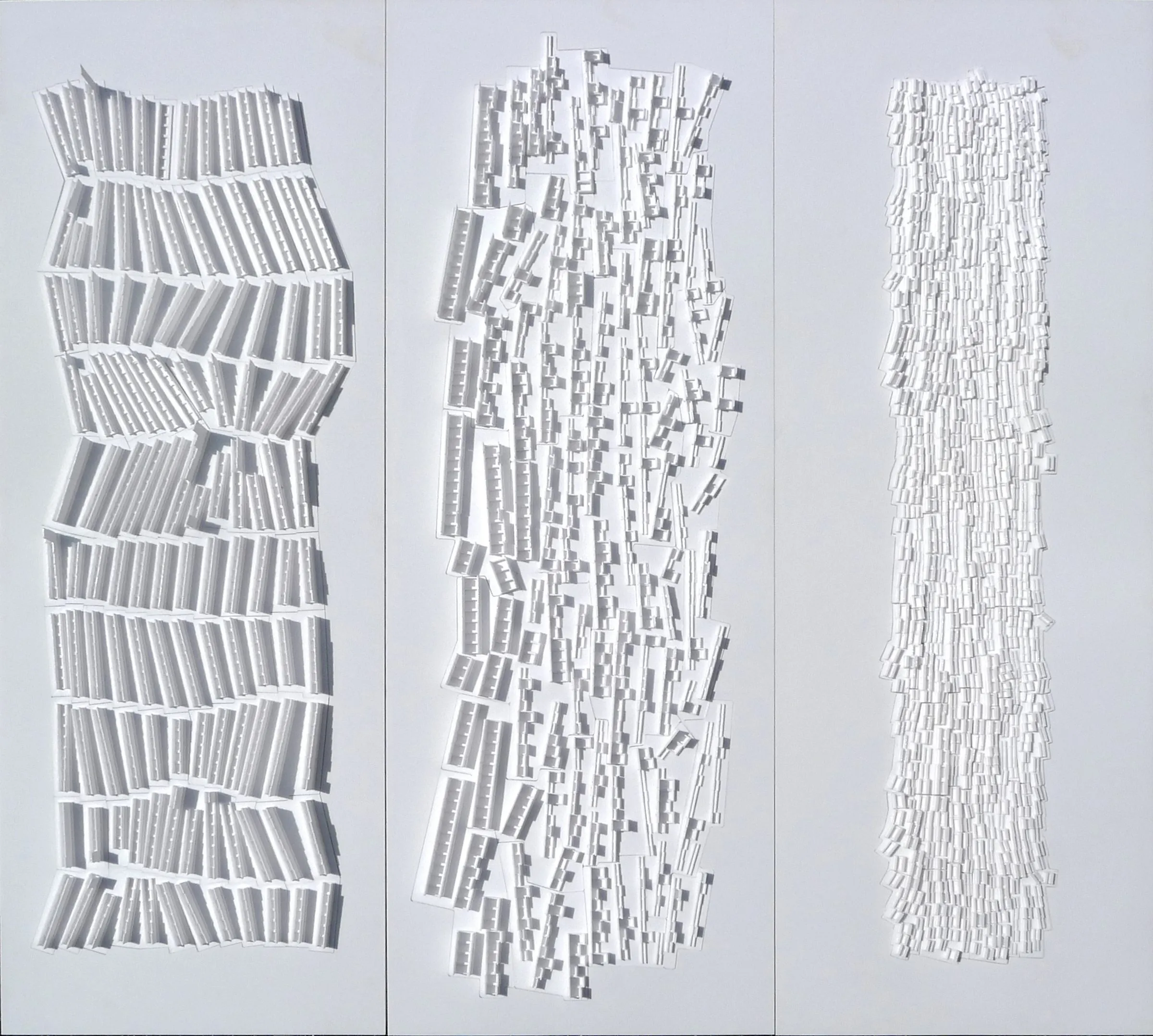
More writing
4 entries