lab-eds
§ programs · No. 03 · 2023–2026
menu
§ program 03

Synthetic Grounds

2023–2026

How computational models become answerable to the physical world, and the physical world legible to computation. Reciprocal grounding as method, evaluation environments as instrument, composition as the architect's contribution.
led by Daniel Koehler

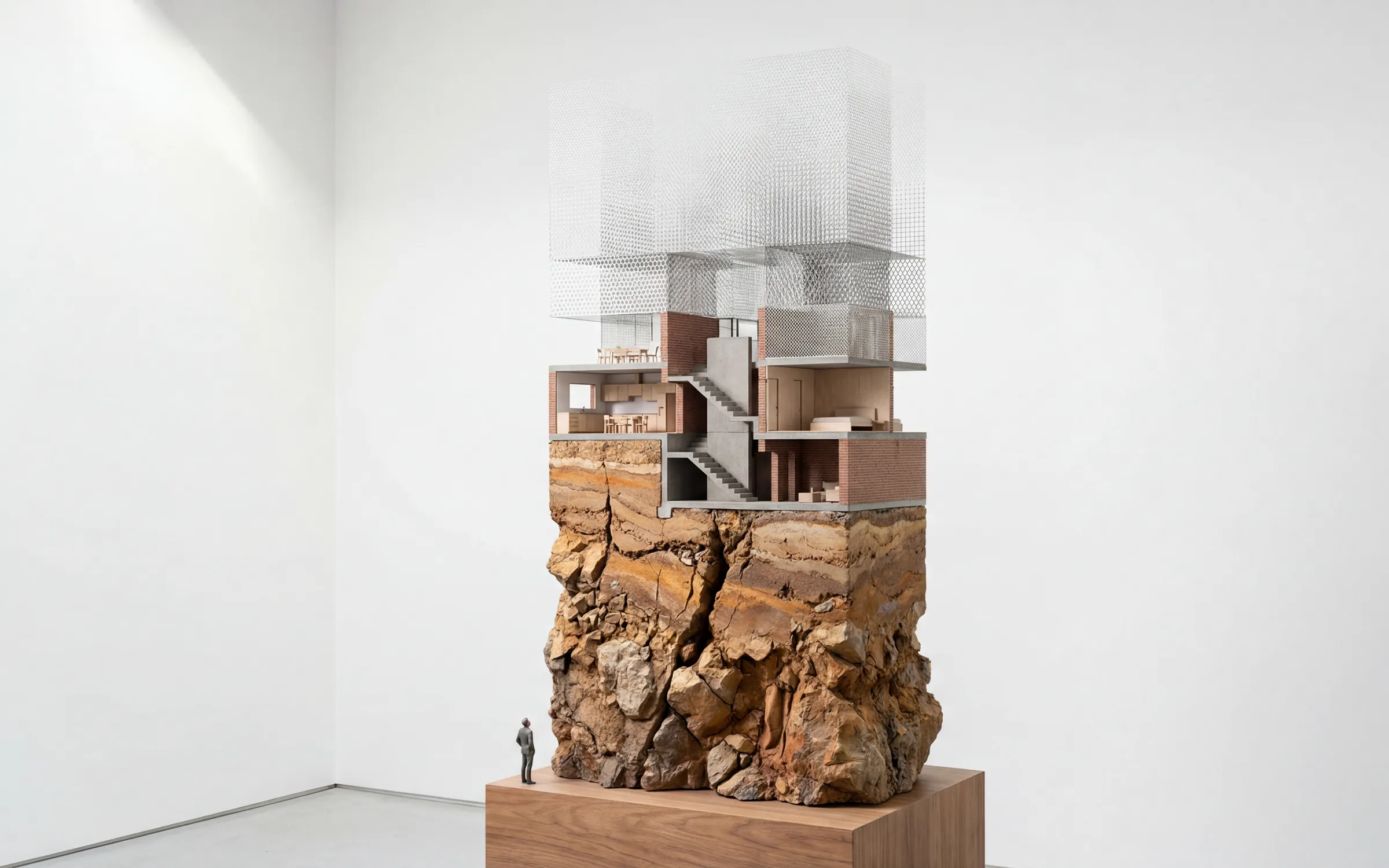
A model of a rock mass carrying a glass house, standing in a gallery

One question governs this program: what ground does generative AI’s new measurement capacity constitute for architecture? Frontier models are trained against verifiable rewards, and the method works wherever a verifier exists. Building codes are machine-checkable rule systems, building information models answer exact queries, energy and carbon have simulators and arithmetic. Where such an oracle exists, grounding works; the materials research of this lab lives on exactly that closure.

But the qualities that make buildings and cities worth caring about have no single verifier: the life of a street, the values communities attach to places, the fit of a type to a way of living. The program’s method for these cases is reciprocal grounding, developed in the chapter of that name (Wiley, 2026) and in Compositional Intelligence: no single signal is the verifier; the mutual resistance of several independent signals is. Where measurements converge, something closure-like appears; where they diverge, the divergence is the finding.

The program’s public artifacts are the theoretical frame in those two books, the Synthetic Grounds studio at UT Austin, in which generative tools are checked against site, code, physics, and carbon rather than against plausibility, and the lectures of 2025 and 2026 under this title. The datasets and atlases of the Latent Earth program are its evidence: they show what a model regresses to when nothing grounds it.

plates

Gallery

3 plates · click to enlarge
  • Synthetic ground drawing (1)
    Synthetic ground drawing (1)
1 / 3 · Synthetic ground drawing (1)
entries

Work

5 entries
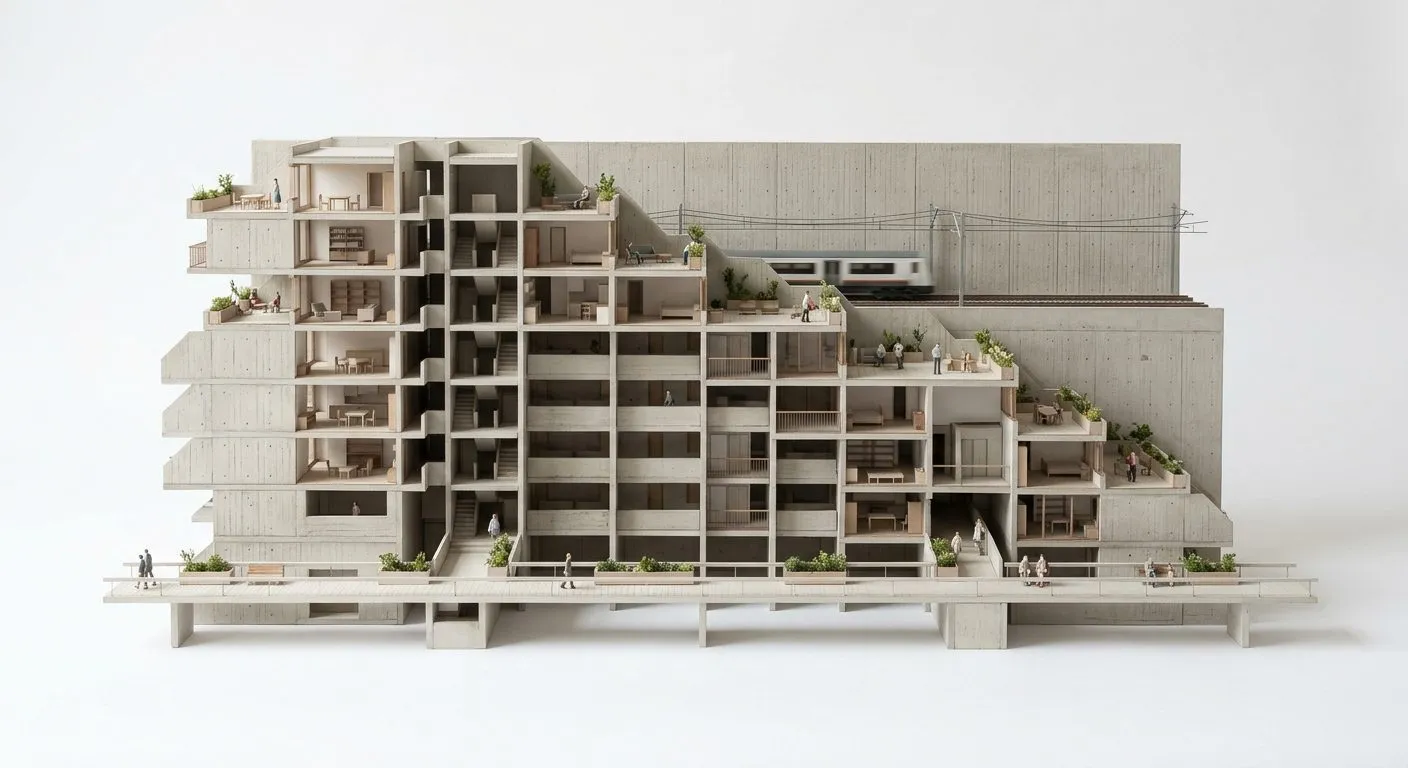
A generated model photograph of a stepped housing section with planted terraces, cut open to show its rooms
2026 · research · The University of Texas at Austin
Daylight as Form
245 case studies of how architecture has shaped daylight in the dense city, from the Roman atrium to the winter garden, classified by formal family and culture of light and browsable as a slide library: the research catalogue of a UT Austin design studio.
D. Koehler
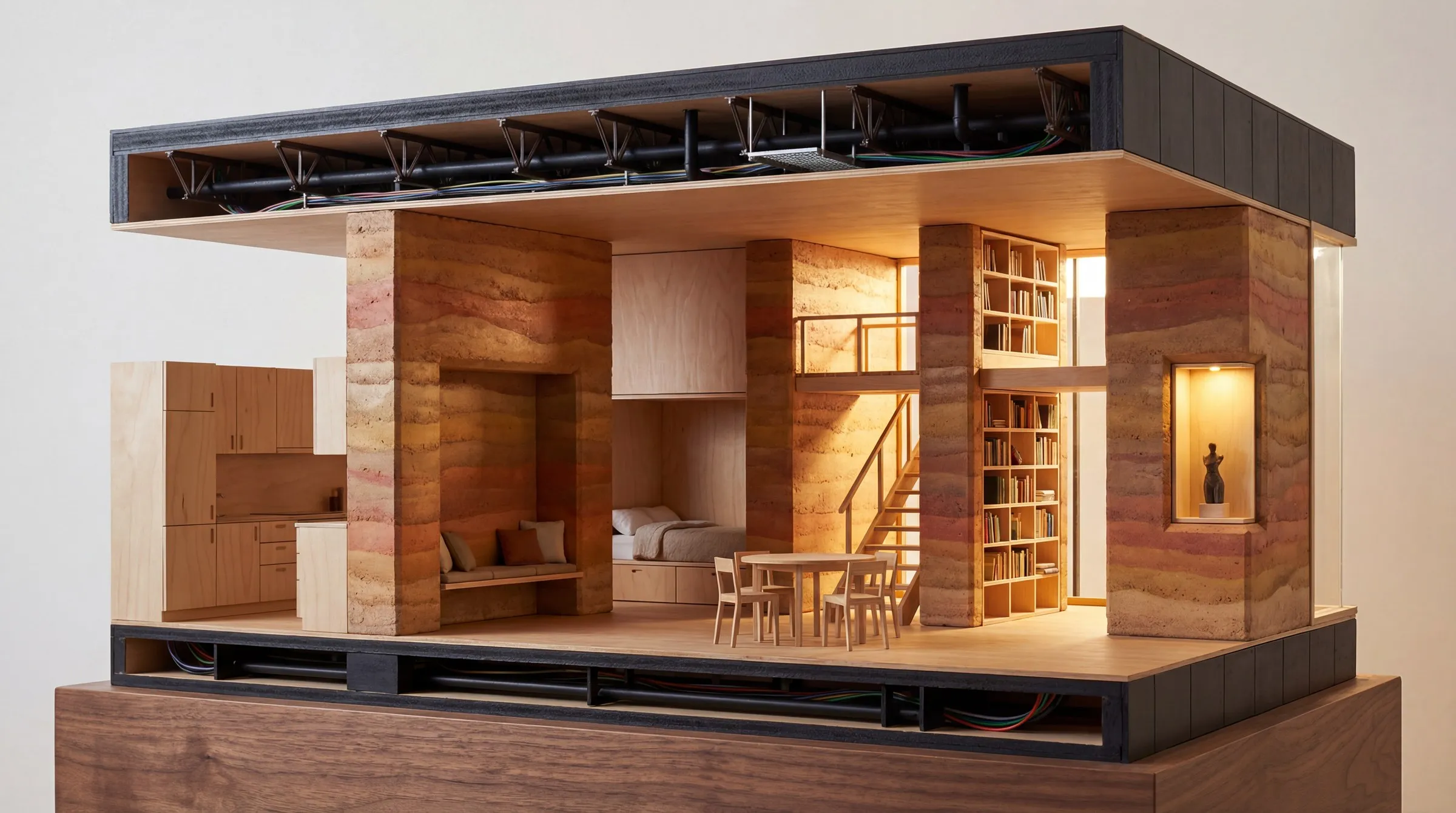
Sectional model view of the Gießhof: warm inhabited rooms in rammed earth alternating with dark truss floors
2026 · research · Stuttgart
The Gießhof
A projective design study for Stuttgart: urban soil read as ore, iron cast on site, clay rammed into piers, and a cooperative that owns the result. Six grounds, one section, six institutions; developed alongside the studio Synthetic Types, 2026.
D. Koehler
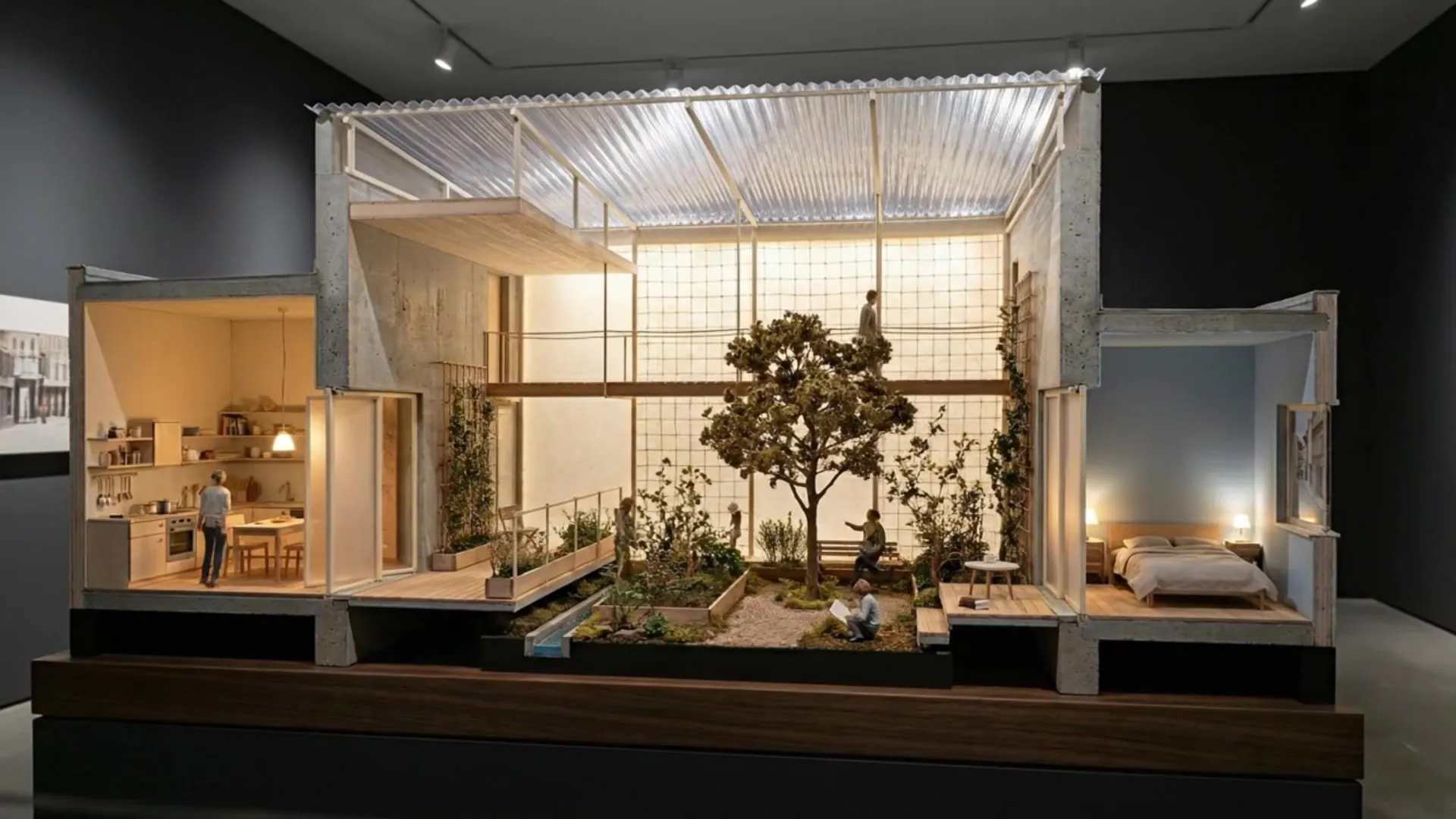
A section model of a house with a translucent roof, a tree in the courtyard and rooms on two levels
2026 · research · Stuttgart
Cellulose
A design study for a housing type made from what a block throws away: a container-sized mill turns kitchen scraps, cuttings and paper into rope, tubes and a translucent membrane that robots stretch over the gaps, courtyards and roofs of an existing block. Film and images generated; 2026.
D. Koehler
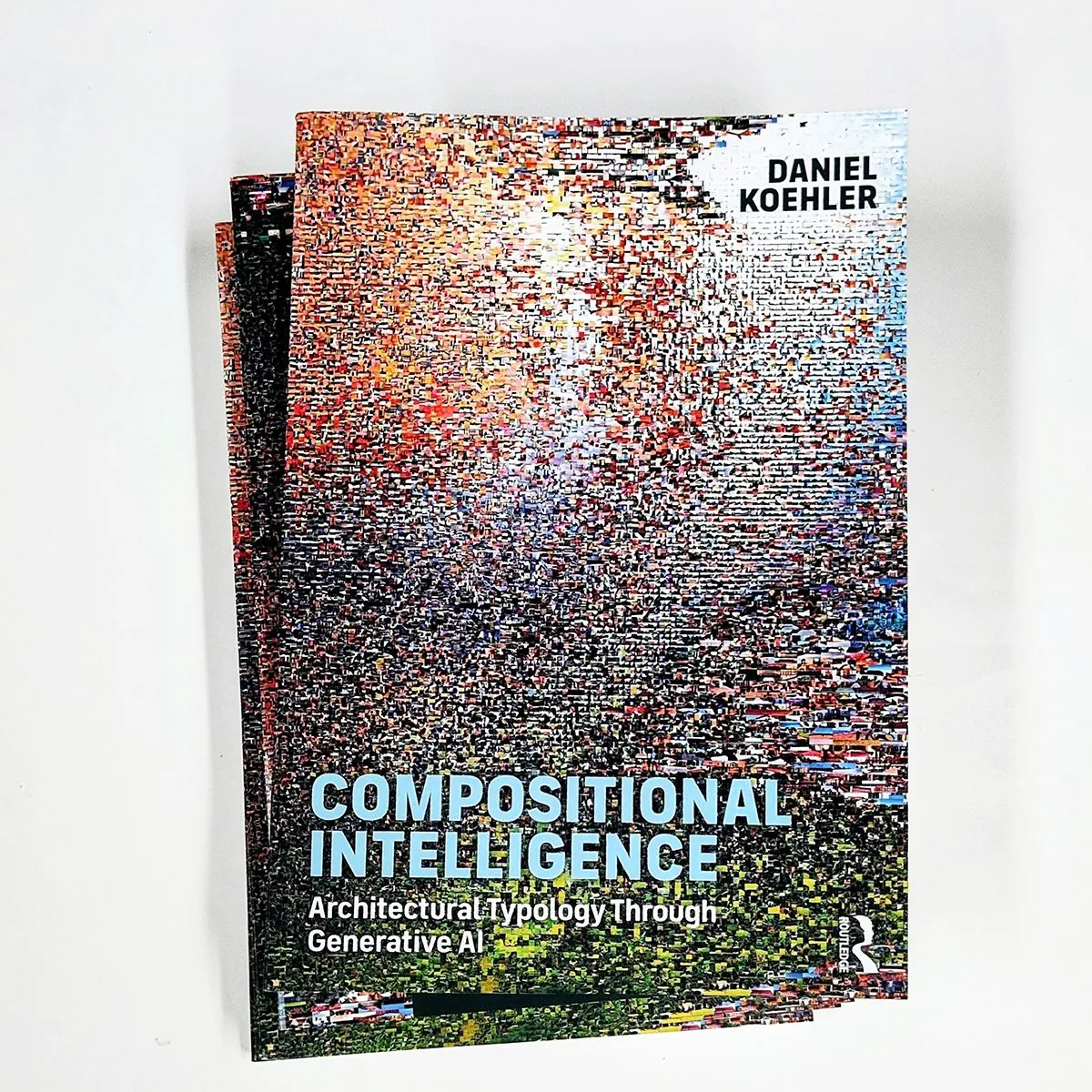
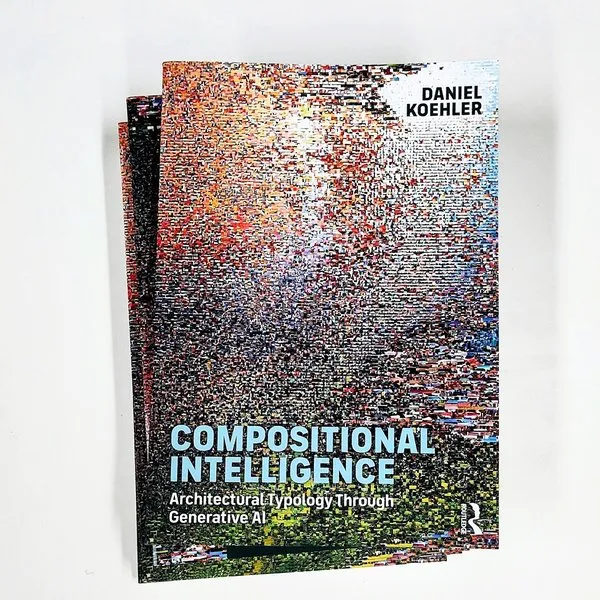
Two copies of the book Compositional Intelligence, the cover a mosaic of thousands of tiny generated city images
2026 · publication
Compositional Intelligence
A monograph on generative AI and architectural typology, with a foreword by Mario Carpo. How large models compress the built world into types, and how architects can compose with those compressions rather than consume their images.
D. Koehler
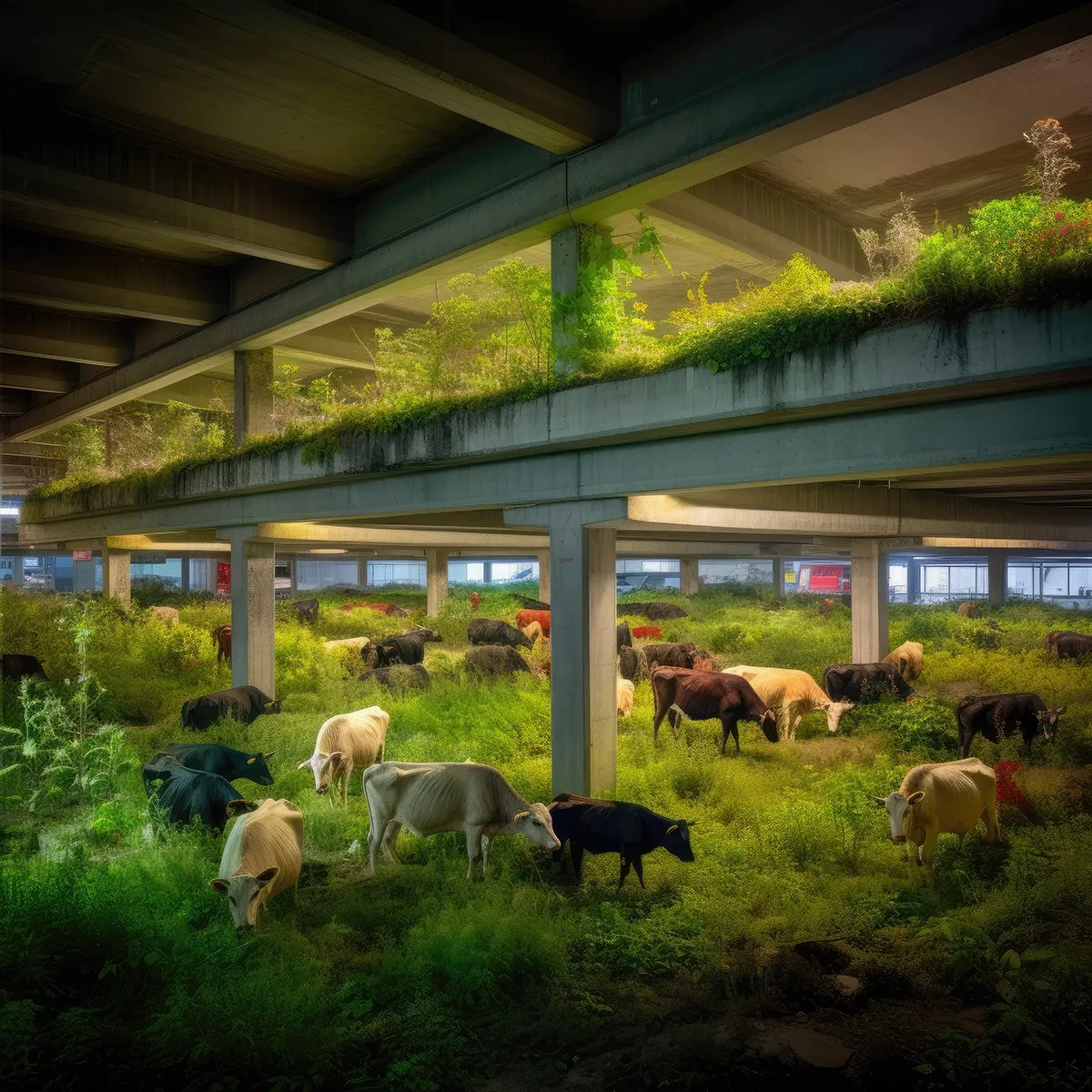
A generated photograph of cows grazing between planters on the deck of a concrete parking garage
2023 · exhibition · Berlin
Carbon Hinterlands
What about Cows: the future of parking and other carbon hinterlands. An image series on the parking garages that autonomous vehicles will leave behind, returned to farms, gardens and pasture, shown in Solarpunk Futures at P61, Berlin, 2023.
D. Koehler
writing

Publications

2 items
2026 · book
Daniel Koehler · Routledge, London · Foreword by Mario Carpo. 275 pages, peer reviewed.
2026 · chapter
Reciprocal Groundings: Human-AI Companionship and the Synthesis of Vernacular Intelligence
Daniel Koehler · Artificial Intelligence and Ecological Design: Frameworks and Methods for Deep Vernacularity, ed. Shermeen Yousif and Vernelle A. A. Noel · Wiley, Hoboken