lab-eds
§ work · No. 053 · 2026
menu
§ work · No. 053

Cellulose

2026 · research

A synthetic housing type spun from a neighbourhood's organic waste

year
2026
type
research
credit
Daniel Koehler, 2026; companion to the Gießhof. All views and the film are generated images; nothing shown is built.
program
Synthetic Types, Synthetic Grounds
where
Stuttgart
no.
053
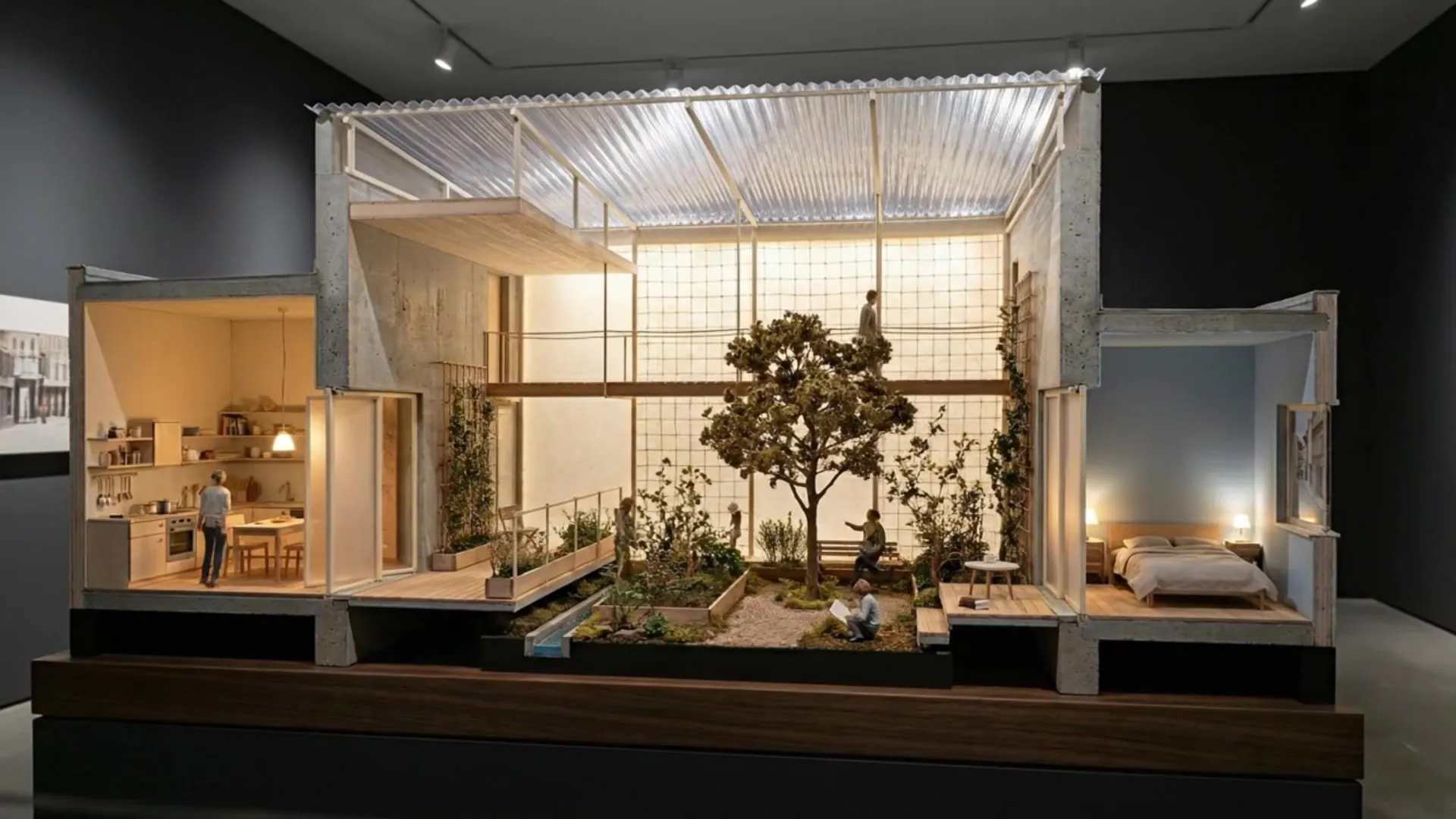
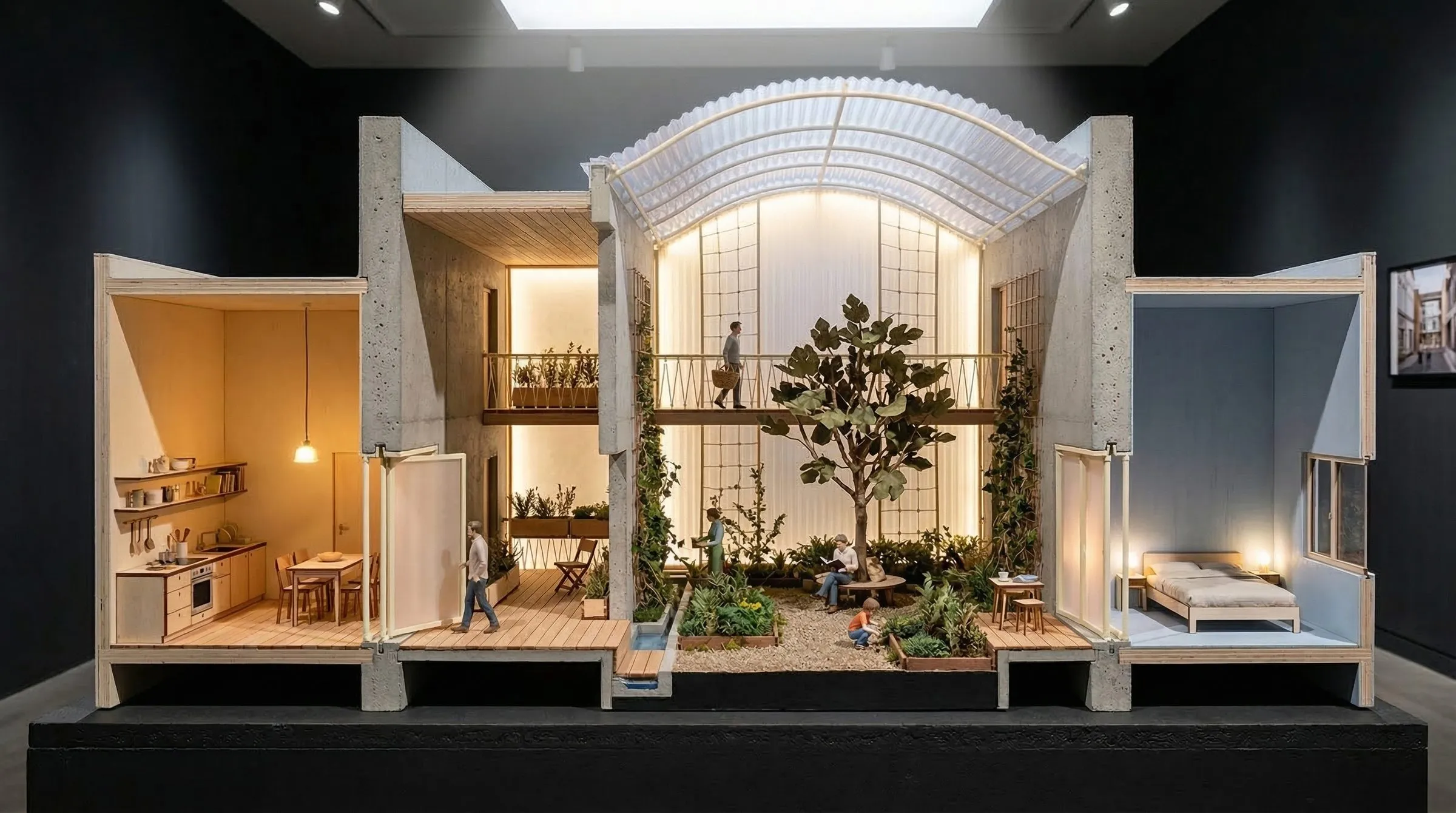
A section model of a house with a translucent roof, a tree in the courtyard and rooms on two levels
Cellulose: a courtyard under a membrane roof · frame from the film · 2026

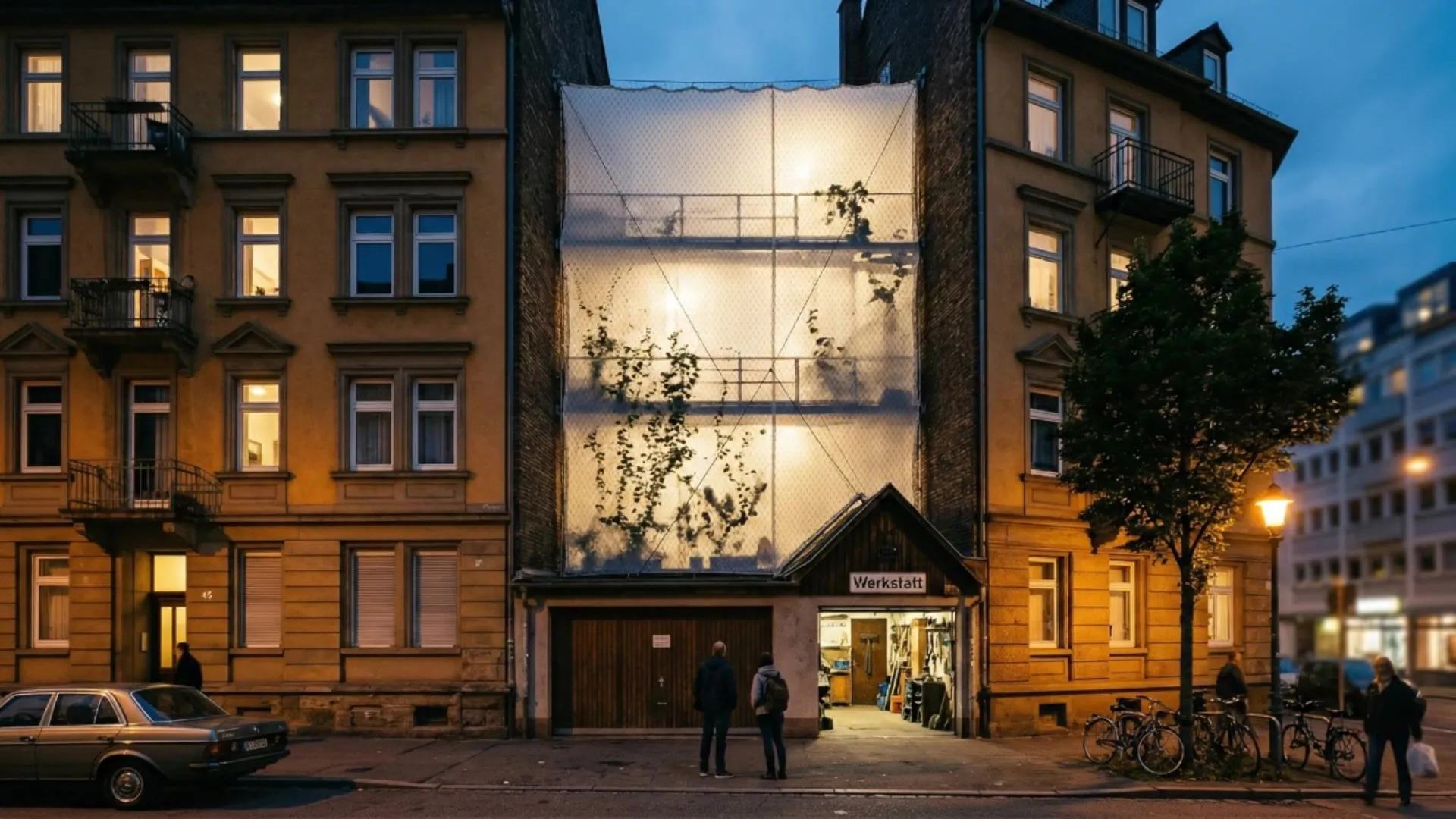
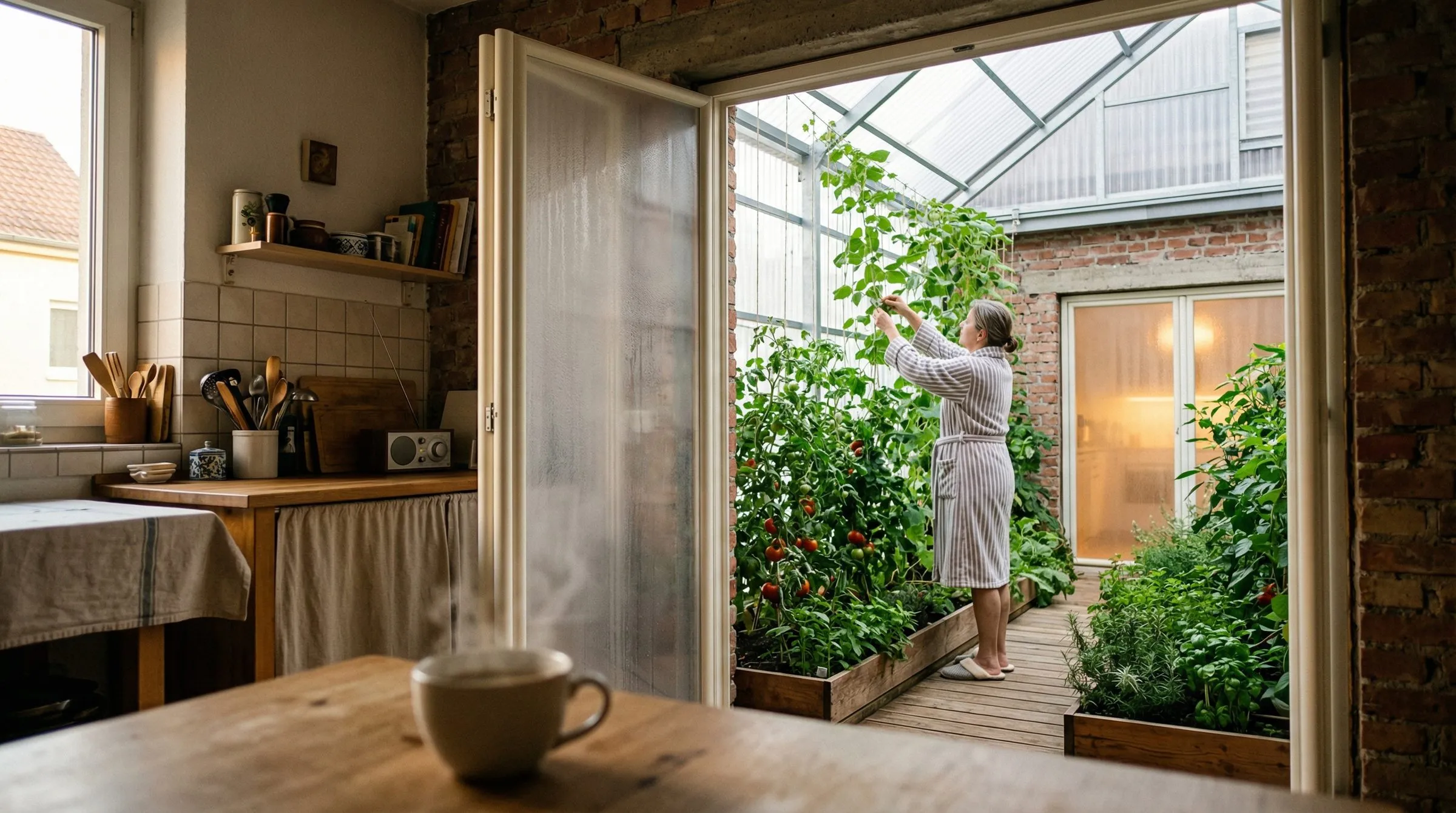
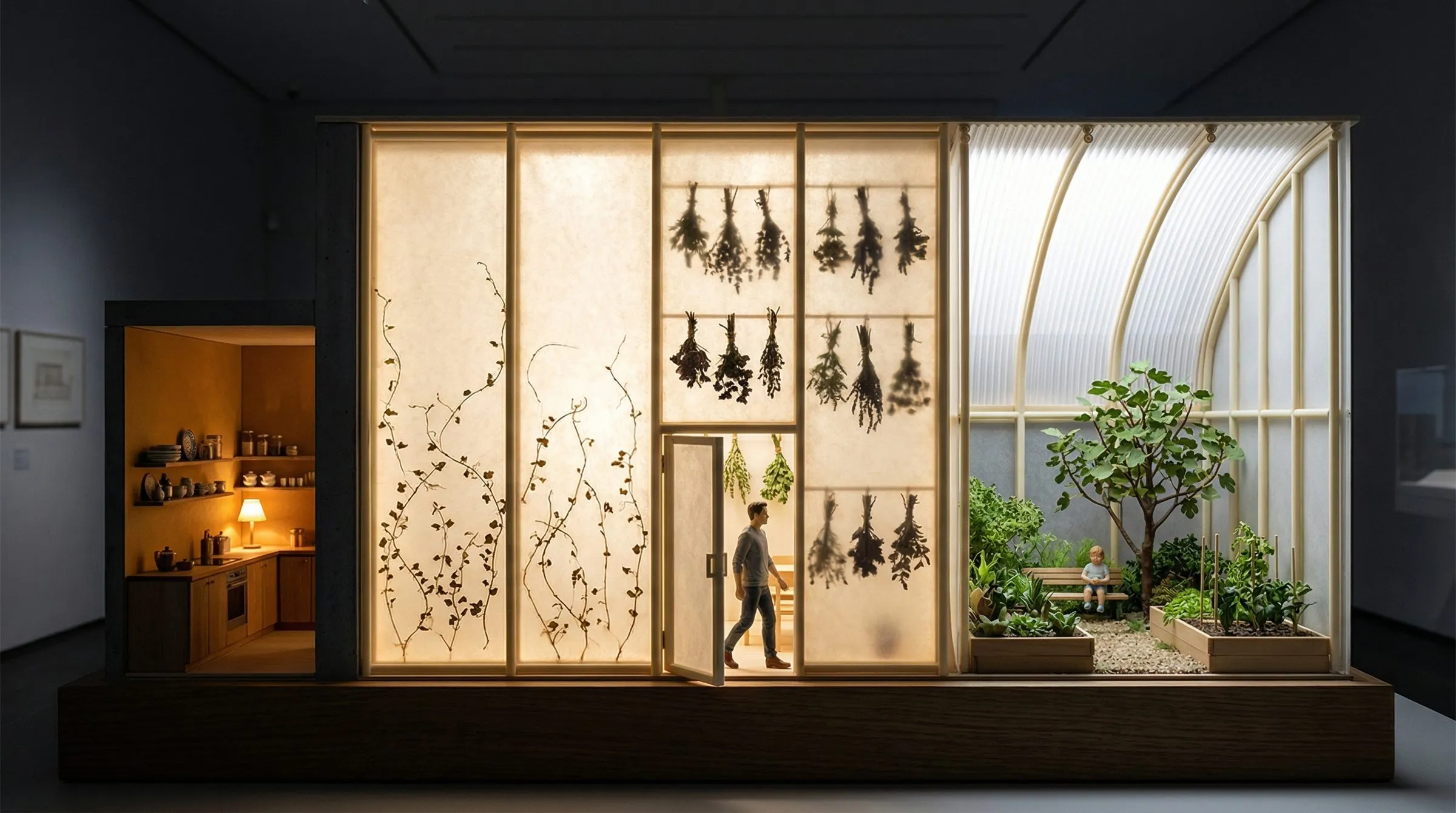
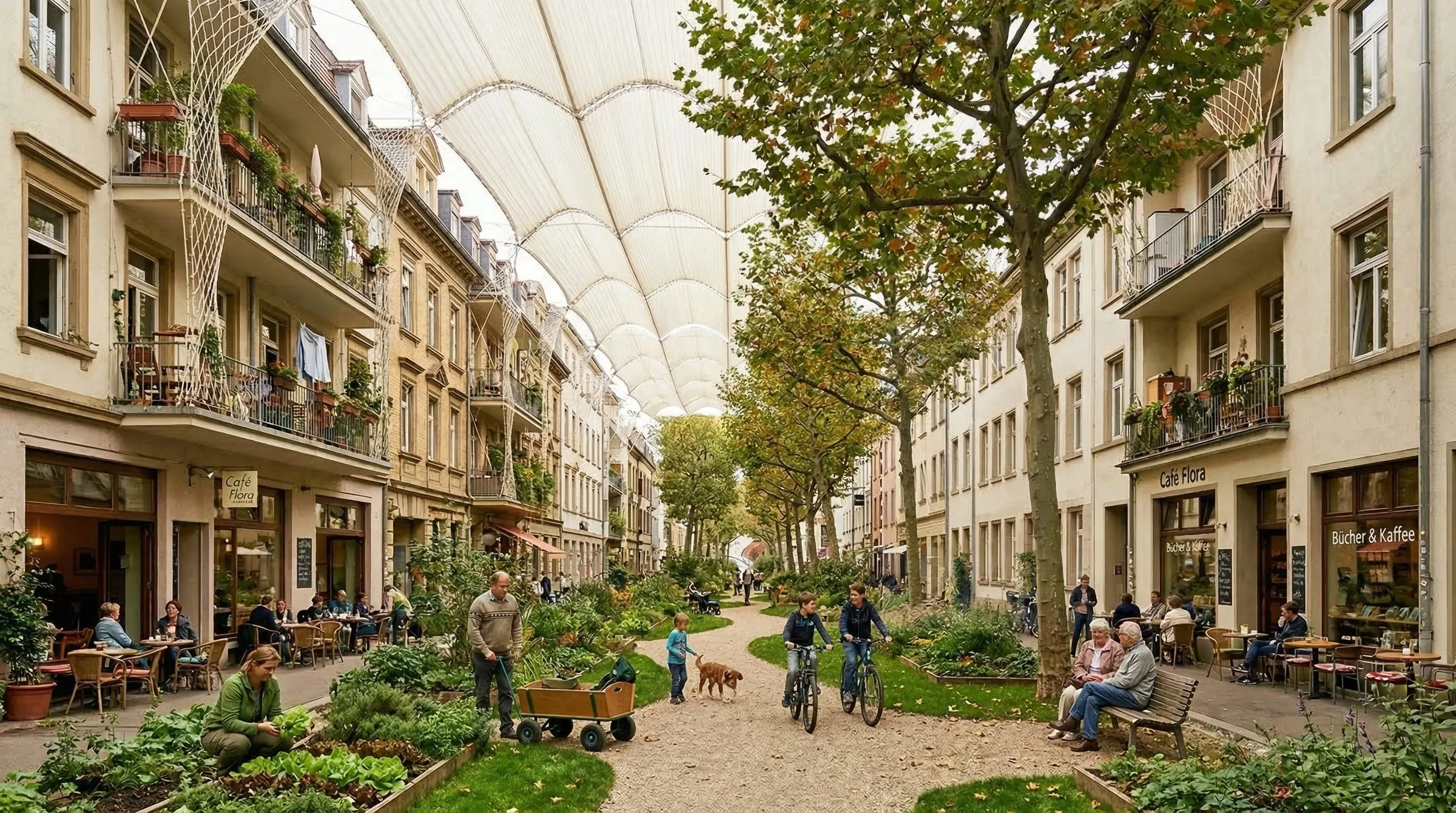
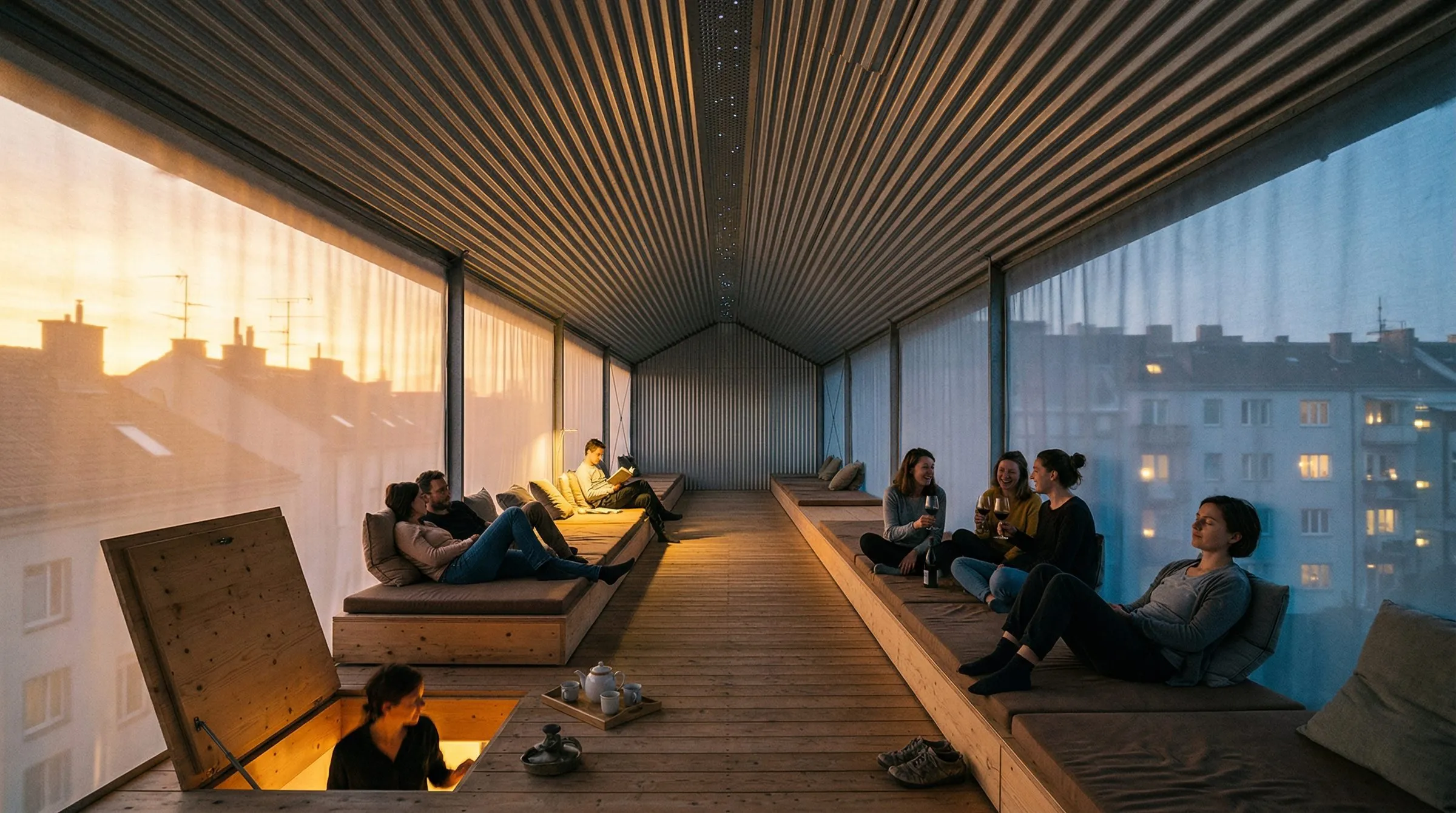
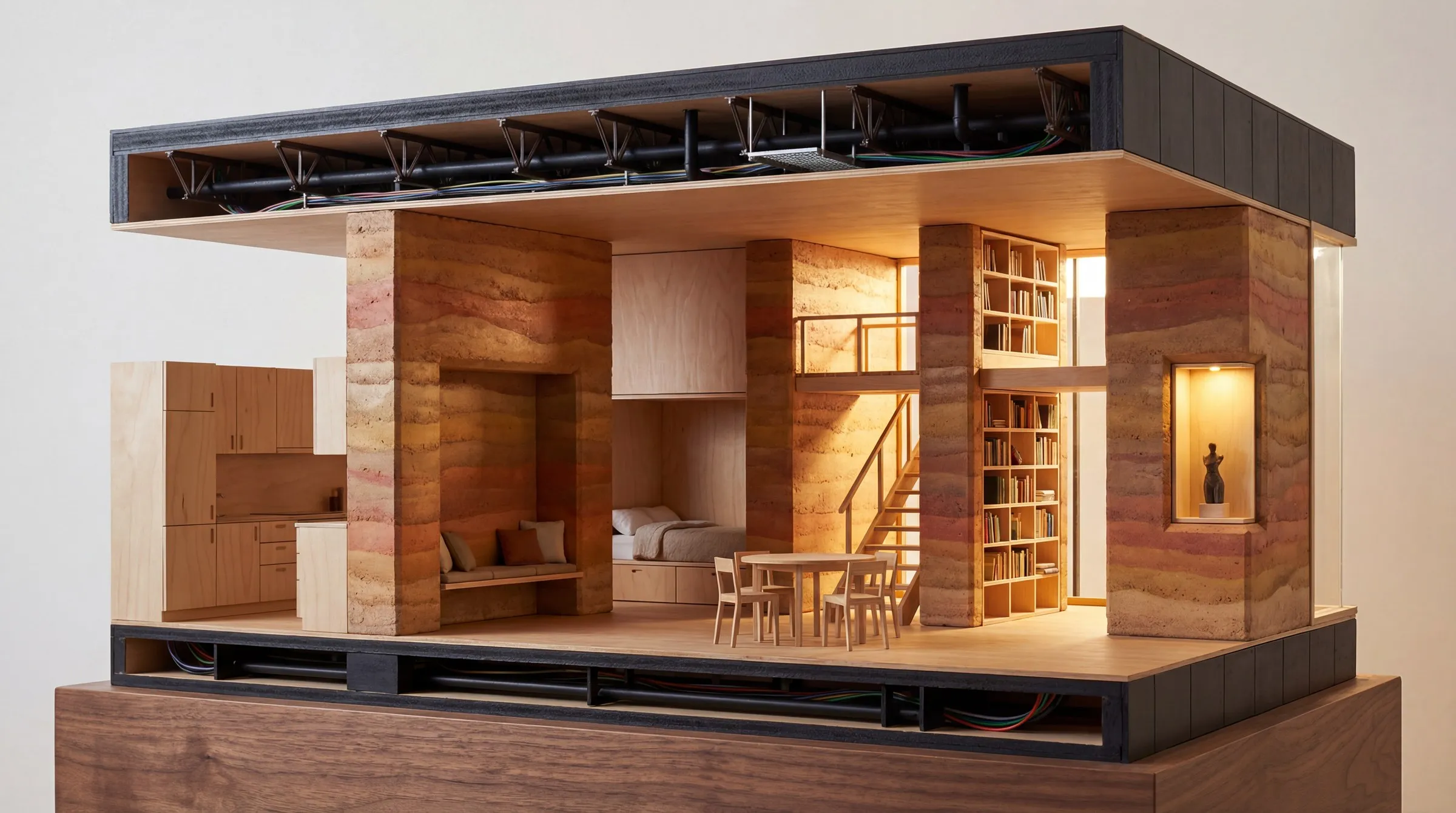
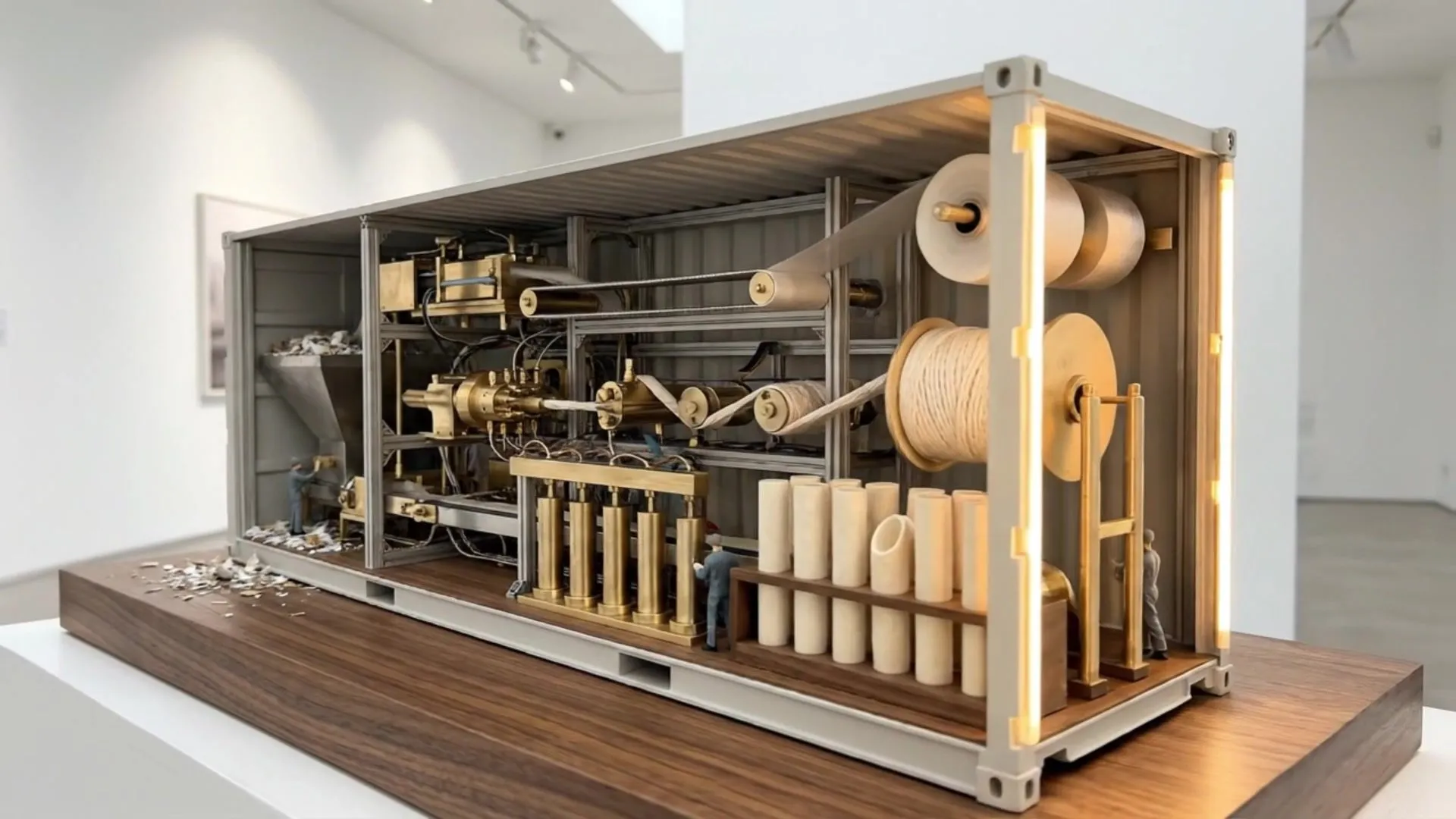
Cellulose asks what a city could build from what it throws away. Where the Gießhof reads the ground as ore, Cellulose reads the organic waste of a block, kitchen scraps, garden cuttings and paper, as a fibre source. In the study a mobile mill the size of a shipping container turns that biomass into cellulose and the cellulose into three products: rope, paper tubes and a translucent membrane. The membrane is the building material. Robots stretch it over the gaps and courtyards of an existing block, span it as a roof between the fire walls of neighbouring houses and hang it as a curtain in front of a shop. Under it the block gains a second, brighter layer of rooms: greenhouse kitchens in which tomatoes grow beside the sink, lofts under a paper sky, rope nets on which children climb and neighbours sit, paper vaults over the courtyard. The old building keeps its bricks. It gains a lighter second body that can be spun again from the same bins when it wears out.

The material research behind the film began in the Synthetic Types studio in Stuttgart. Cellulose nanofibre films rival steel by weight and approach glass in transparency, and the feedstock exists in municipal quantities: green waste, food waste and waste paper are collected separately in every German city. What does not exist is the link between the bin and the building, a facility that turns mixed organic waste into an architectural membrane. The film pictures that missing link as a neighbourhood machine and the housing type it would produce. One limit of the material shapes the whole type: the membrane fears water, so it is always a roof or a wall and never a floor, and the floors are nets. Every image and the film are generated; nothing shown is built.

Cellulose: the film, 2 min · 2026
plates

Gallery

7 plates · click to enlarge
  • A street of old houses at night; the gap between two of them is filled by a glowing translucent building
    The gap between two fire walls, filled with a membrane house · frame from the film · 2026
1 / 7 · The gap between two fire walls, filled with a membrane house · frame from the film · 2026
adjoining sheets

Related

3 entries
§ work

More work

34 entries
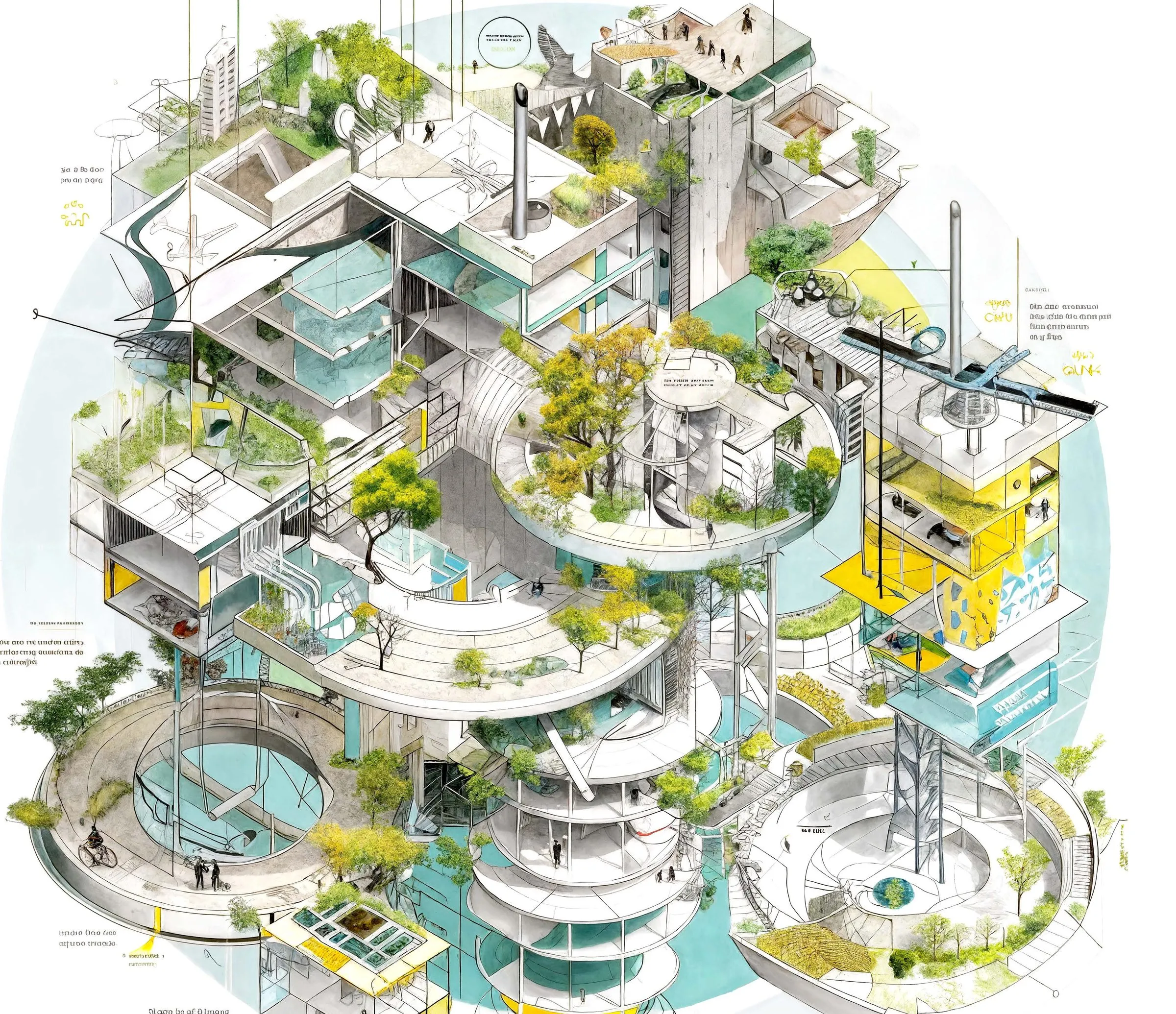
A large circular isometric drawing of an open building complex with terraces, water basins, trees and technical towers
2026 · research · University of Innsbruck
Between the Parts
Doctoral dissertation, University of Innsbruck, defended May 2026: a research-by-design methodology that develops the ecological void as a spatial type, tested from composition to building to city.
R. Navasaityte
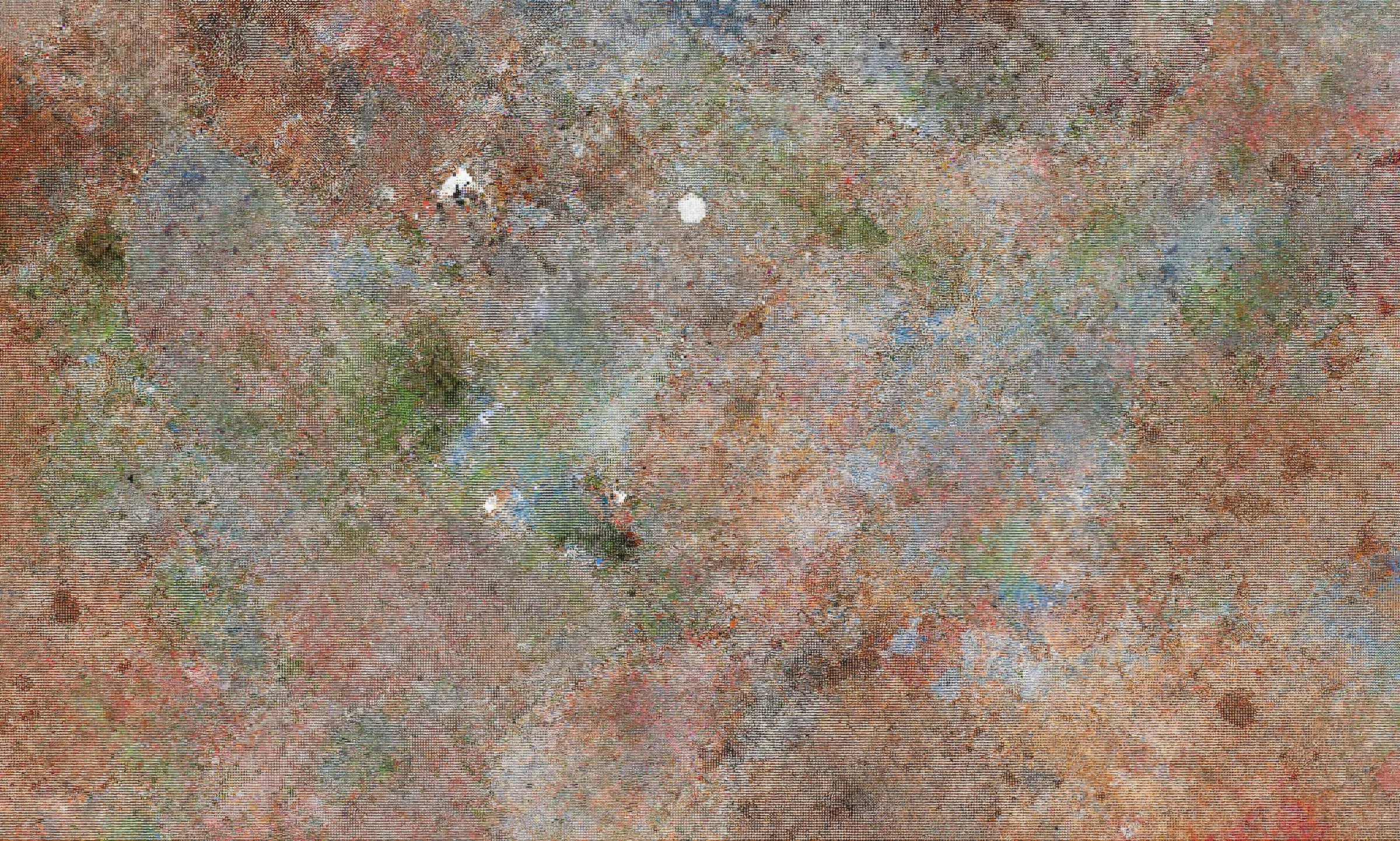
The Latent Earth wall: 160,000 generated images arranged as one continuous mosaic whose colour fields emerge from the sort
2026 · research · Frankfurt
Latent Earth
200,000 images of 40,000 places on Earth, each rendered by one image model from nothing but the place's name and sorted by the model's own internal representations. Not a picture of the world but a probe of the model.
D. Koehler
A grid of windowless building types across US cities, sorted by type
2025 · research · Austin
Dark Spots
About one per cent of US residential buildings have rooms without adequate daylight; because those buildings are large apartment complexes, roughly one household in ten lives with one. Maps and plans made with the University Tenants Union, Austin, 2025.
D. Koehler
A generated building type grown from rock, soil and vegetation, with rooms cut into the strata
2025 · exhibition · Brooklyn
Geological Types
A four-minute film of building types grown rather than drawn: terraces cut into strata, rooms hollowed from the block, gardens on every ledge. Generated with Stable Diffusion 3 Medium and animated with Midjourney; shown in Transductions at Pratt Institute, Brooklyn, 2025.
D. Koehler
The drawing installed in the Drawing Codes exhibition
2025 · exhibition
Complicit Code
A drawing shown in Drawing Codes: instead of beginning with setbacks and height limits, the buildings are designed through consent and complicity governed by blockchain algorithms. Mashburn Gallery, Houston, and Richardson Memorial Hall, New Orleans, 2025.
D. Koehler
The projector display of Architecture After AI in the Mebane Gallery
2023–2024 · exhibition
Architecture After AI
The first overview of generative AI in architecture: more than 2,000 works by 80 architects and artists, shown at the Mebane Gallery in Austin in 2023 and twice in Boulder in 2024 and 2025. Curated with Kory Bieg and Clay Odom.
D. Koehler
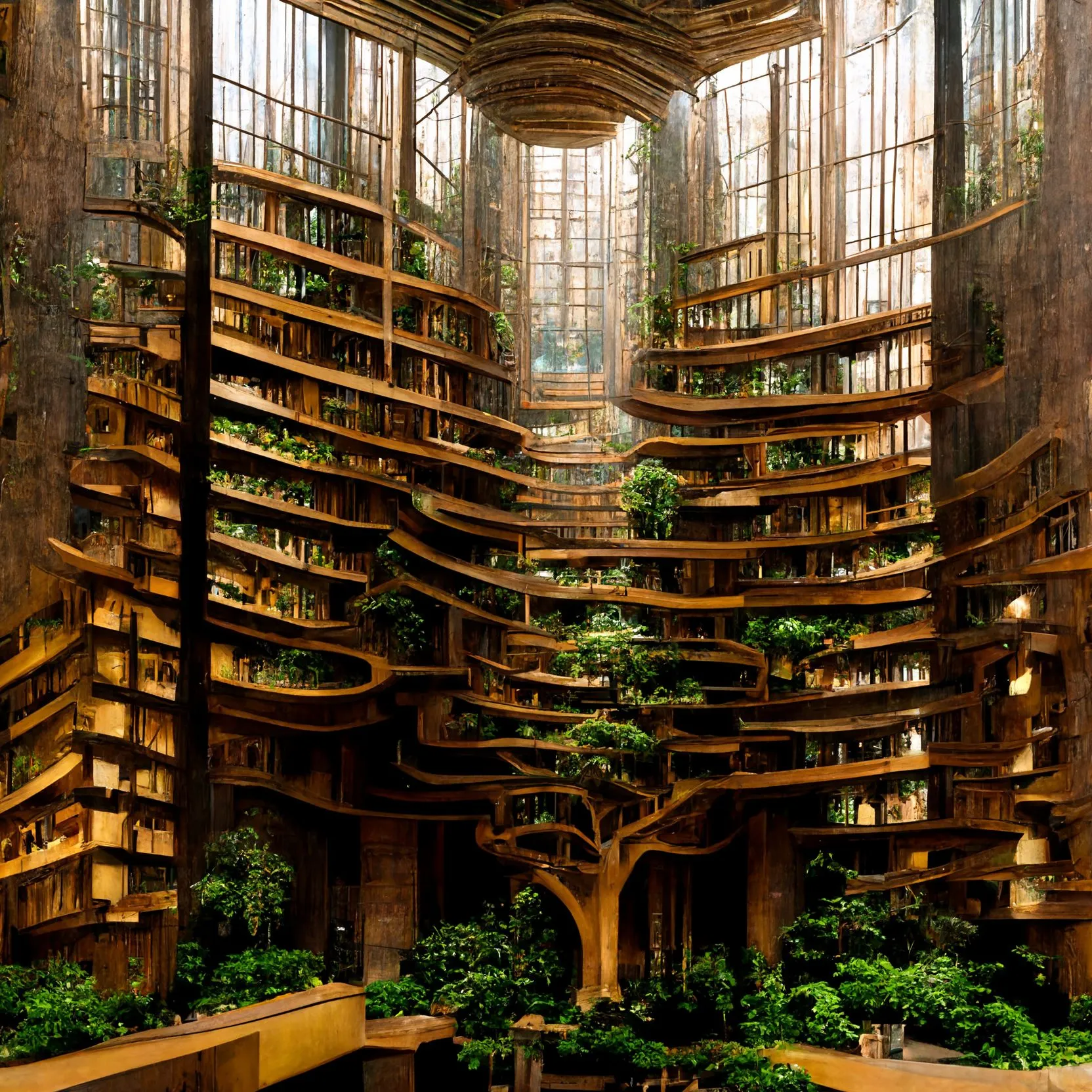
A generated view of a vast atrium in which a living tree trunk rises through tiers of curved timber galleries under a skylight
2023–2024 · research
Foresting Architecture
Can cities be built with living trees? An advanced design studio at UT Austin and an image series that explore an architecture literally forested with trees; the series won the Metaverse Architecture and Design Award 2023.
D. Koehler
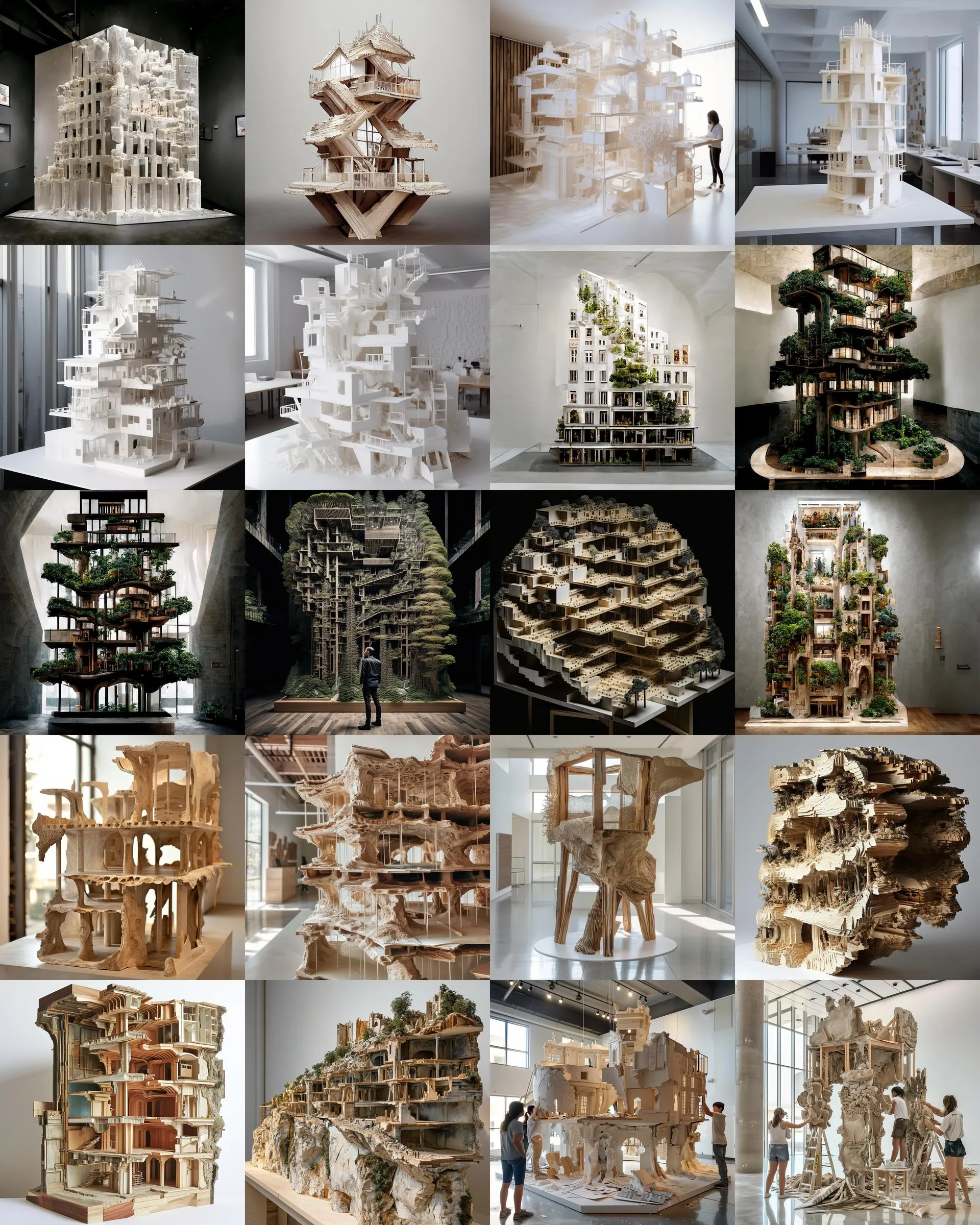
A grid of small mixed-media architectural models with exposed frames and geological bases
2022–2024 · research
Research by Models
Physical models built in mixed media and left deliberately incomplete become the ground on which diffusion models are asked to complete a building. The augmentation stays answerable to the object on the table: the frame constrains the roof, the base constrains the section.
D. Koehler
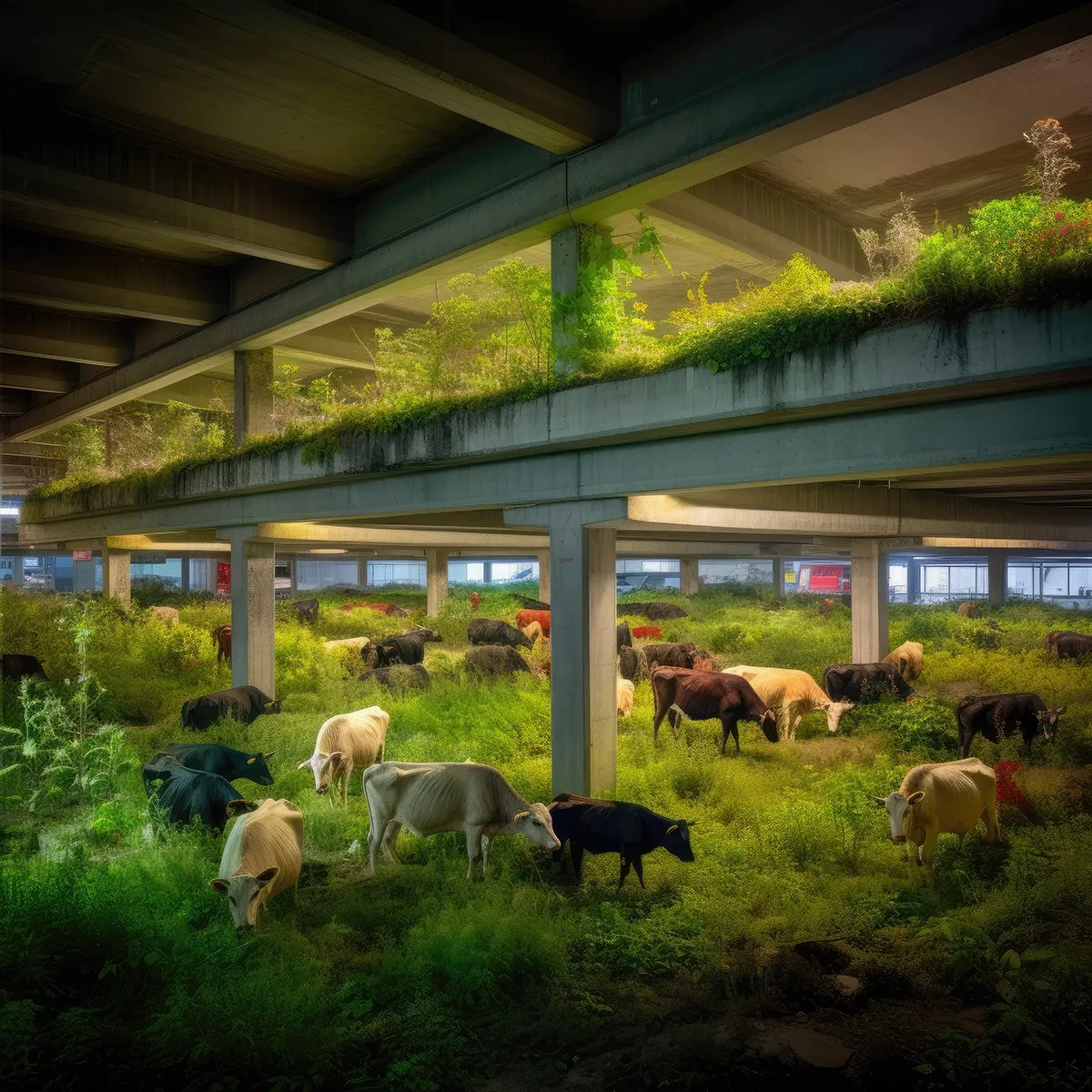
A generated photograph of cows grazing between planters on the deck of a concrete parking garage
2023 · exhibition · Berlin
Carbon Hinterlands
What about Cows: the future of parking and other carbon hinterlands. An image series on the parking garages that autonomous vehicles will leave behind, returned to farms, gardens and pasture, shown in Solarpunk Futures at P61, Berlin, 2023.
D. Koehler

All work entries →