§ work · No. 048
Complicit Code
2025 · exhibitionBuildings designed through consent rather than prohibition
- year
- 2025
- type
- exhibition
- status
- Mashburn Gallery, Houston, 27 January to 21 February 2025; Richardson Memorial Hall, Tulane University, New Orleans, 17 March to 19 April 2025
- credit
- Daniel Koehler. Drawing, shown in Drawing Codes: Experimental Protocols of Architectural Representation, curated by Adam Marcus and Andrew Kudless.
- program
- Large City Architecture
- no.
- 048
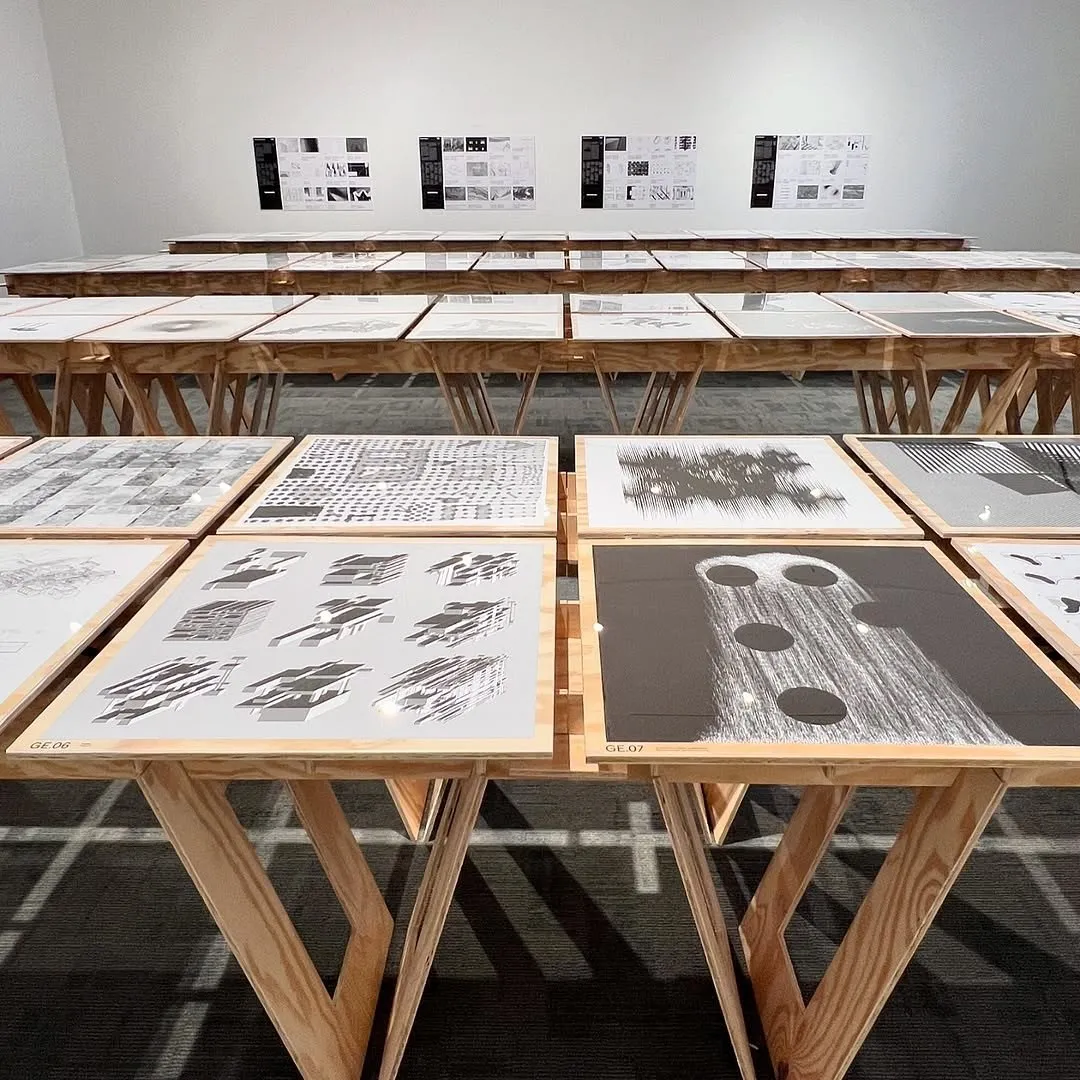
Drawing Codes is a series of exhibitions on the effects of computation on architectural representation and on how architects have integrated procedural thinking into their drawing. Complicit Code reimagines architectural boundaries: instead of beginning with prohibitions such as setbacks and height limits, the buildings in the drawing are designed through consent and complicity, governed by blockchain algorithms that record who agrees to what.
plates
Gallery
1 plates · click to enlarge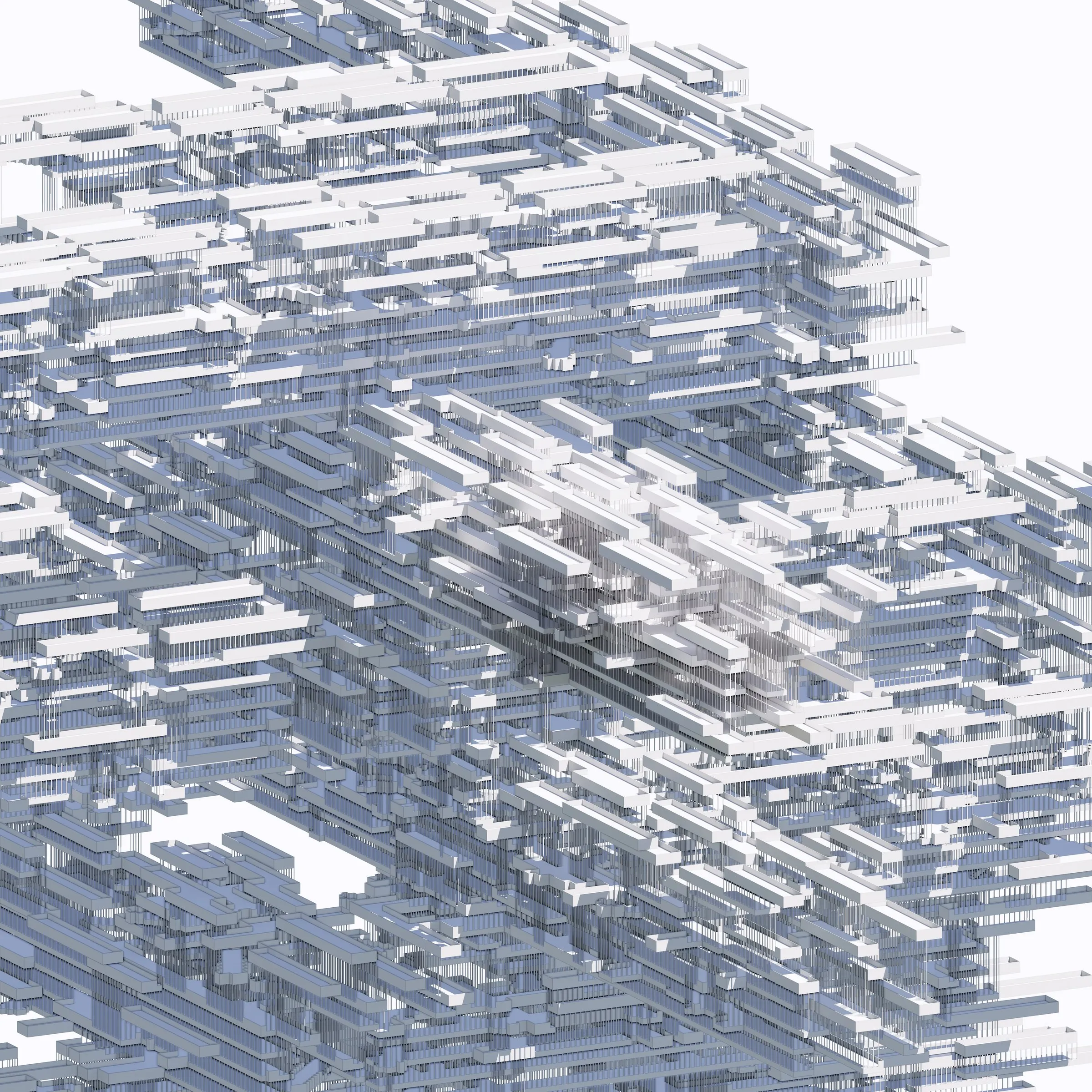
Study view · rendered, 2022
1 / 1 · Study view · rendered, 2022
adjoining sheets
Related
3 entries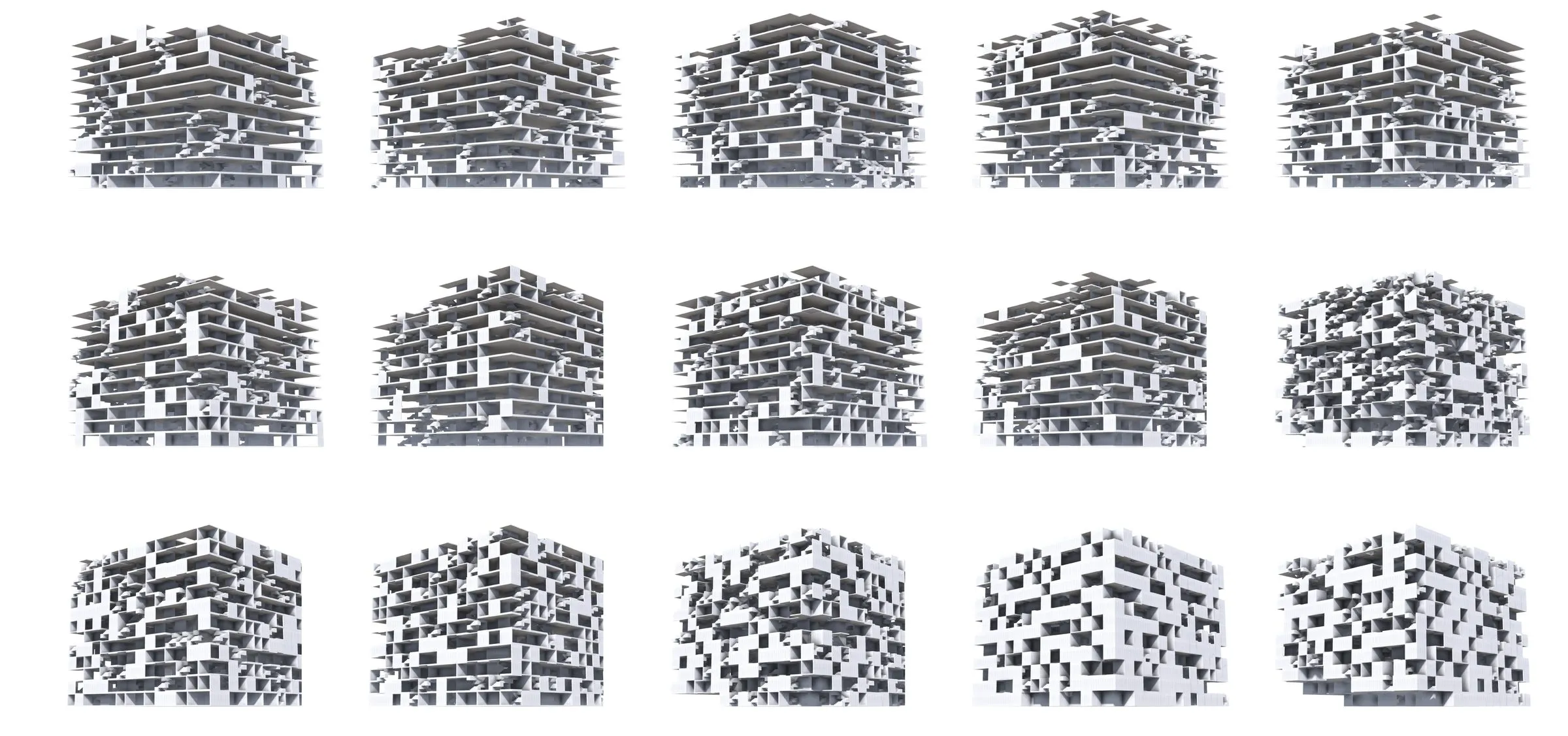
UT Austin studios 2020–22: assemblies
Advanced studios and fully simulated building assemblies at UT Austin, 2020–22: peer-to-peer habitats for Austin, stair networks that become structure, and a 382,659-part tower.
City Architecture
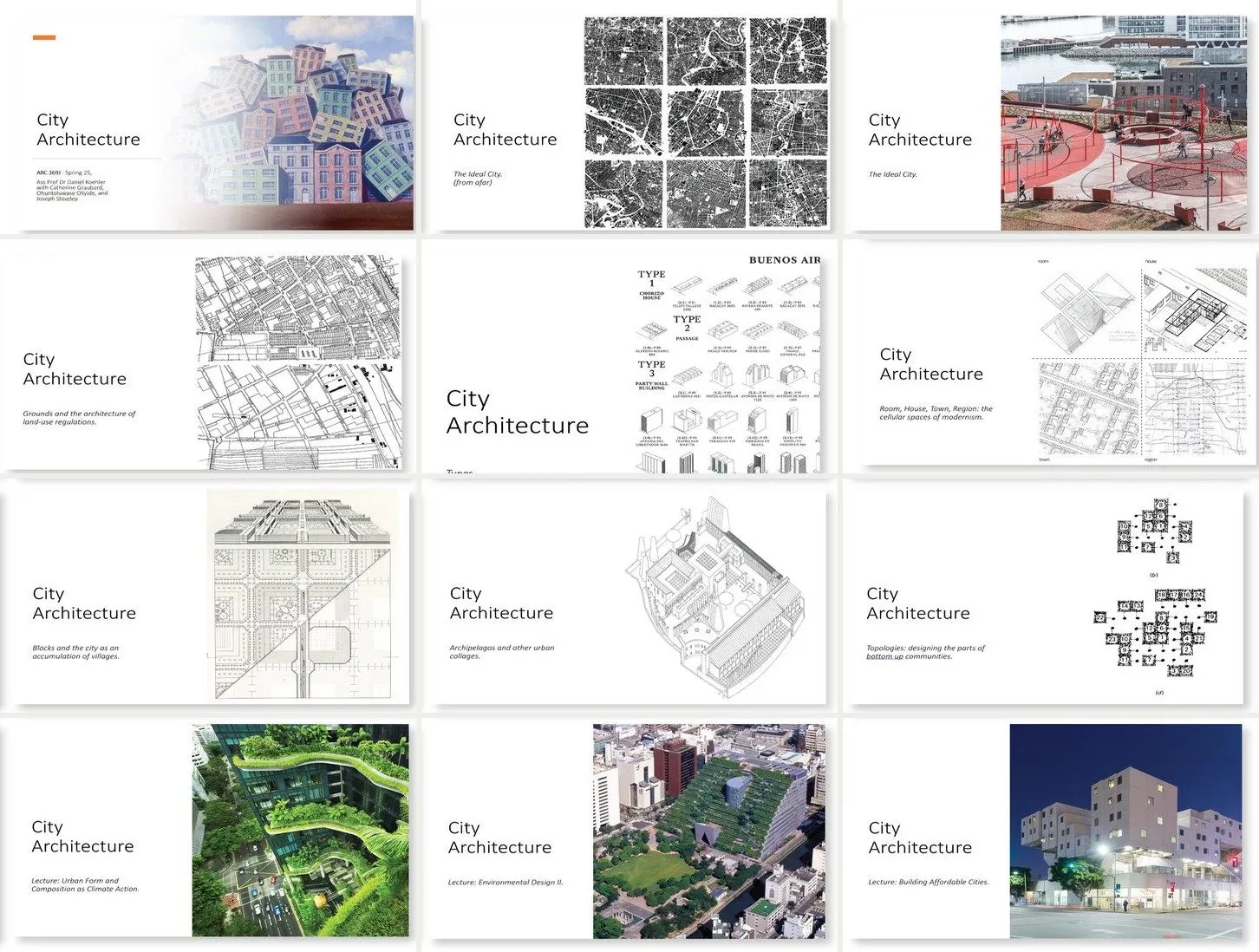
A required, writing-intensive lecture for all fourth-year students at UT Austin, taught for six years with three teaching assistants and a reader rewritten every year: the city examined through the lens of architectural practice, with research reports, a Pecha Kucha event and a peer-reviewed award.
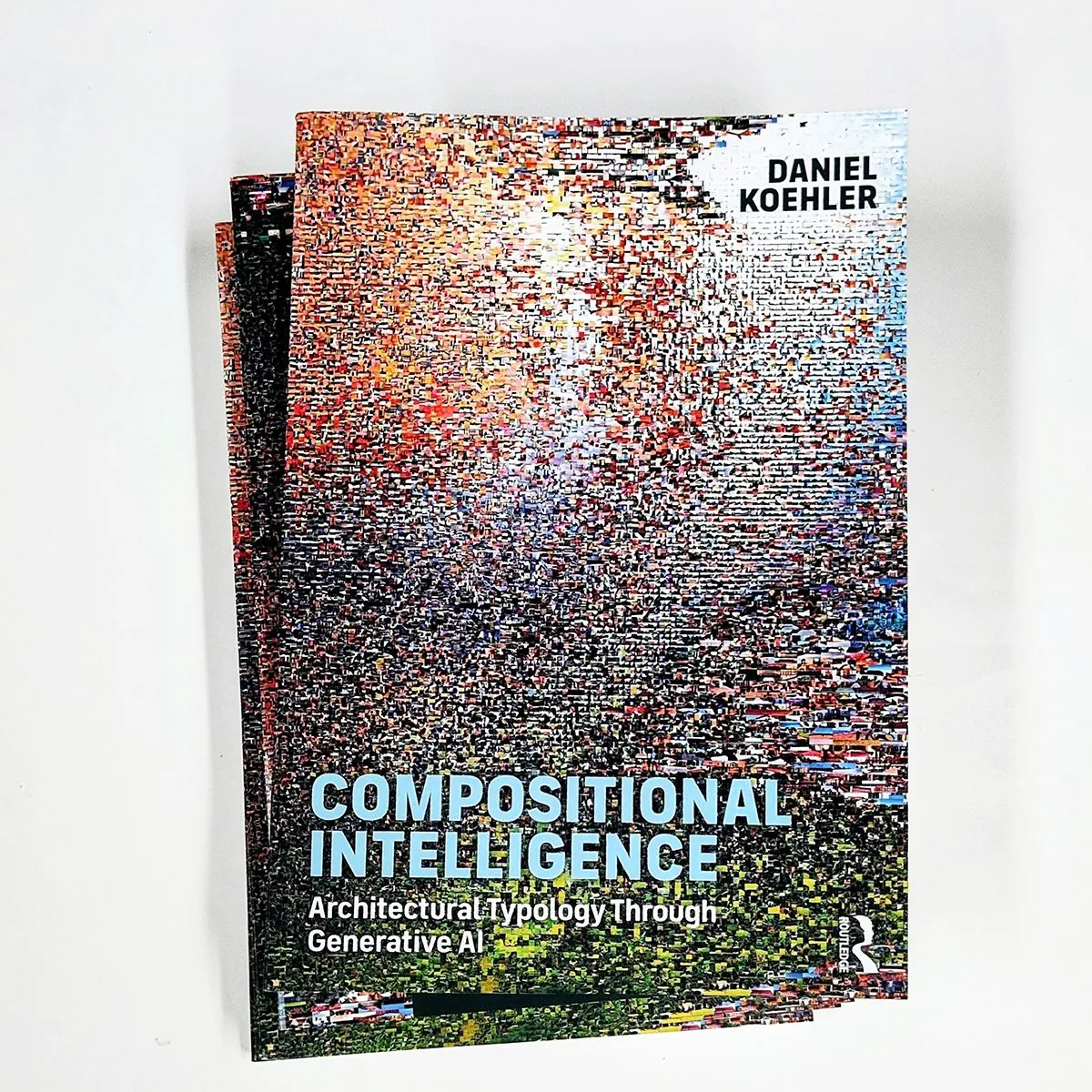
Compositional Intelligence
A monograph on generative AI and architectural typology, with a foreword by Mario Carpo. How large models compress the built world into types, and how architects can compose with those compressions rather than consume their images.
§ work
More work
34 entries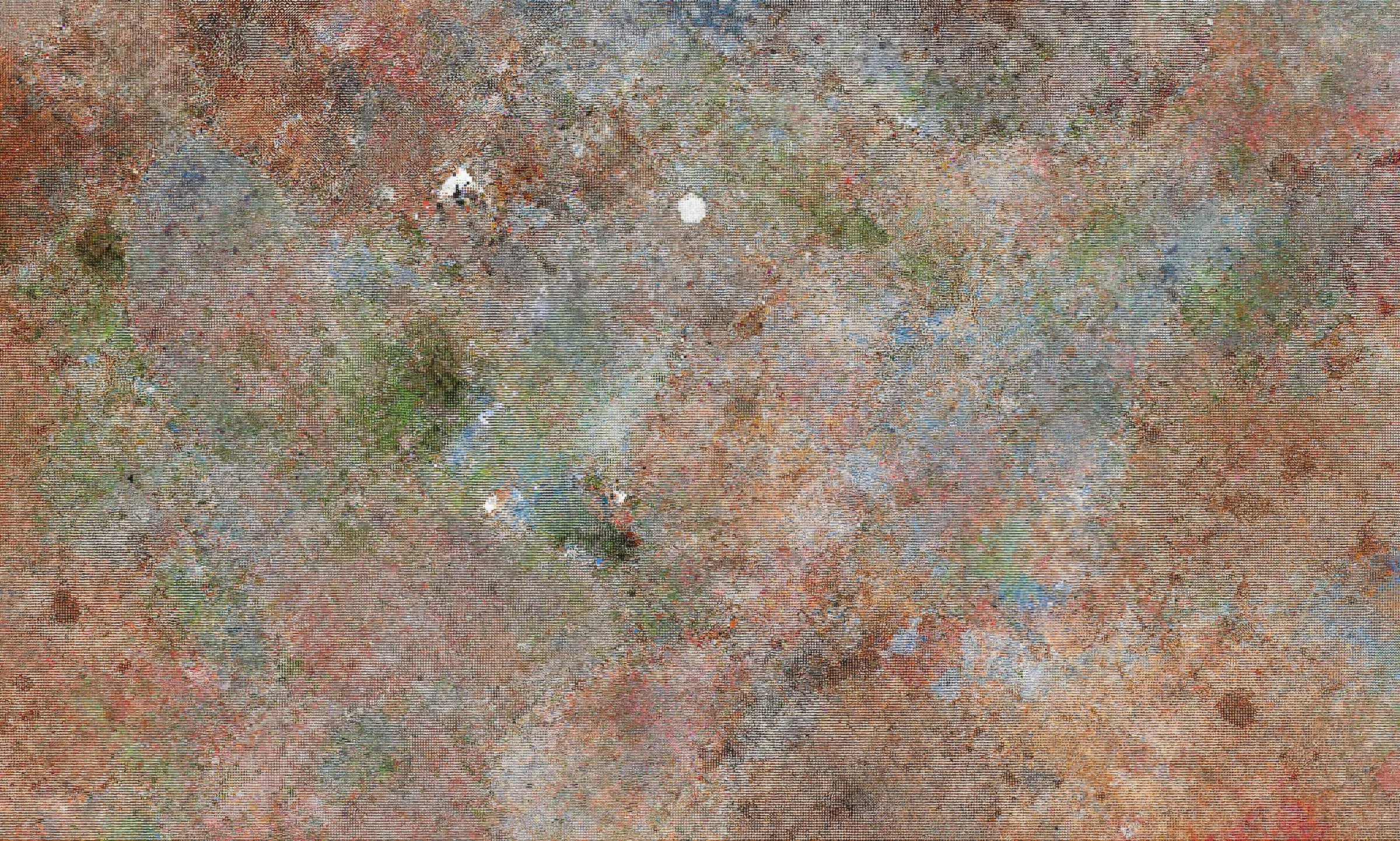
Latent Earth
200,000 images of 40,000 places on Earth, each rendered by one image model from nothing but the place's name and sorted by the model's own internal representations. Not a picture of the world but a probe of the model.
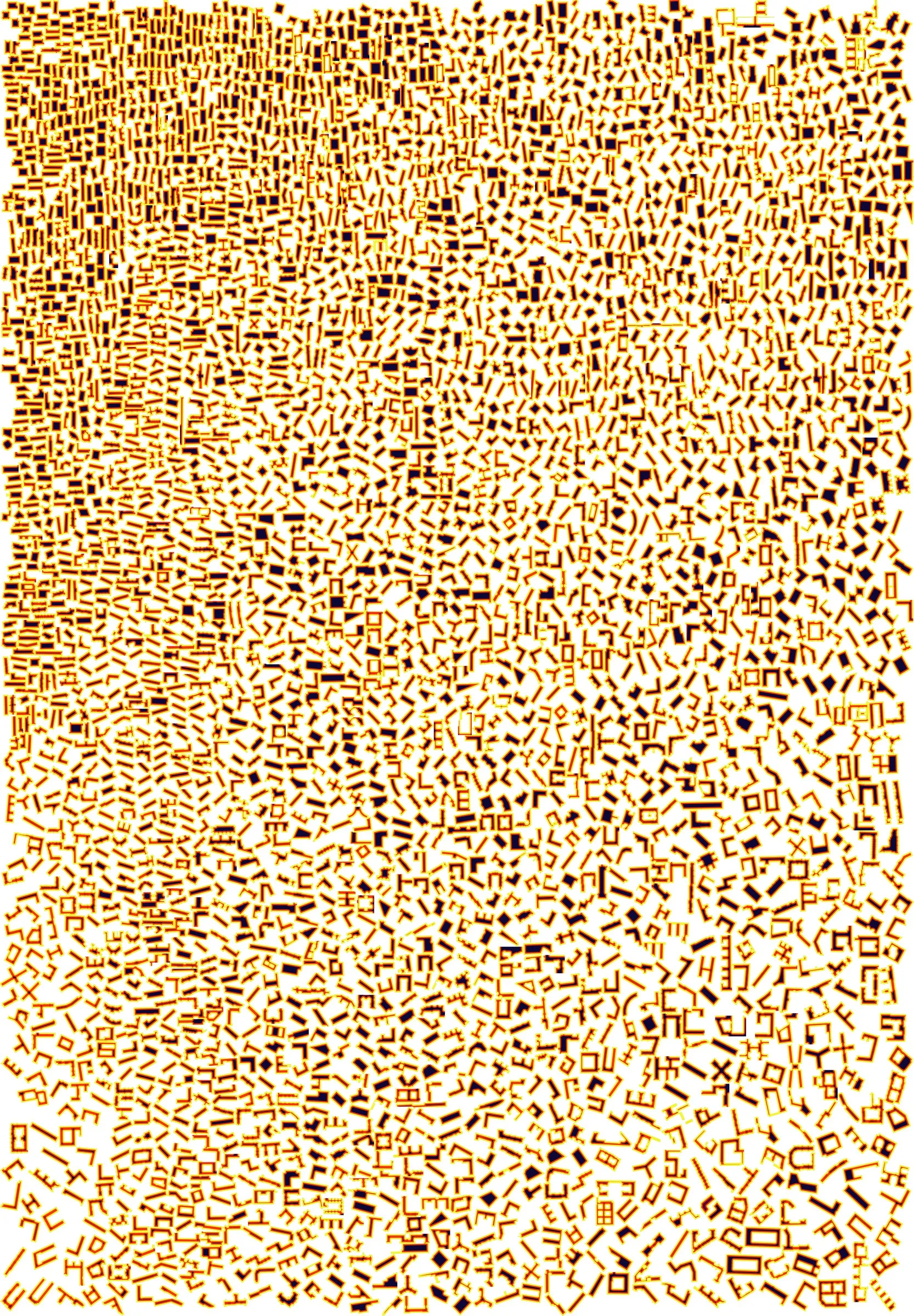
Dark Spots
About one per cent of US residential buildings have rooms without adequate daylight; because those buildings are large apartment complexes, roughly one household in ten lives with one. Maps and plans made with the University Tenants Union, Austin, 2025.
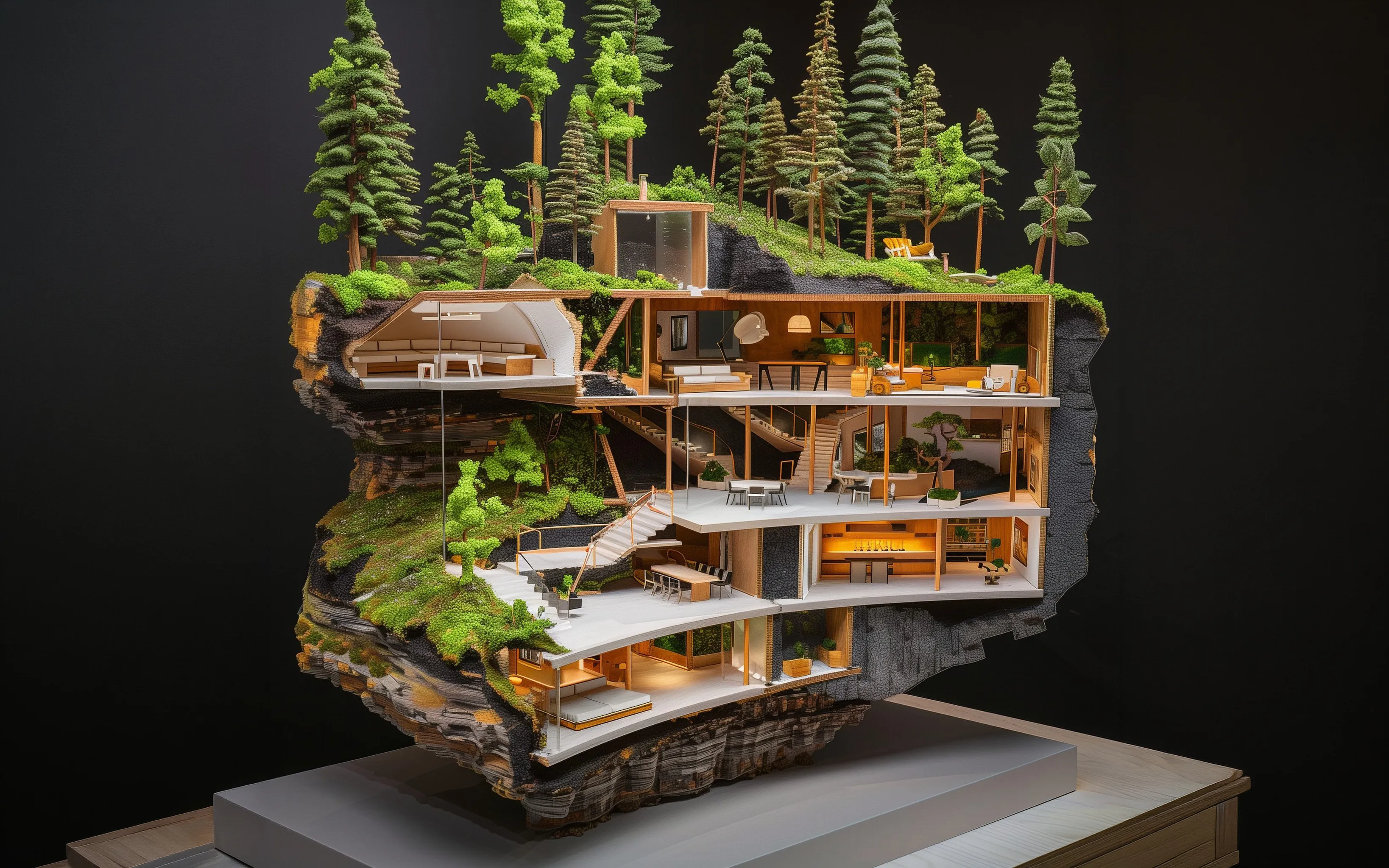
Geological Types
A four-minute film of building types grown rather than drawn: terraces cut into strata, rooms hollowed from the block, gardens on every ledge. Generated with Stable Diffusion 3 Medium and animated with Midjourney; shown in Transductions at Pratt Institute, Brooklyn, 2025.
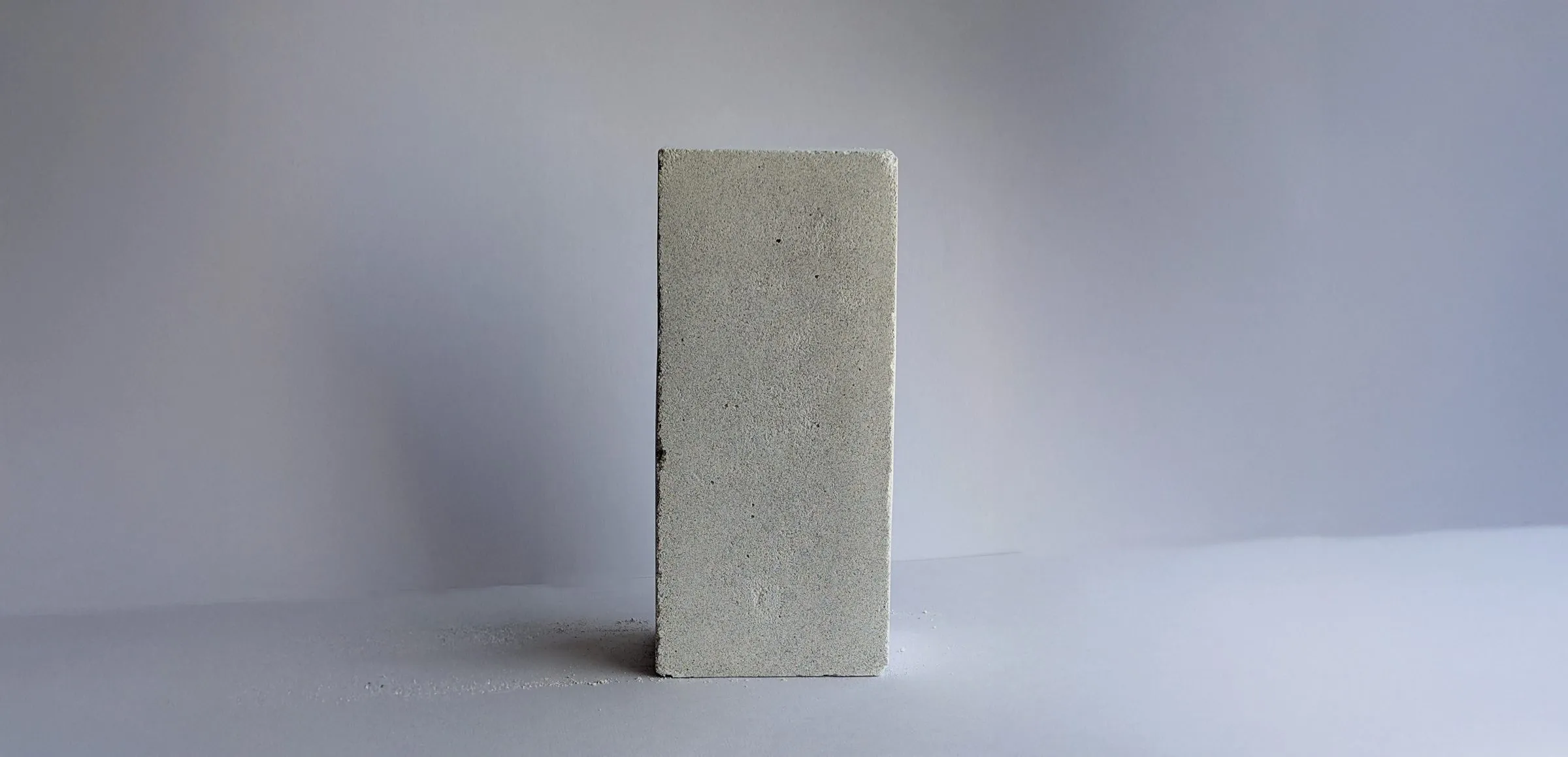
Generative Matter
DeepMind's GNoME predicted 380,000 stable compounds. This pipeline filtered them to 13,638 building-material candidates with machine-readable synthesis protocols, released them openly, and made several of them physically, with students, in ordinary workshops.
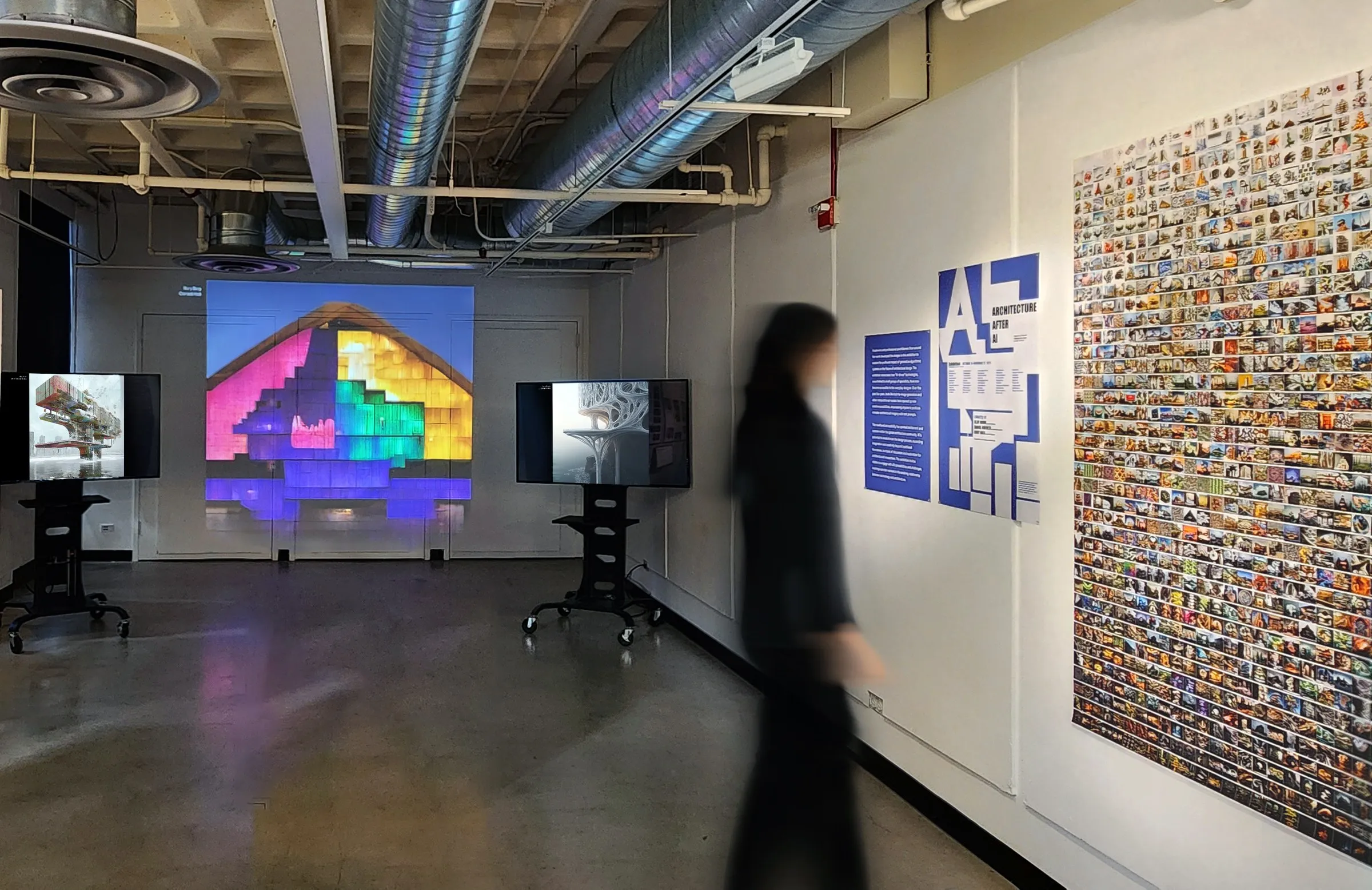
Architecture After AI
The first overview of generative AI in architecture: more than 2,000 works by 80 architects and artists, shown at the Mebane Gallery in Austin in 2023 and twice in Boulder in 2024 and 2025. Curated with Kory Bieg and Clay Odom.
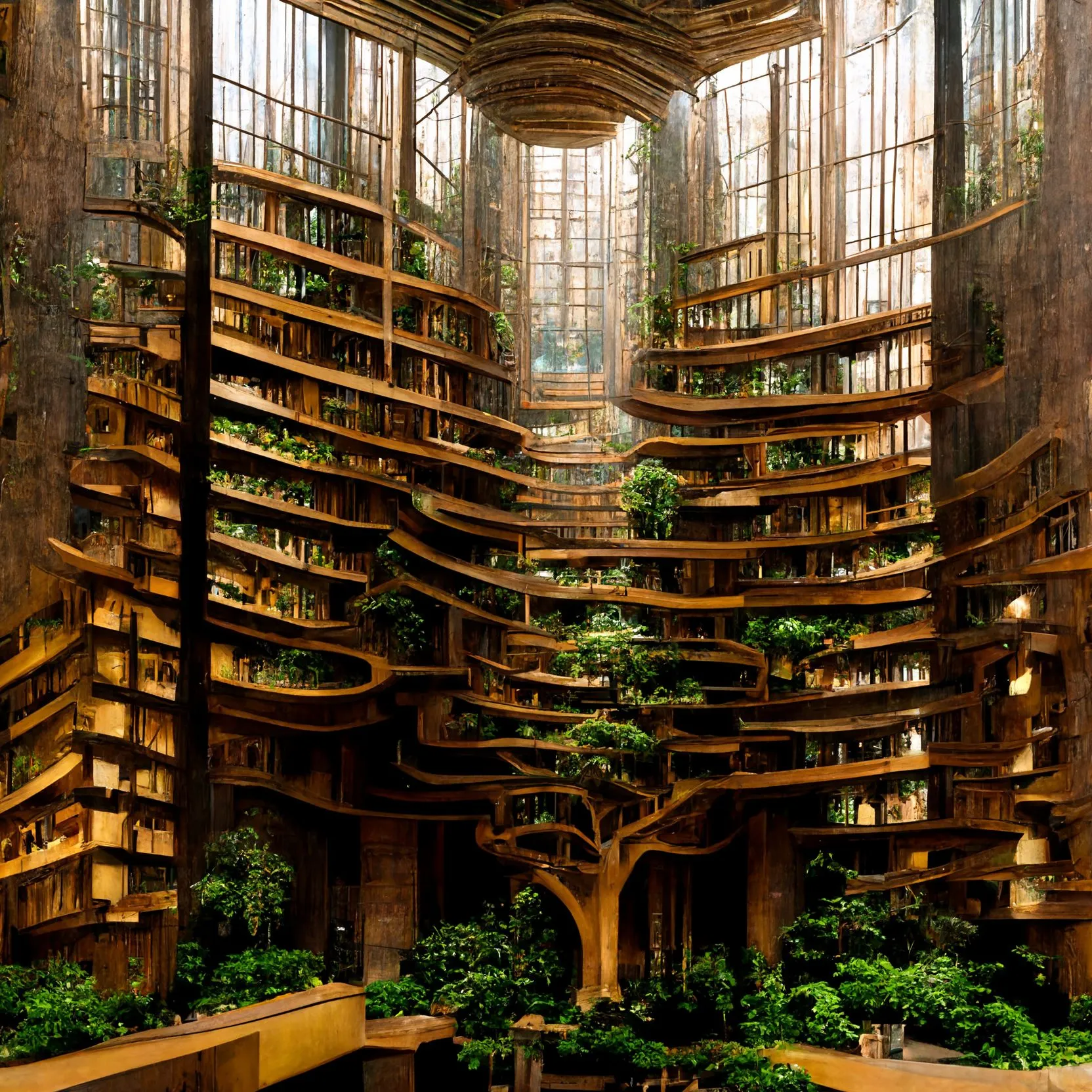
Foresting Architecture
Can cities be built with living trees? An advanced design studio at UT Austin and an image series that explore an architecture literally forested with trees; the series won the Metaverse Architecture and Design Award 2023.
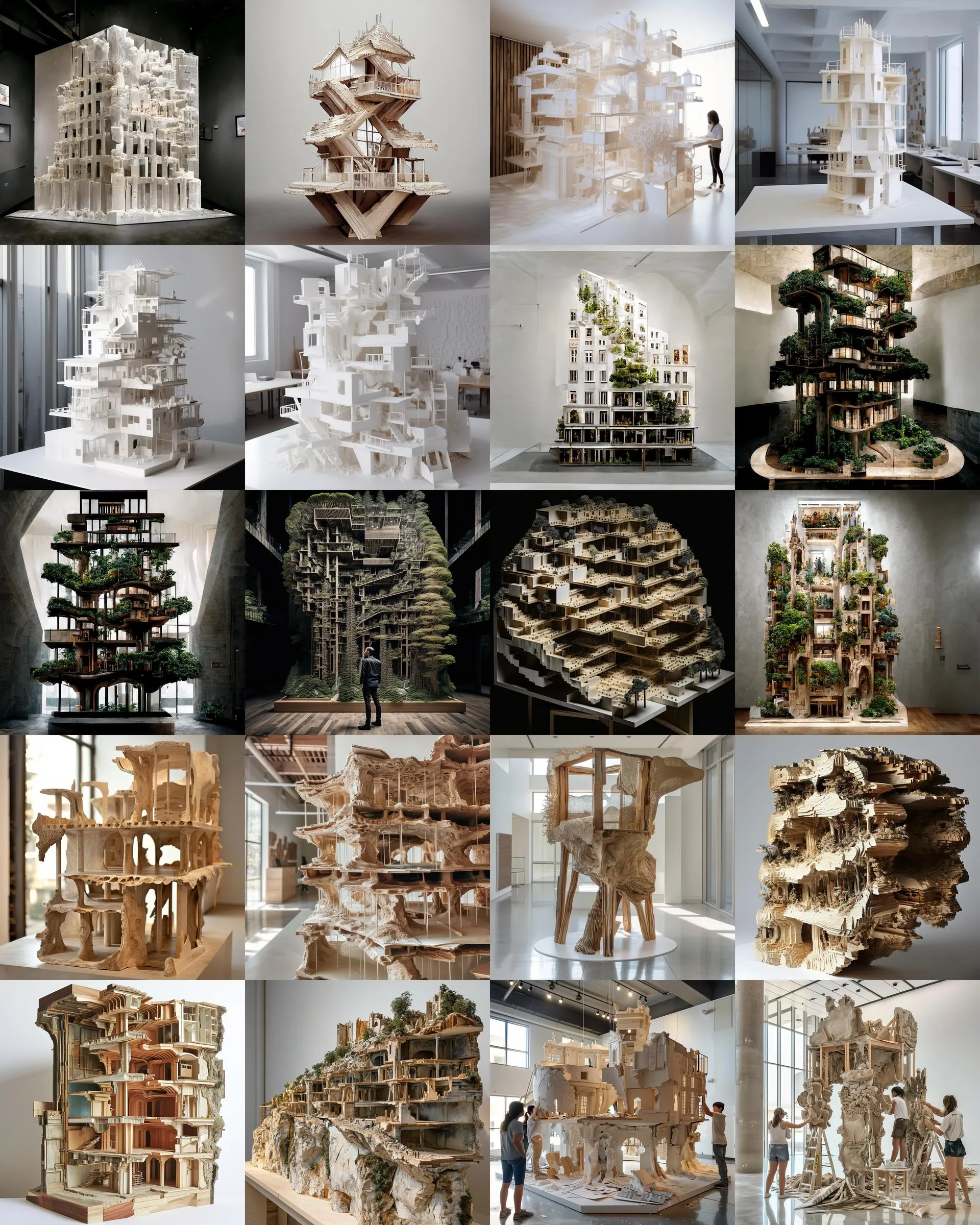
Research by Models
Physical models built in mixed media and left deliberately incomplete become the ground on which diffusion models are asked to complete a building. The augmentation stays answerable to the object on the table: the frame constrains the roof, the base constrains the section.
Carbon Hinterlands
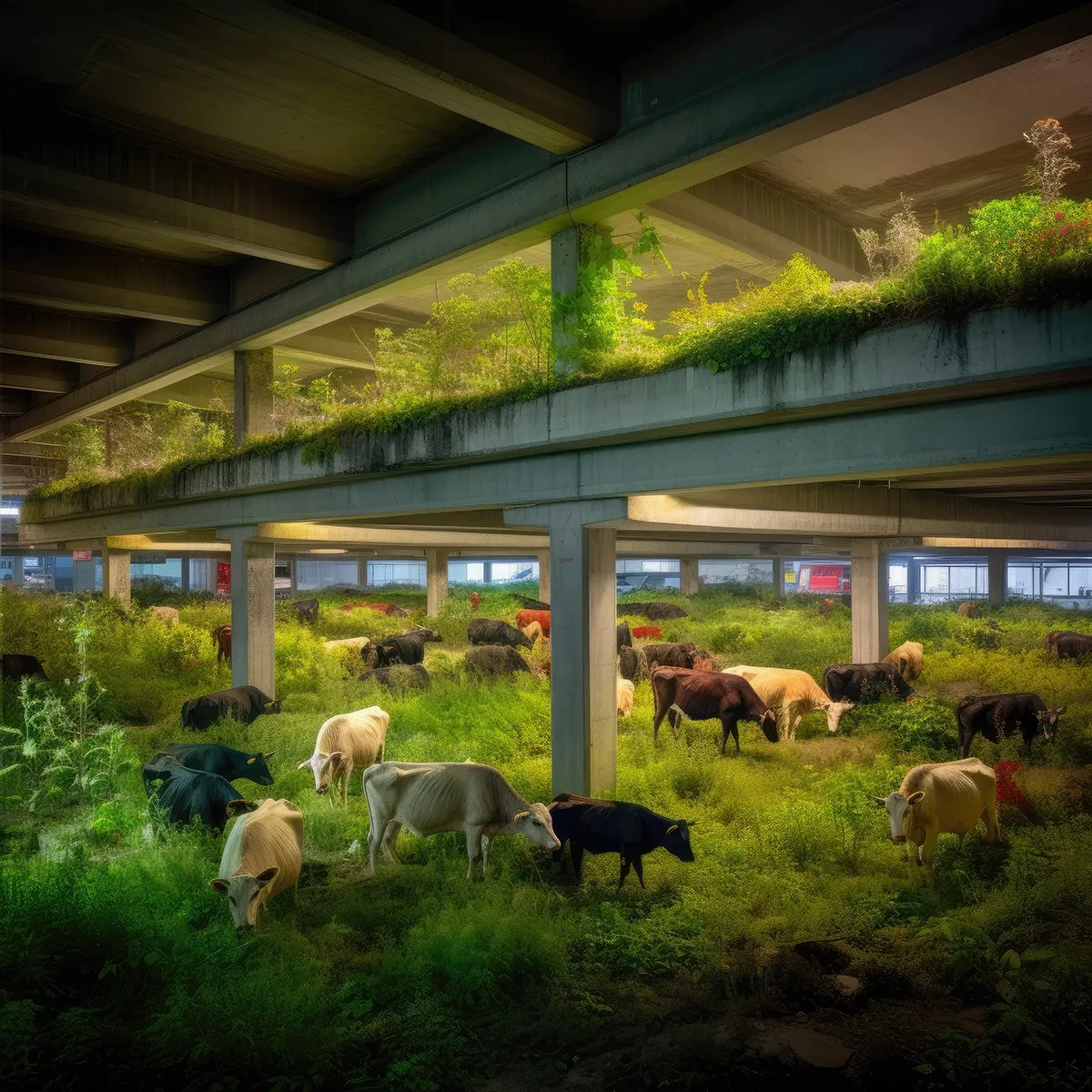
What about Cows: the future of parking and other carbon hinterlands. An image series on the parking garages that autonomous vehicles will leave behind, returned to farms, gardens and pasture, shown in Solarpunk Futures at P61, Berlin, 2023.
Designing Cities with Cities
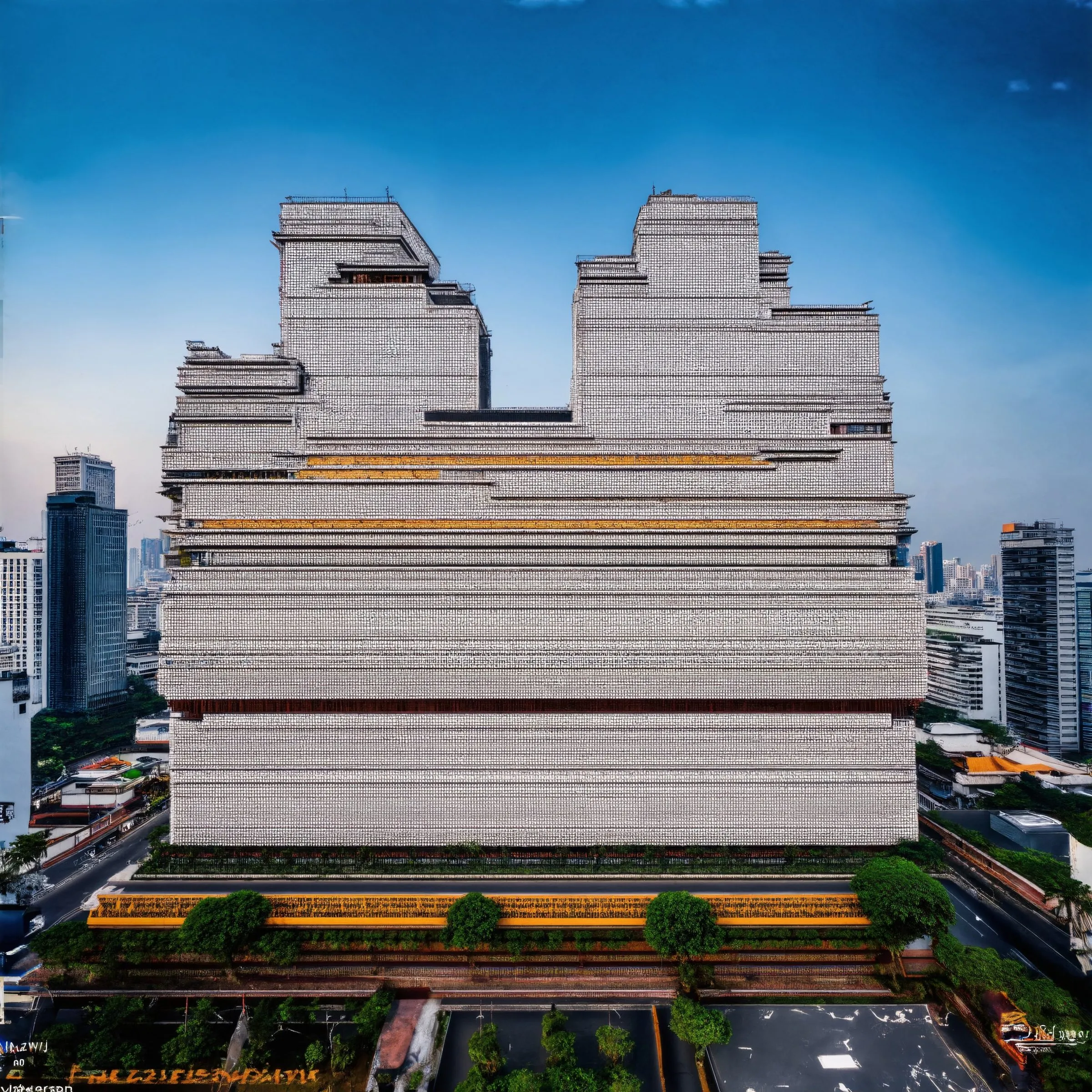
Generated image series from 2022–23, made from and about the imagery of cities: compressed city types, remixed neighborhoods, treehouses, urban material studies, and Rasa Navasaityte's interiors. The pilot studies that led to the LCA-GCS dataset.