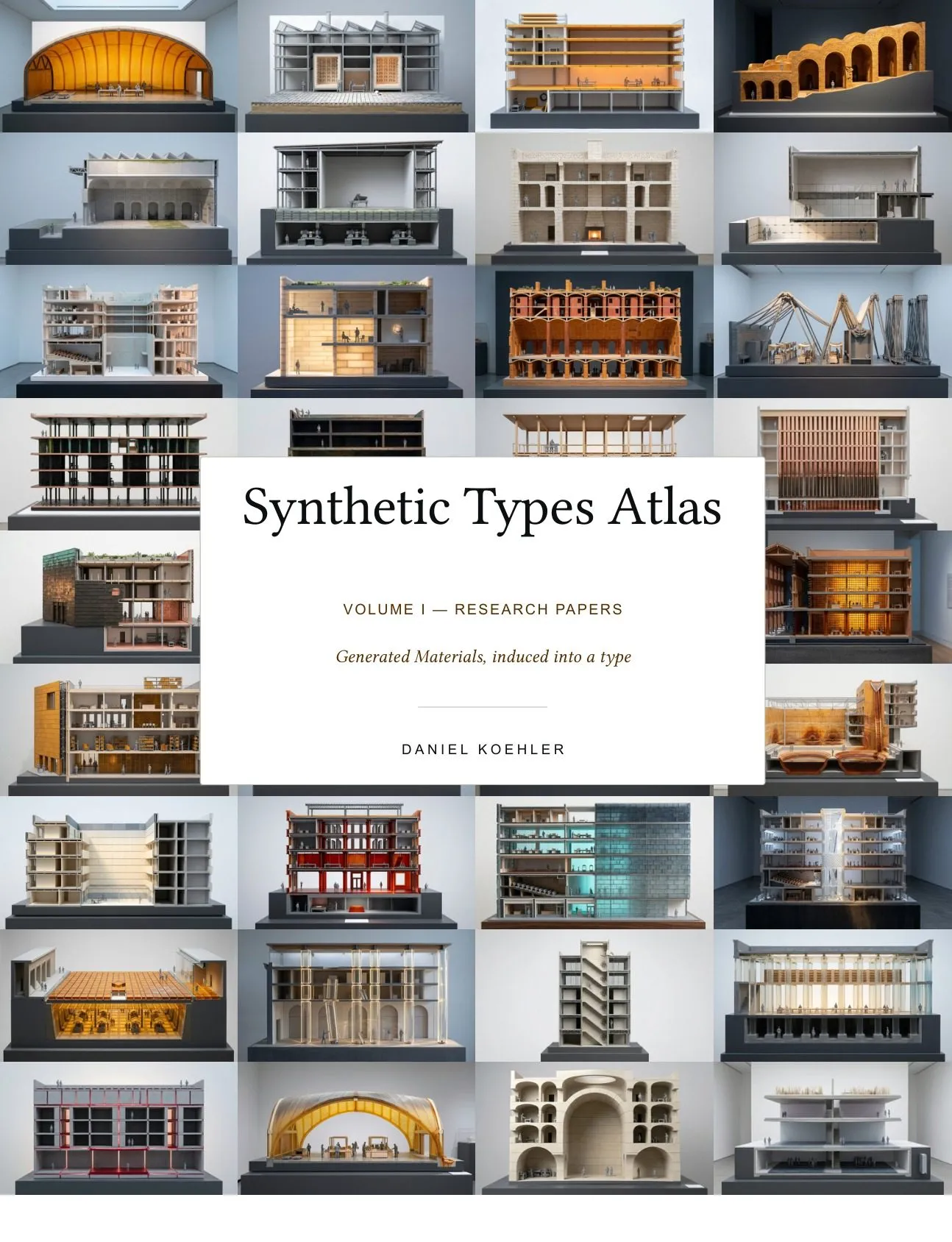
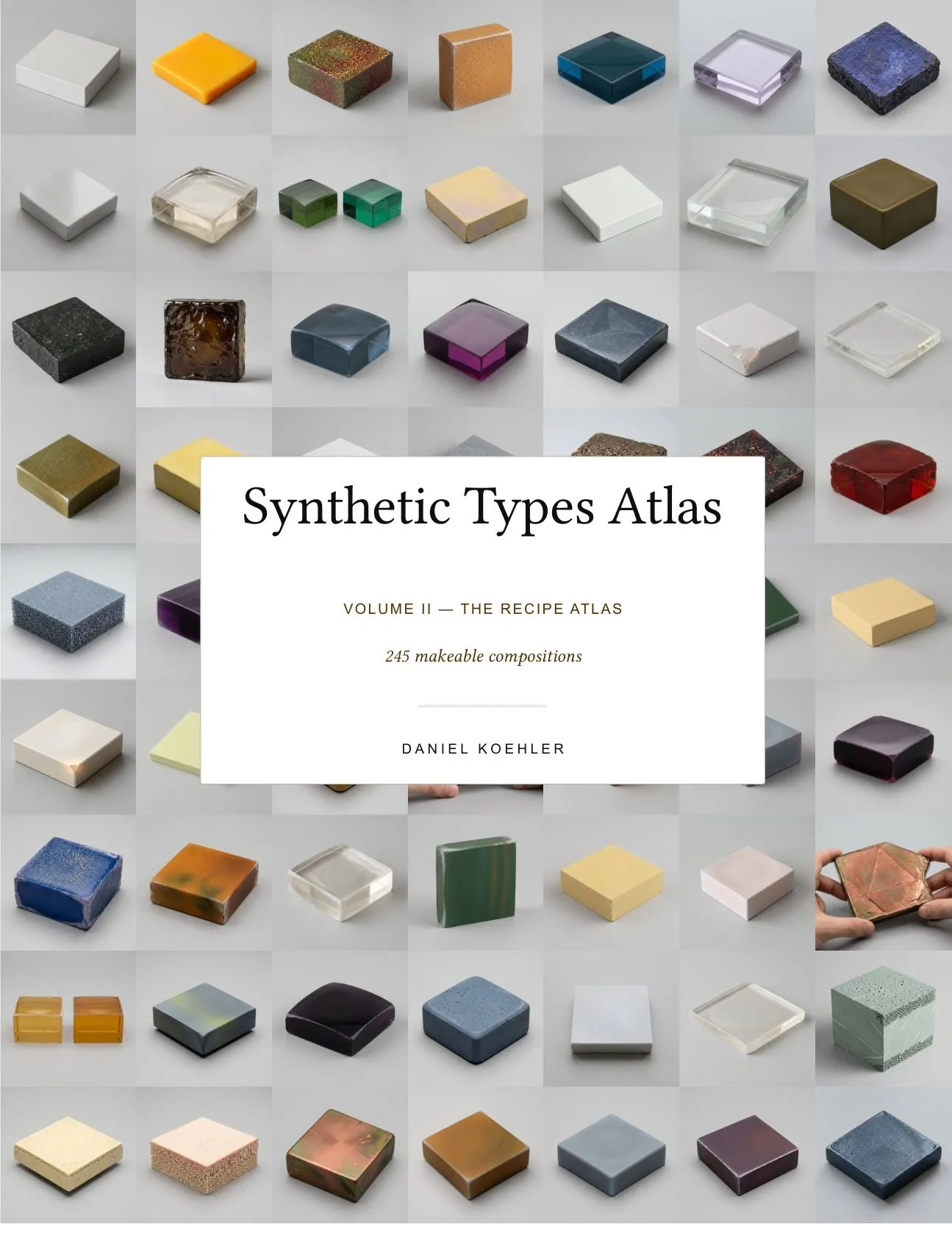
Compositional Intelligence
2026 · publicationArchitectural Typology through Generative AI (Routledge)
- year
- 2026
- type
- publication
- credit
- Daniel Koehler. Foreword by Mario Carpo. Routledge, London.
- program
- Synthetic Types, Synthetic Grounds, Large City Architecture
- no.
- 055
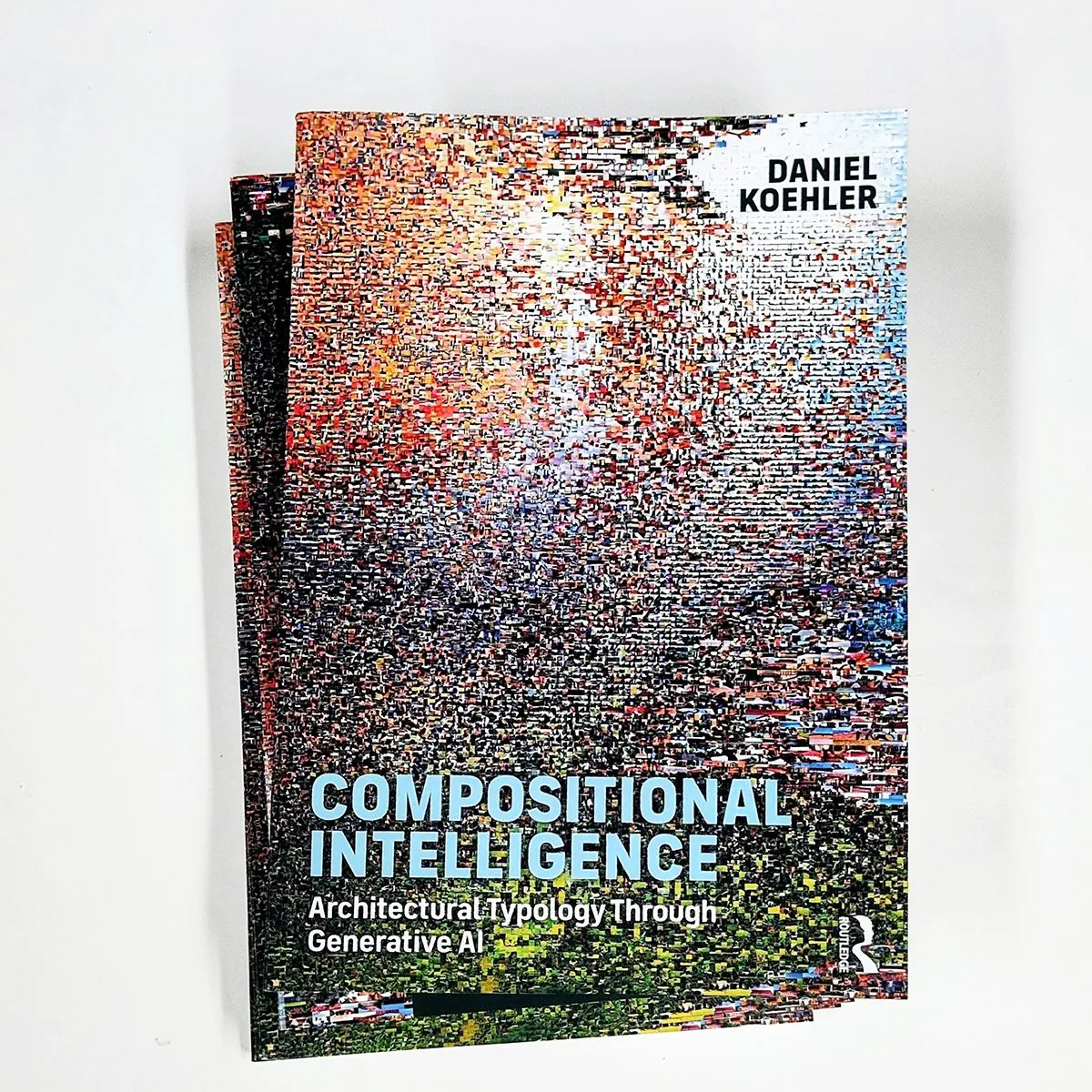
Generative AI has changed what a type is. A large model does not store buildings; it stores compressions of millions of them, and every image it produces is a composition drawn from those compressions. Compositional Intelligence takes this seriously as a question for architecture: if the discipline’s oldest instrument, typology, now lives inside a model, how do architects read it, and how do they compose with it?
The book moves from the datasets I built to measure the models, through the languages and scales at which they organise the built world, to the design consequences: types that are induced rather than inherited, cities composed from the features of cities, and a criticality that works by superposition rather than by dialectics. Its argument is not that the image generator replaces the architect, but that composition, the architect’s own intelligence, is what makes a model’s compressions answerable to buildings.
Published by Routledge with a foreword by Mario Carpo. ISBN 978-1-041-03053-9 (paperback), 978-1-041-03056-0 (hardback); DOI 10.4324/9781003622055.
Gallery
6 plates · click to enlarge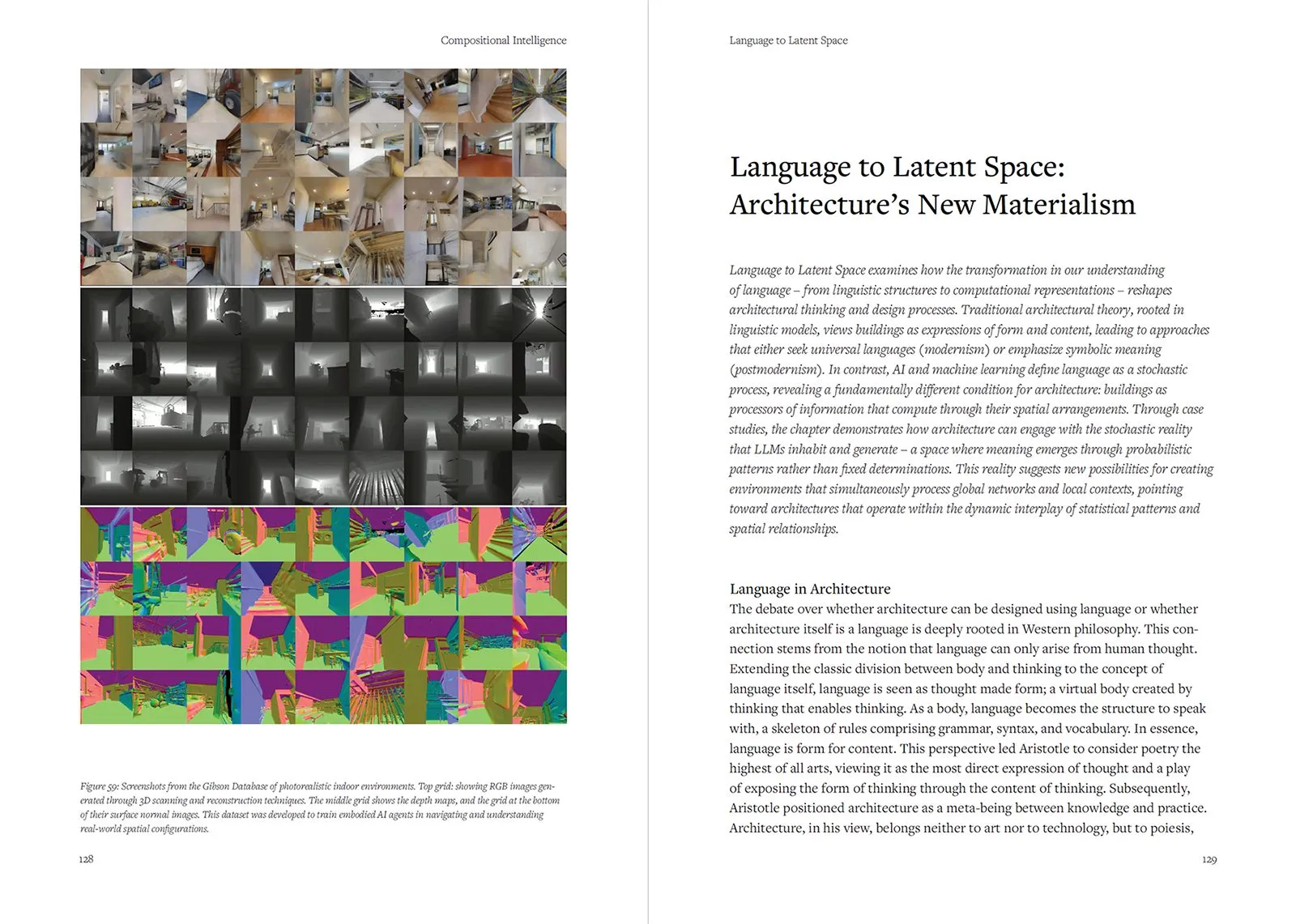
Spread: Language to Latent Space, architecture's new materialism 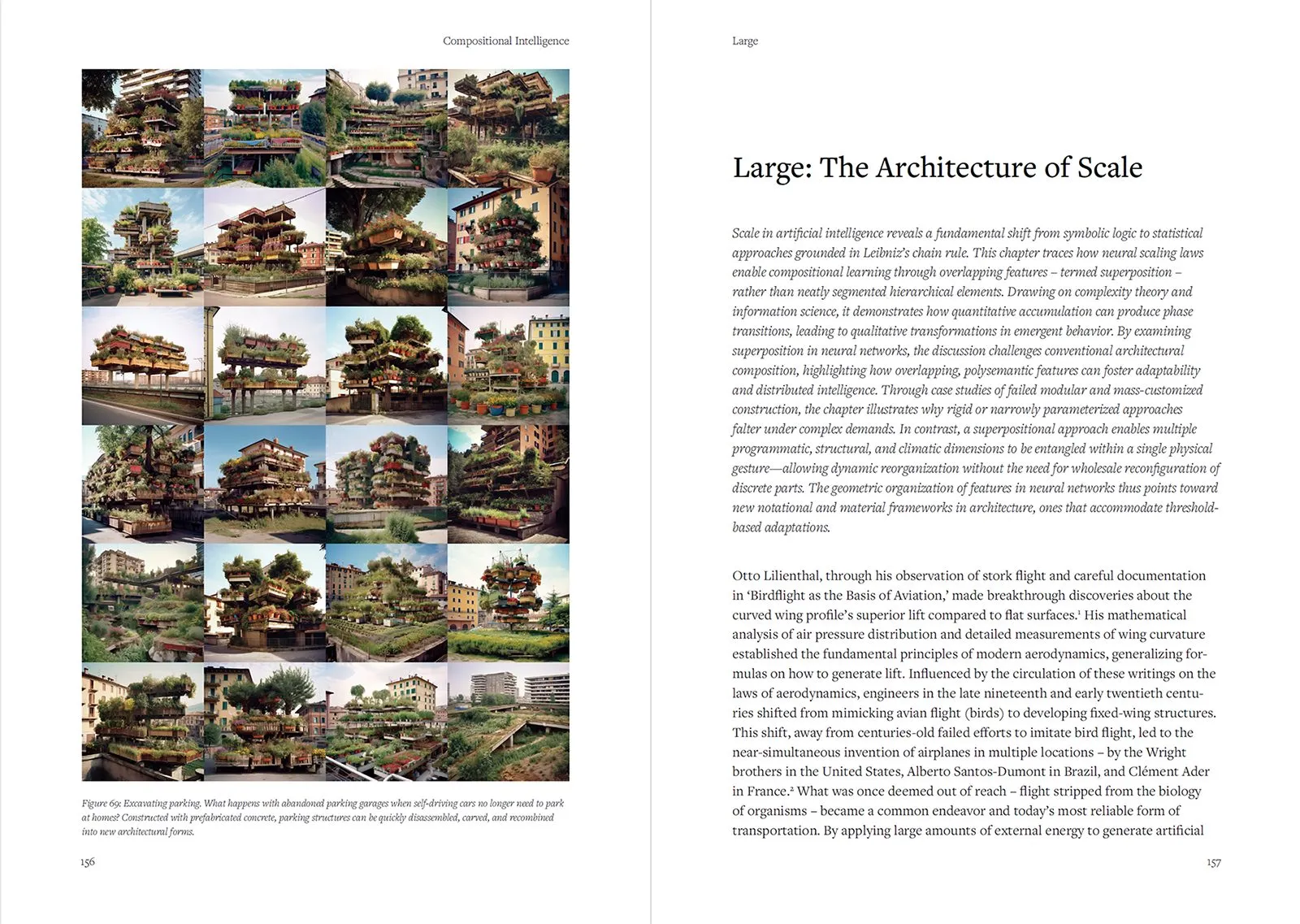
Spread: Large, the architecture of scale 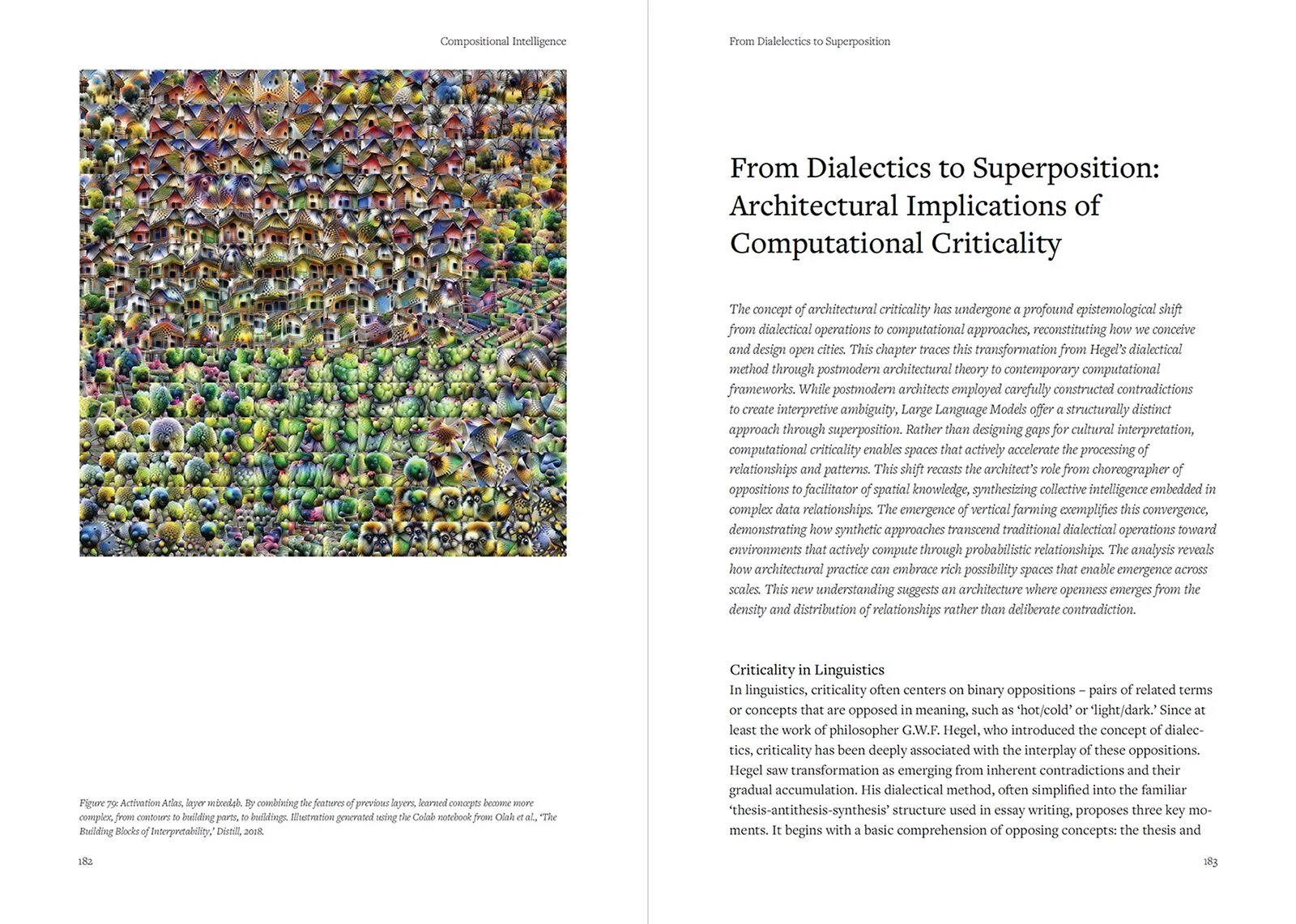
Spread: From dialectics to superposition, architectural implications of computational criticality 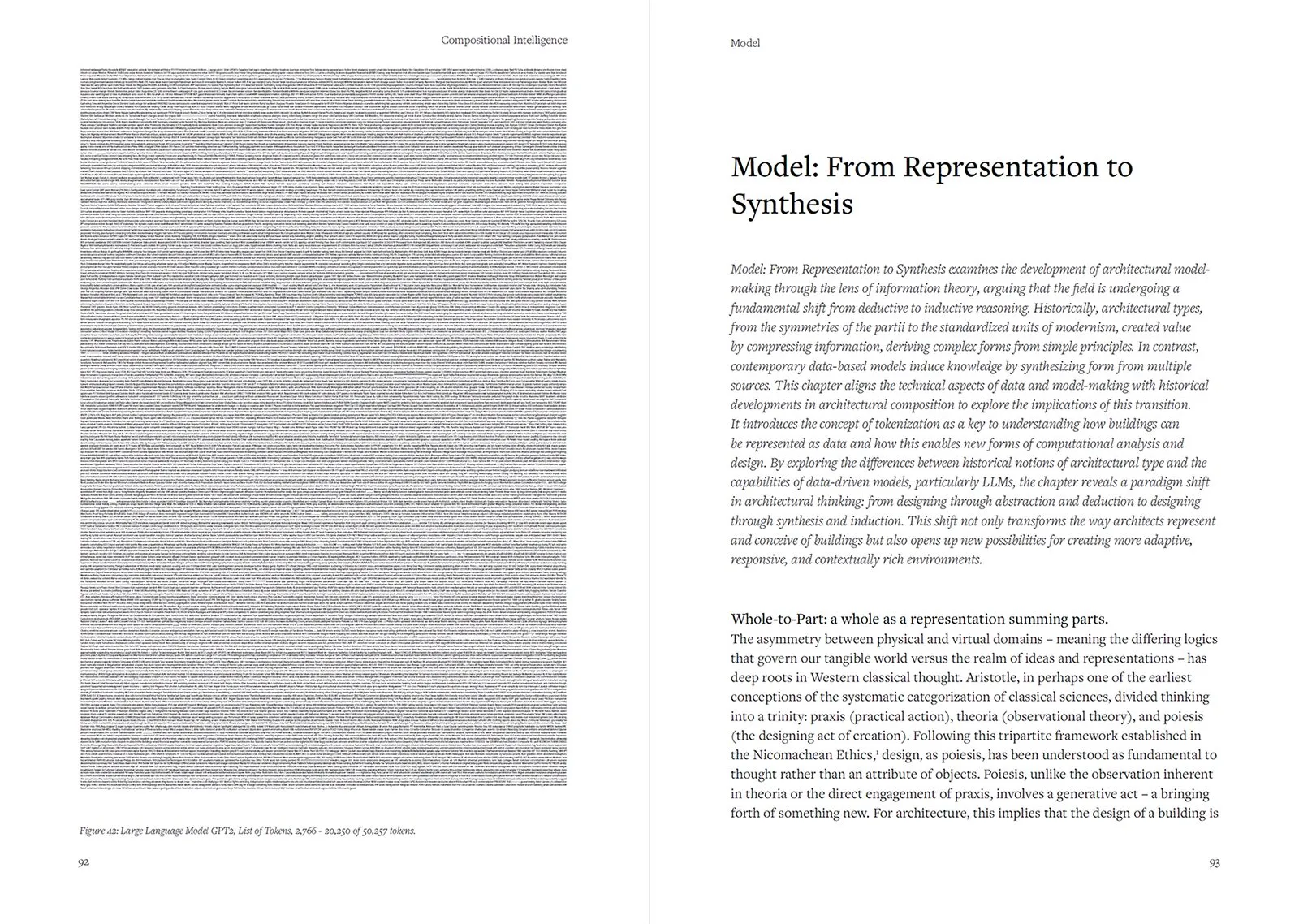
Spread: Model, from representation to synthesis 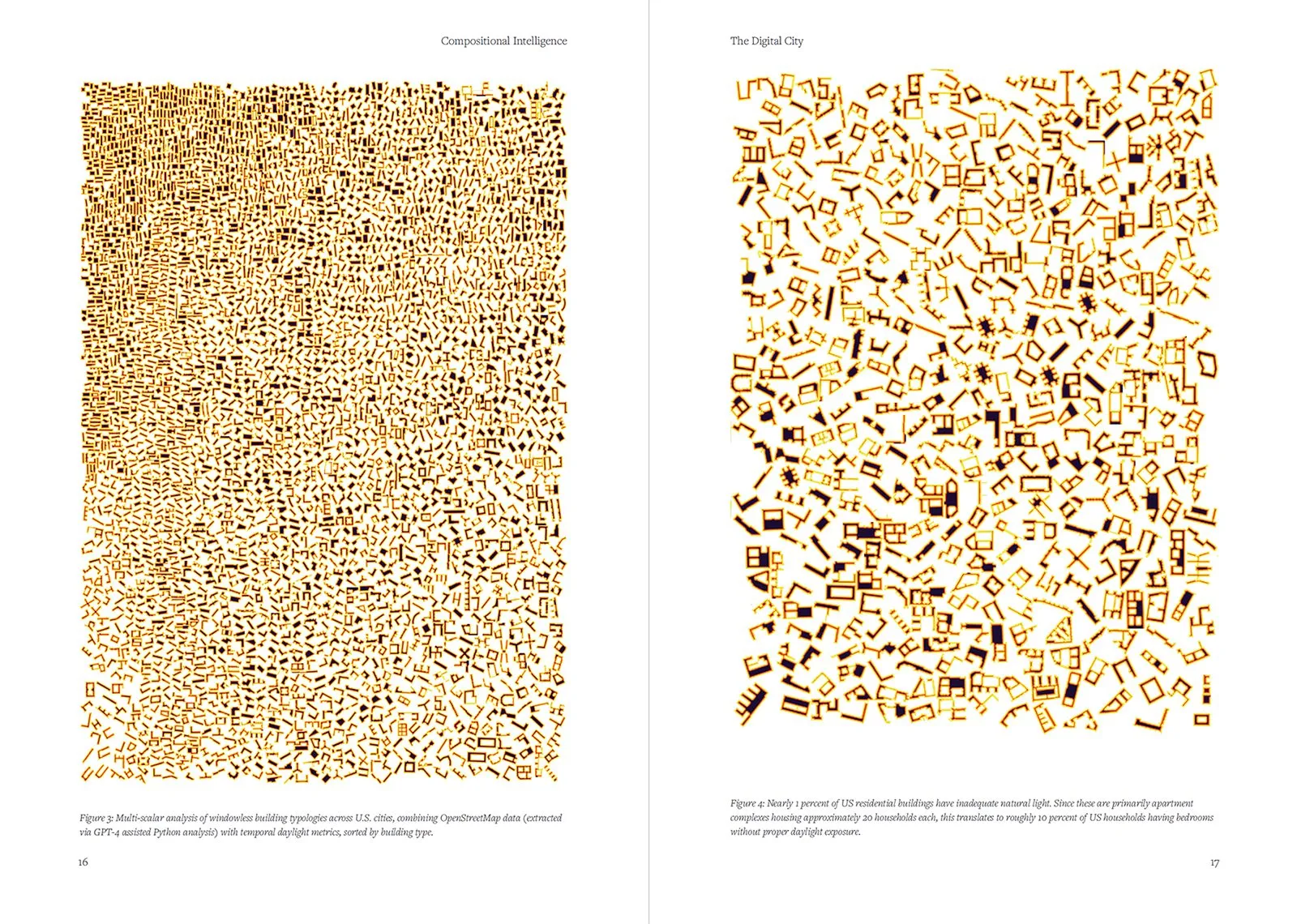
Spread: a city block drawn as an assembly of parts 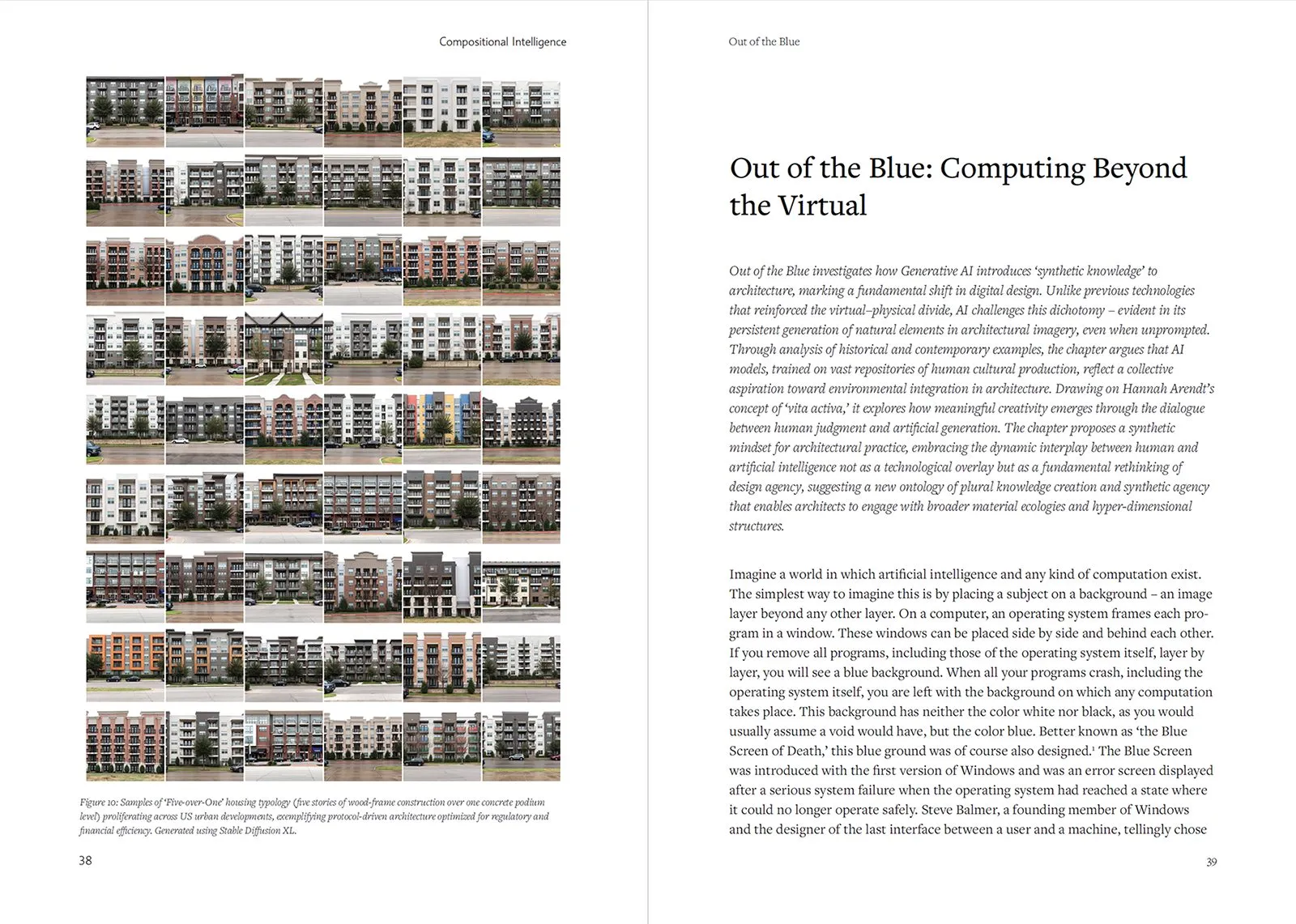
Spread: Out of the Blue, computing beyond the virtual
Related
4 entries

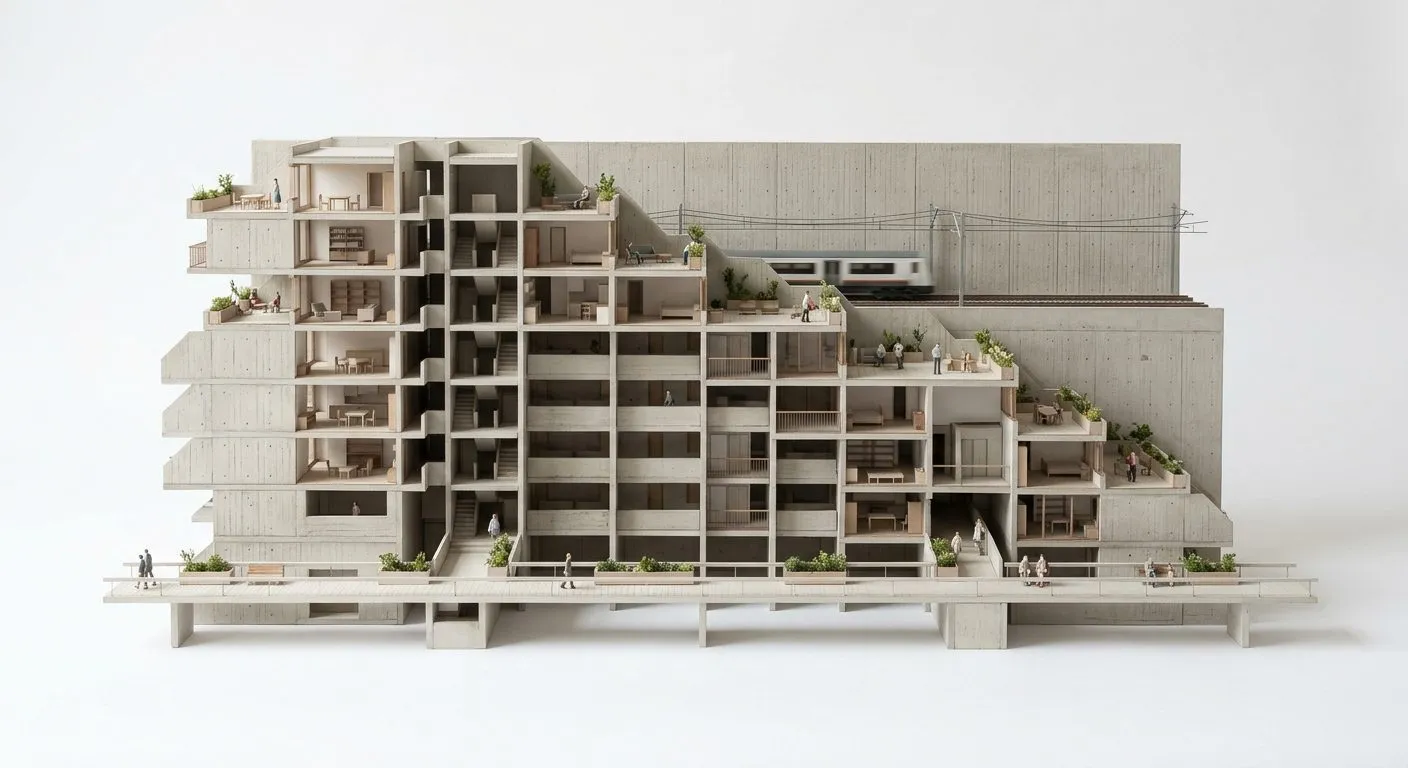
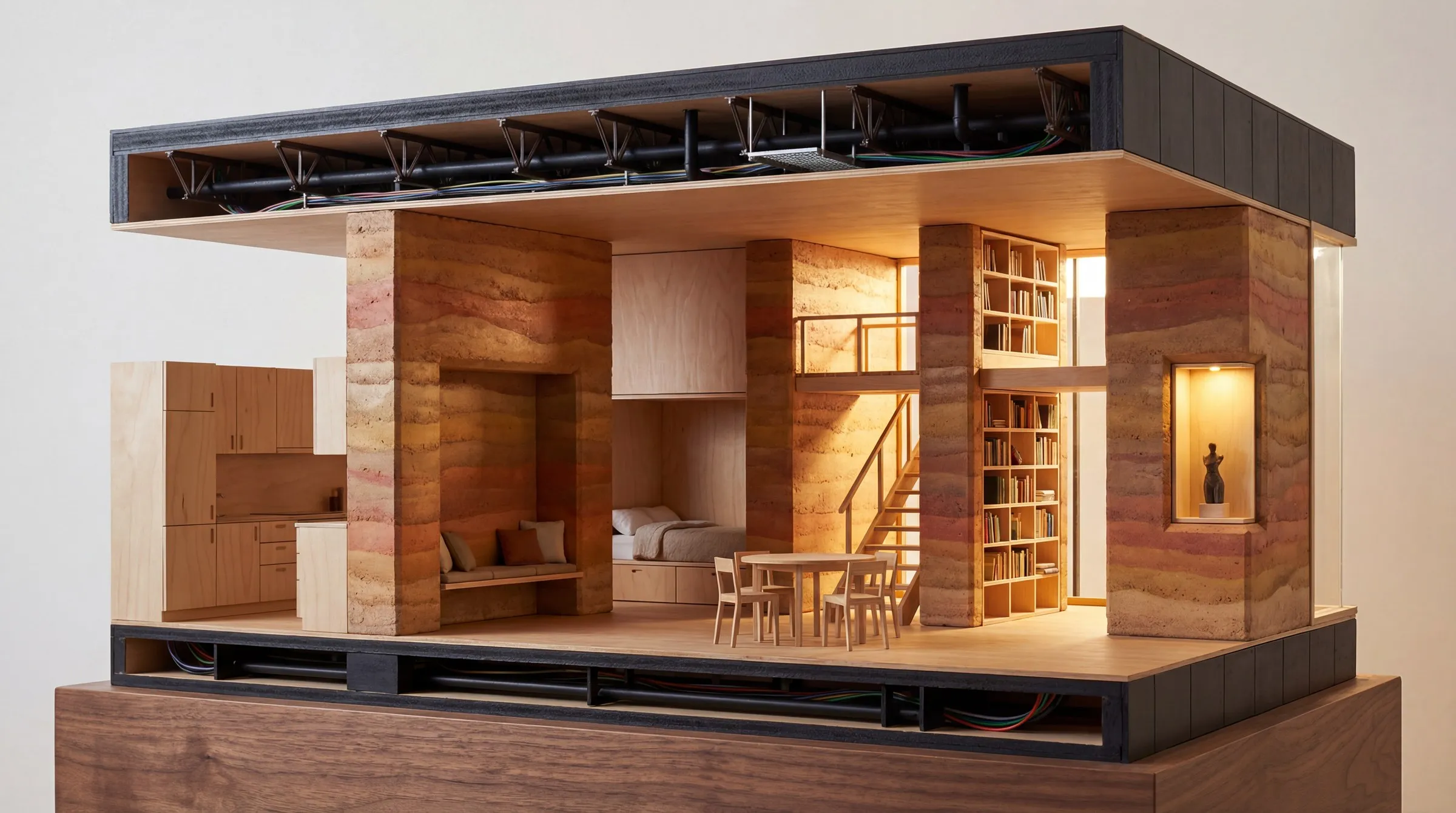
More writing
4 entries