lab-eds
§ teaching · No. 039 · 2023–2026
menu
§ teaching · No. 039

Architecture Computation

2023–2026 · teaching

A fall seminar at UT Austin since 2023: startups, apps and venture films as a way to think about practice

year
2023–2026
type
teaching
credit
Daniel Koehler, ARC 327R, The University of Texas at Austin, fall 2023 to fall 2026. Apps and venture films by the students of each year, listed below; GarageGoods (2025) by Deeptanil Pal and Nicolas Spark.
program
Synthetic Types
where
The University of Texas at Austin · Architecture Computation, ARC 327R, with ARC 386M, ARI 350R, ARI 386M, CRP 386 and UD 388R · Fall 2023 to fall 2026
students
Deeptanil Pal, Nicolas Spark, Sarah Brodbeck, Yulong Chen, Aniruddha Khare, Negar Ghasemzadehnadaf, Catherine Graubard, Sarah Gurevitch, Noah Guth, Niah Pierre, John McCarley, Shrisiva Pushpa Shanmugasundaram, Mikhail Maverick Santos, Clay Seifert, Thomas Slay, Xuchen Wang, Jessica Wilsey, Chenyang Xu, Saba Abdolshahi, Travis Gerhardt, Jane Holsten, Jonathan Juarez, Jared Labus, Winnie Lin, Rodolfo Macias, Tyler McCormick, Manuel Olivares, Annie Tutrone, Nandita Warrier, Nicholas Alacano, Luis Alcantar, Lucio Castro Arias, Jordan Cooper, David Dang, Maria Gomez Martinez, Janelle Lim, Michelle Marquez, Francisco Muniz Ituarte, Garrett Owens, David Phan, Raha Shahvazian
no.
039
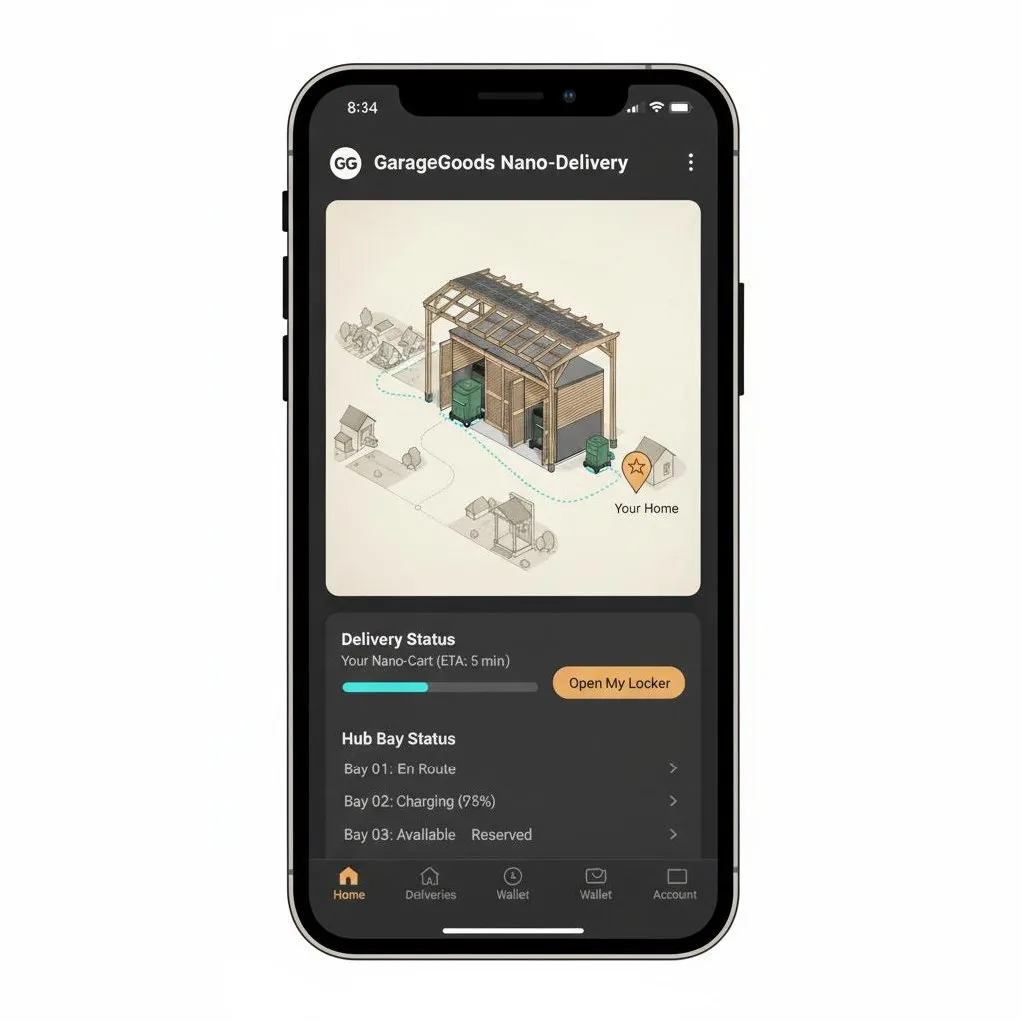
App demo of GarageGoods: converting a garage into a compliant cottage-food space
GarageGoods, app demo · Deeptanil Pal and Nicolas Spark, fall 2025

Architecture Computation is the seminar in which I ask what architectural practice becomes when generative AI is part of it, and I ask it by making the students found something. Every fall since 2023 each team has built a working demo app and produced a three to four minute venture film that pitches an architectural startup. The frame is deliberate: a startup has to demonstrate value to a stranger, so a proposal cannot rest on an image. It needs an app that runs, a pitch that can be followed, a regulation read correctly. The films shown here are snapshots of the apps the students developed, and they are theirs.

The frontier moves each year. In 2023 the projects extended datasets and tuned models towards just and environmentally inclusive building generation, from eye-tracking as design input to compliance review and renovation estimates, and their work was shown in an exhibition of the seminar. In 2024 large language models acted as agents that access and edit supply chains in order to scale carbon-negative building: databases of synthetic materials as carbon supplements, local craft with local materials to reduce transport, reliable cost estimation to favour repair and reuse. In 2025 architecture was treated as a processor of collective patterns, with interfaces, thresholds and superpositions that unlock plural uses and values on the suburban, single-family lots typical of Texas. In 2026 the seminar introduces Synthetic Architecture as a practice, with agentic workflows and vibe coding, through four assignments that build on one another: a speculative visual essay that projects one link of architecture’s material chain forward, a browser simulation in which AI proposals meet a physical behaviour that can push back, an instrument grounded against reality and developed into a working app, and the venture film.

The seminar bridges theory and implementation through weekly lectures, workshops and project discussions, on a cloud computing infrastructure that I customize for the course, with UT’s Discovery Center of Impact strengthening its entrepreneurial side; no prior experience with AI or programming is required. Its projects have left the classroom twice. One grew into master’s thesis research with peer-reviewed publications and became Generative Matter, the pipeline behind the ACADIA 2025 Vanguard Paper Award; another became a startup, Resia, that implements the concepts of its seminar app. The same logic carries the feasibility work I now pursue at the scale of the single lot.

Apps of the 2023 seminar, among them Re-Resi, Nanoforge, As We See It and the Compliance Review Assistant, 1 min 16 s · student work
Apps of the 2024 seminar, among them Urban Stride, Qi Space, EcoScape and MatiLink, 1 min 15 s · student work
Apps of the 2025 seminar, among them GarageGoods, PocketHome and FlexHouse, 2 min 32 s · student work
adjoining sheets

Related

3 entries
§ teaching

More teaching

12 entries
Hero
2023–2026 · teaching · The University of Texas at Austin, School of Architecture
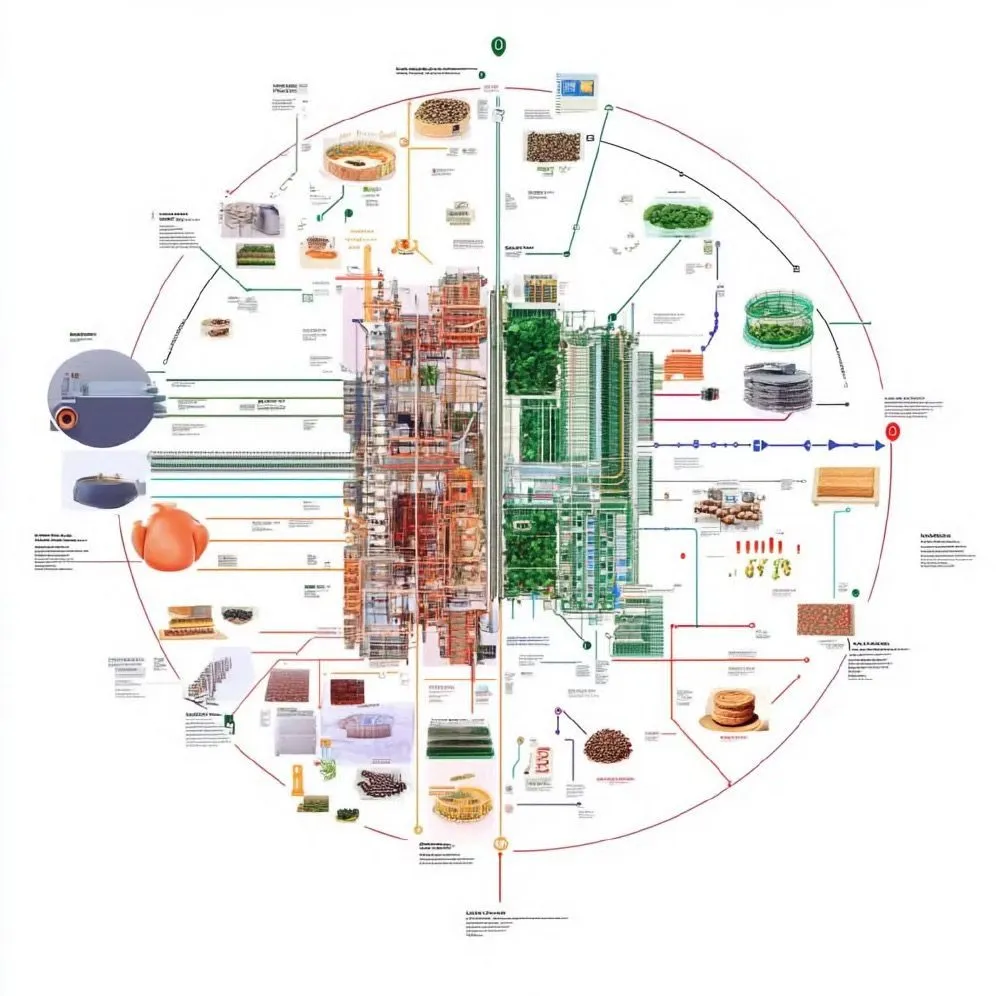
Circular Market Hubs
Advanced design studio at UT Austin, shown Fall 2024: marketplaces designed as circular ecosystem hubs for Innsbruck, integrating food production, energy, water and community resilience.
R. Navasaityte
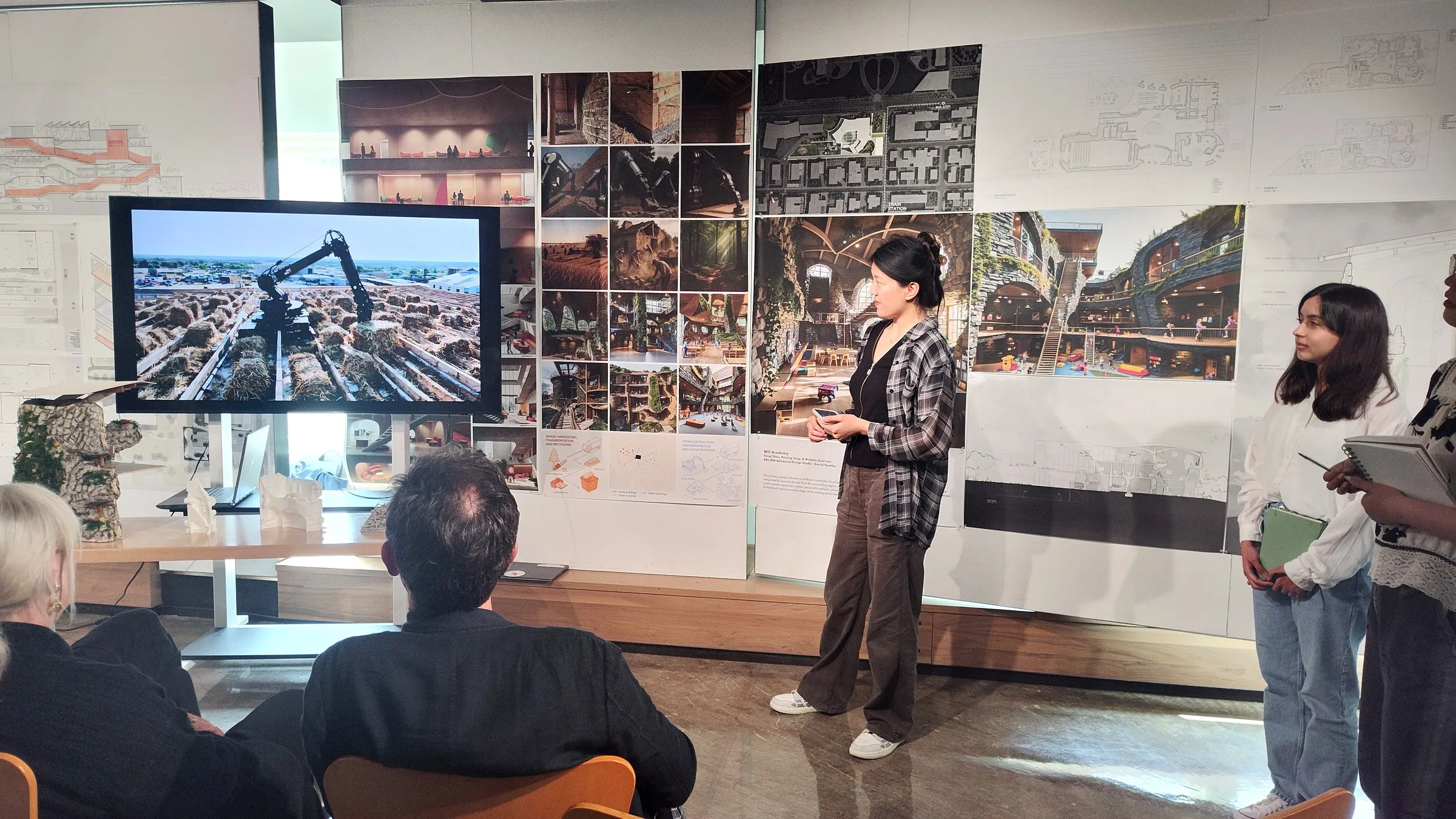
Final review of the Meta-Learning studio with models and drawings on the wall
2024–2026 · teaching · The University of Texas at Austin
Meta-Learning
Three advanced design studios at UT Austin, spring 2024 to spring 2026, that extend design beyond geometry to material chains and life cycles: a playhouse at Deep Eddy, a school and its generative material intelligence, and midrise types for the Synthetic Grounds of the I-35 cap.
D. Koehler
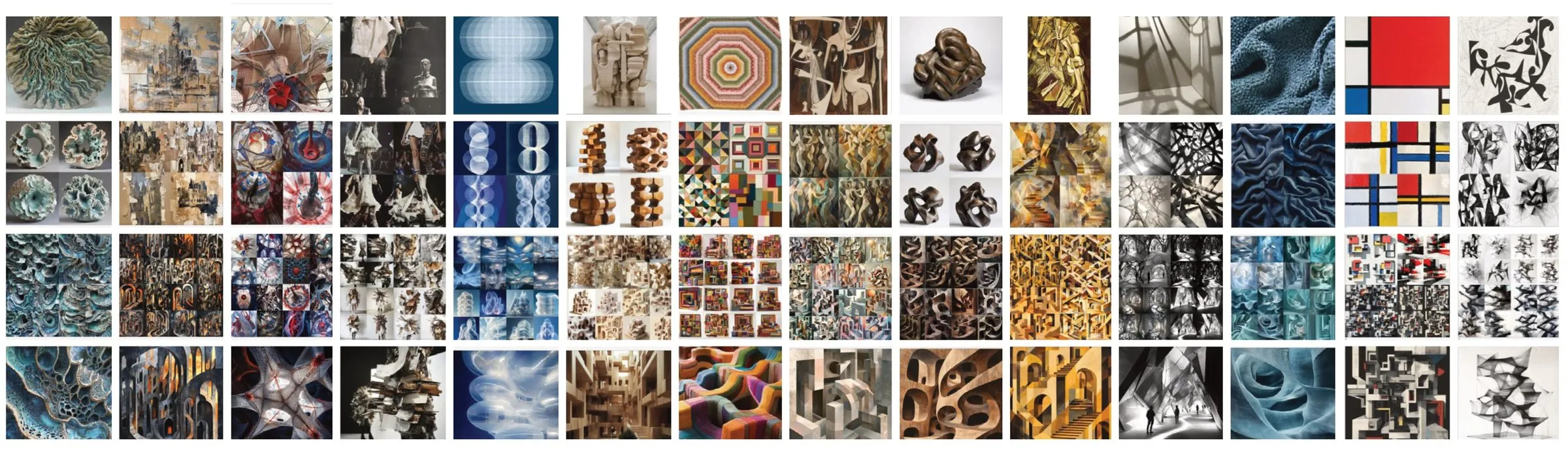
A matrix of small images pairing art-historical references with AI-generated studies, one column per student
2023–2026 · teaching · The University of Texas at Austin, School of Architecture
Visual Communication III
Foundation course in digital architectural visualization at UT Austin, 50 to 70 students per semester: art movements as references, AI-driven visuals across urban, architectural and interior scales, and layered visual narratives, in three assignments, since 2023.
R. Navasaityte
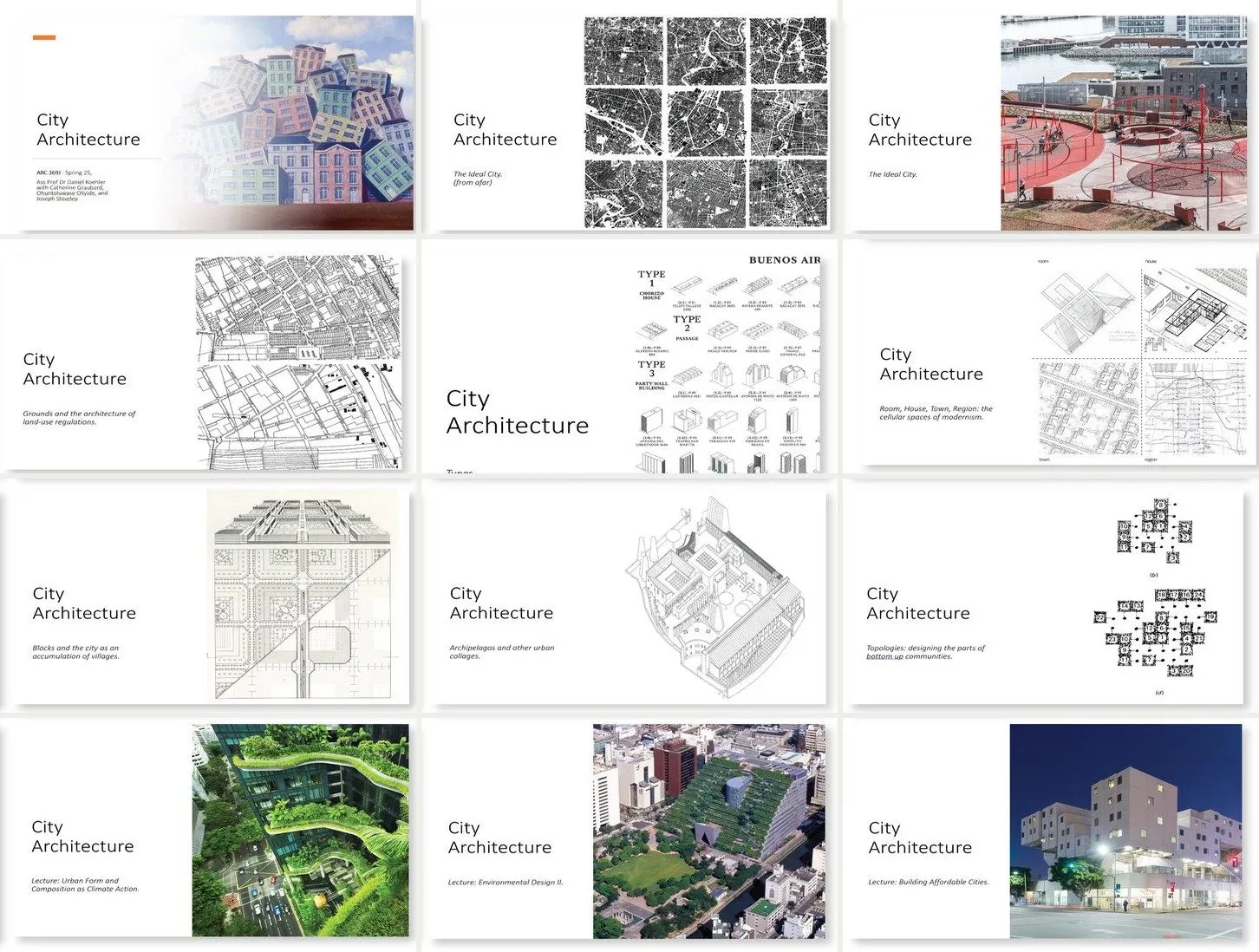
Twelve title slides of the City Architecture lecture series in three columns
2020–2026 · teaching · The University of Texas at Austin
City Architecture
A required, writing-intensive lecture for all fourth-year students at UT Austin, taught for six years with three teaching assistants and a reader rewritten every year: the city examined through the lens of architectural practice, with research reports, a Pecha Kucha event and a peer-reviewed award.
D. Koehler
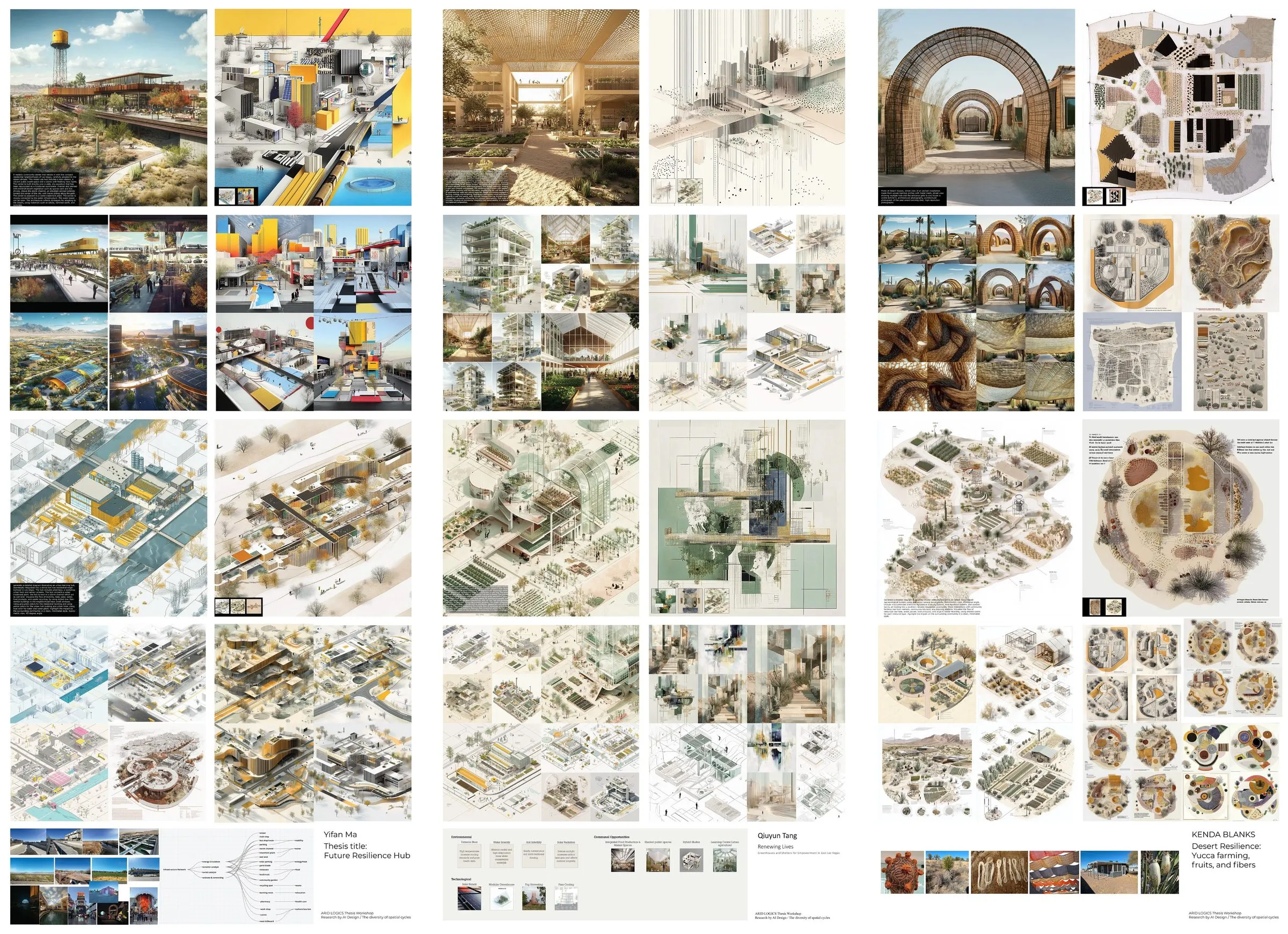
Three workshop posters side by side: grids of AI-generated studies of desert settlements, spatial cycles and tectonic speculations
2025 · teaching · Taubman College of Architecture and Urban Planning, University of Michigan
Research by AI Design: The Diversity of Spatial Cycles
One-week workshop for the ARID LOGICS thesis unit at Taubman College, University of Michigan, February 2025, guest instructor Rasa Navasaityte, coordinated by Kathy Velikov: generative AI as a research-by-design tool for the Las Vegas Valley, shown as Research by AI Design, February 10 to 17, 2025.
R. Navasaityte
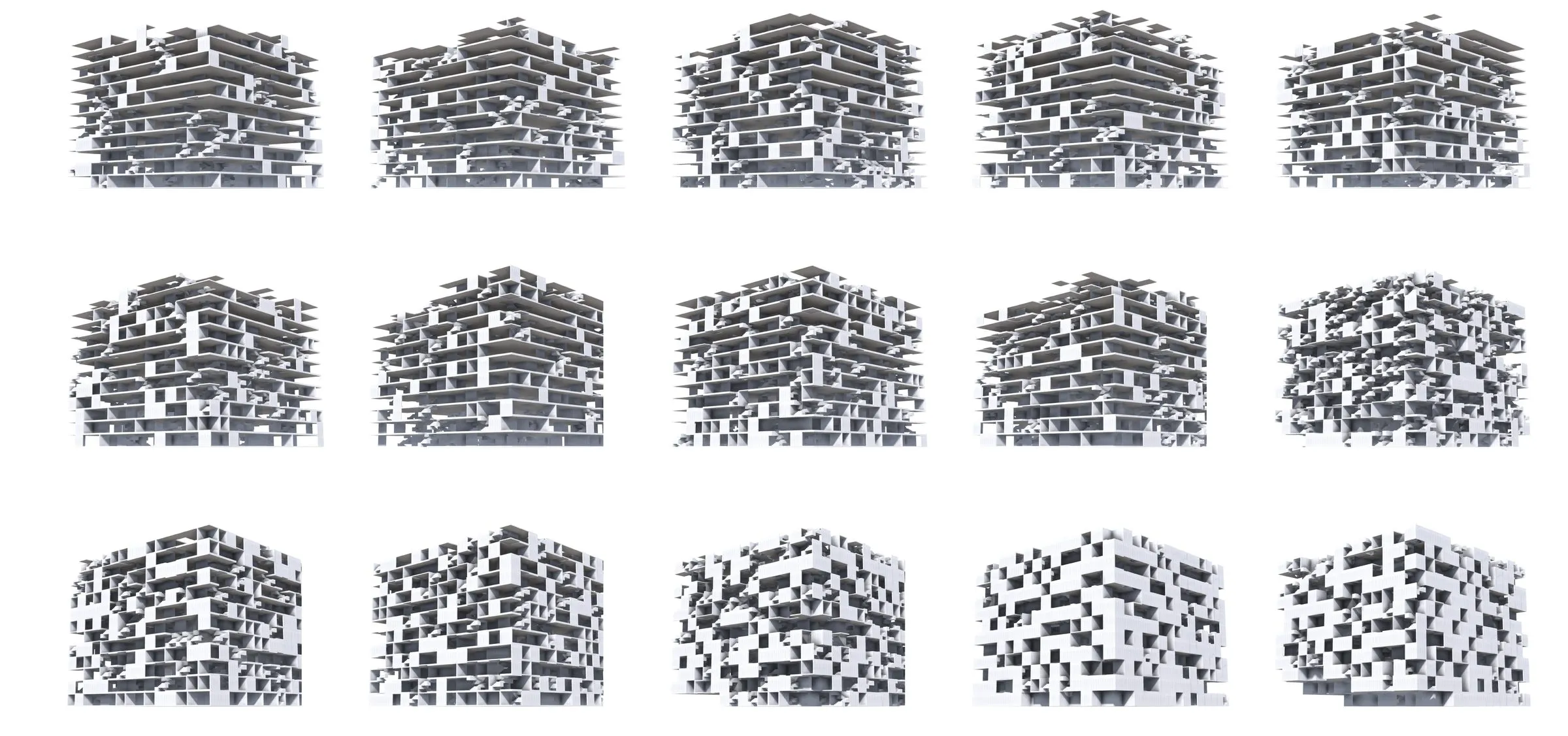
A wide sheet of small grey building assemblies arranged in rows, each a different configuration of stairs and slabs
2020–2022 · teaching · The University of Texas at Austin
UT Austin studios 2020–22: assemblies
Advanced studios and fully simulated building assemblies at UT Austin, 2020–22: peer-to-peer habitats for Austin, stair networks that become structure, and a 382,659-part tower.
D. Koehler
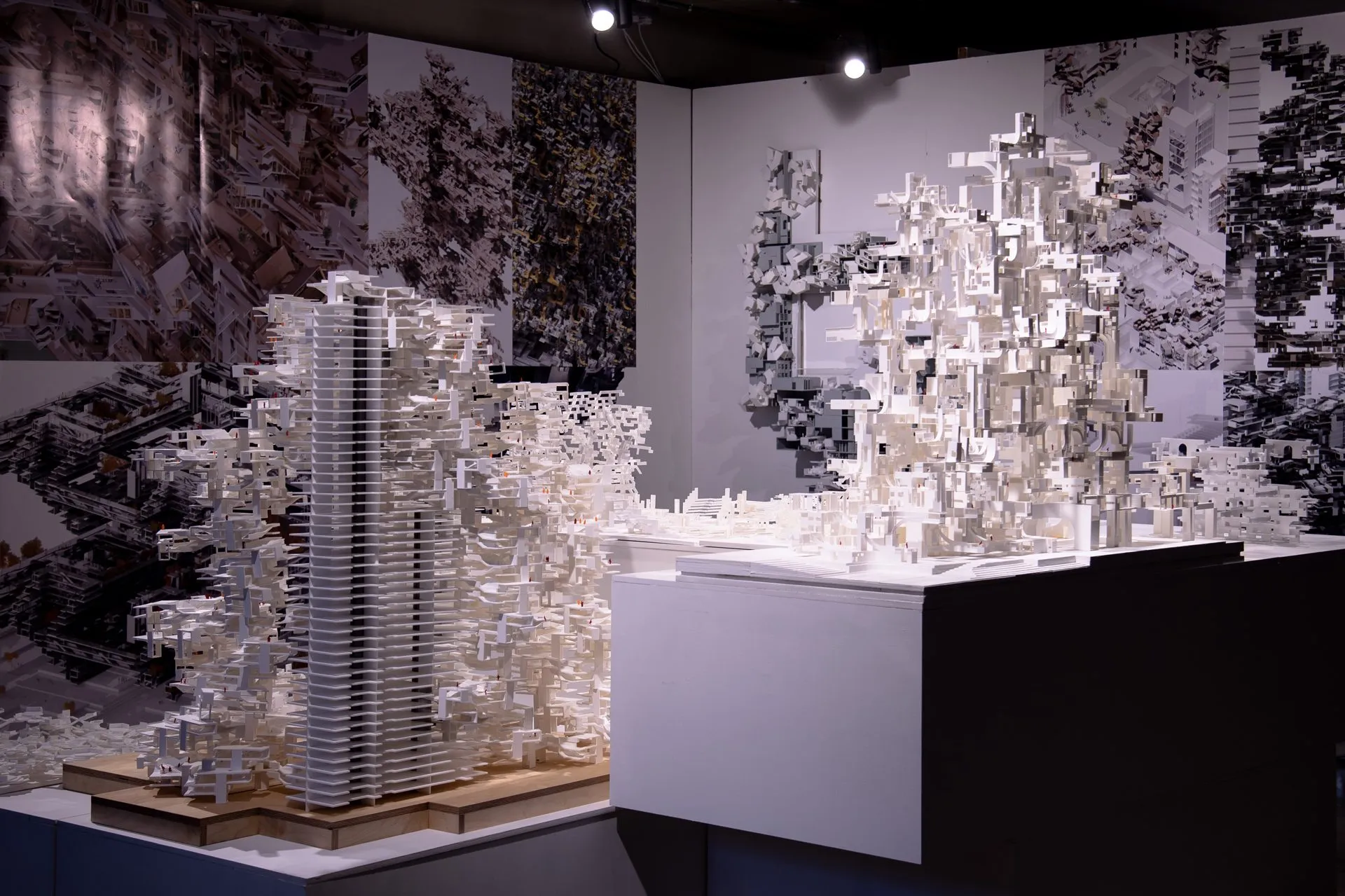
Two large white models, a tower of stacked slabs and a spreading aggregate, on plinths in front of wall-sized prints
2016–2019 · teaching · The Bartlett School of Architecture, UCL
Large City Architecture at the Bartlett
Three years of research clusters at the Bartlett B-Pro, 2016 to 2019, composing buildings as cities from architectural parts: walls, stairs, courtyards, corners, shares. Twelve student teams, three research reports, a UCL Gold and a Silver Medal.
D. Koehler · R. Navasaityte
A field of small white student models on a white table, each a fragment of a building read as a city
2016–2019 · teaching · University of Innsbruck, Institute of Urban Design
The City as an Element of Architecture
Second-year urban design exercise at the Institute of Urban Design, University of Innsbruck, 2016 to 2019: each student reads one building for the public it gathers and rebuilds it as a white model of its city-forming parts. Shown in Urban Inventories, Montreal 2019.
D. Koehler
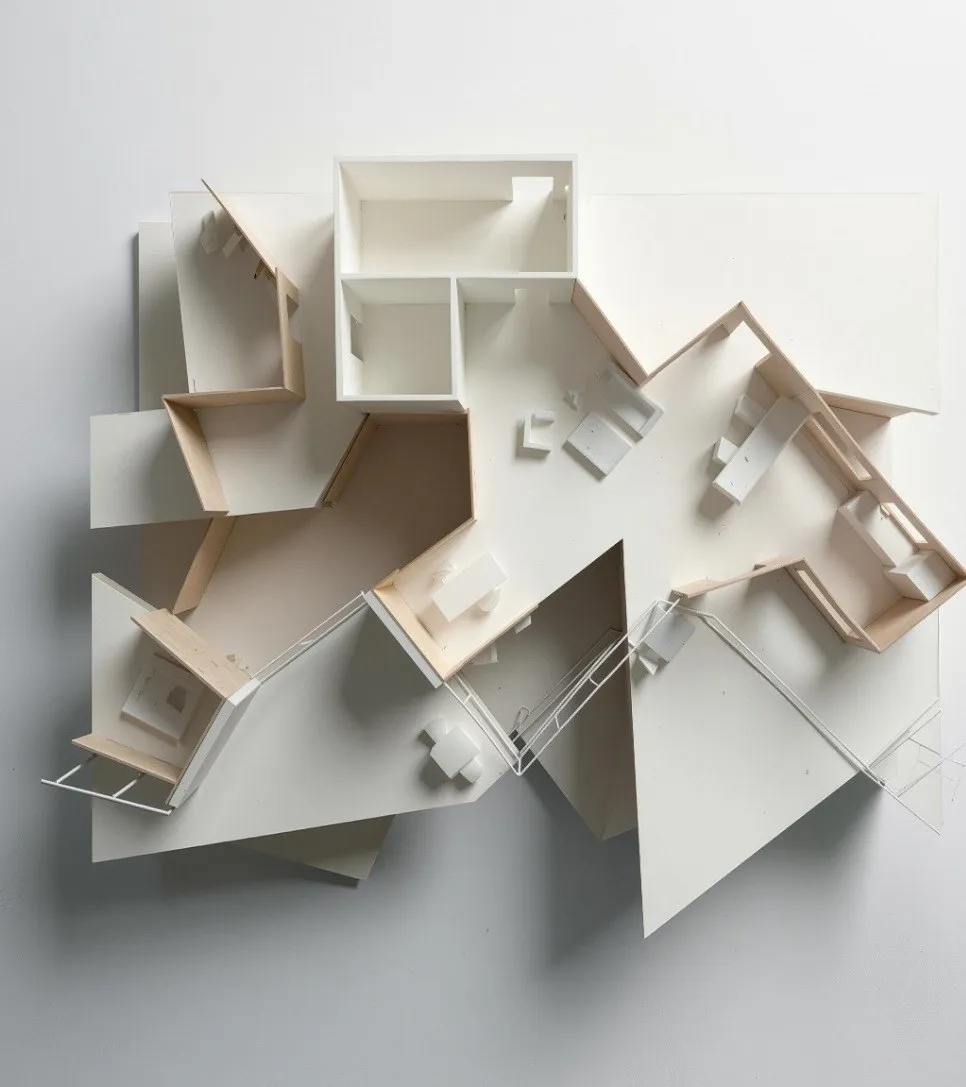
A white relief model of housing along a canal, its parts cut and folded from card, photographed from above
2011–2019 · teaching · University of Innsbruck, Institute of Urban Design
Innsbruck: foundations and the city, 2011–2019
Nine years of first- and second-year teaching at the University of Innsbruck: basic design exercises for 52 beginners, figure and ground, part-to-whole aggregates, and E1 studios that read London, Manhattan, and the Regent's Canal as urban textiles.
R. Navasaityte

All teaching entries →