lab-eds
§ work · No. 050 · 2026
menu
§ work · No. 050

Between the Parts

2026 · research

A Relational Methodology for Ecological Design

year
2026
type
research
status
defended May 2026
credit
Rasa Navasaityte. Doctoral dissertation, University of Innsbruck, with research stays at UCL Bartlett and UT Austin; defended May 2026. Supervisors Kristina Schinegger and Kathy Velikov.
program
Between the Parts
where
University of Innsbruck · Innsbruck / London / Austin
no.
050
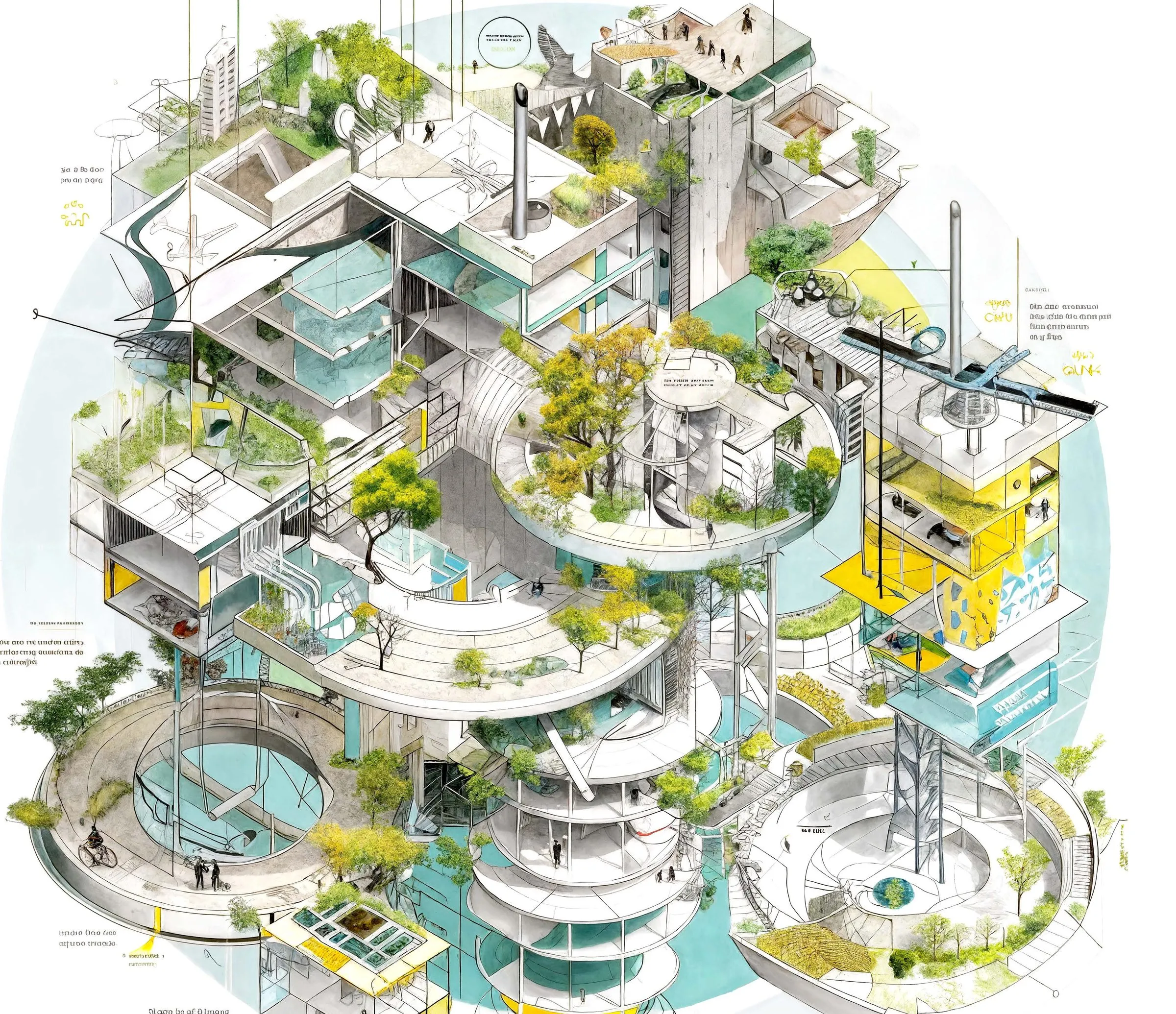
A large circular isometric drawing of an open building complex with terraces, water basins, trees and technical towers
The ecological void · isometric · dissertation key image · 2025

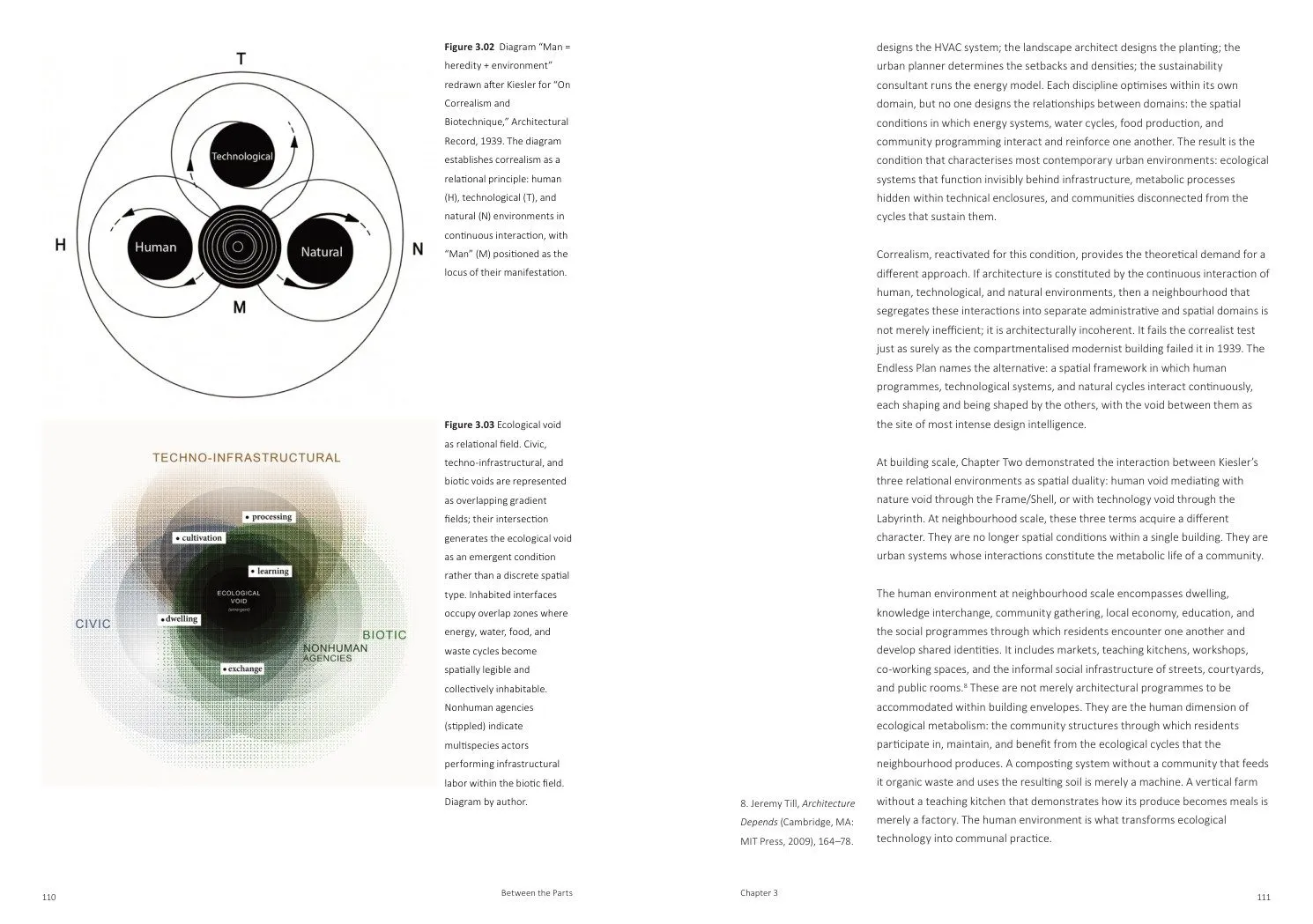
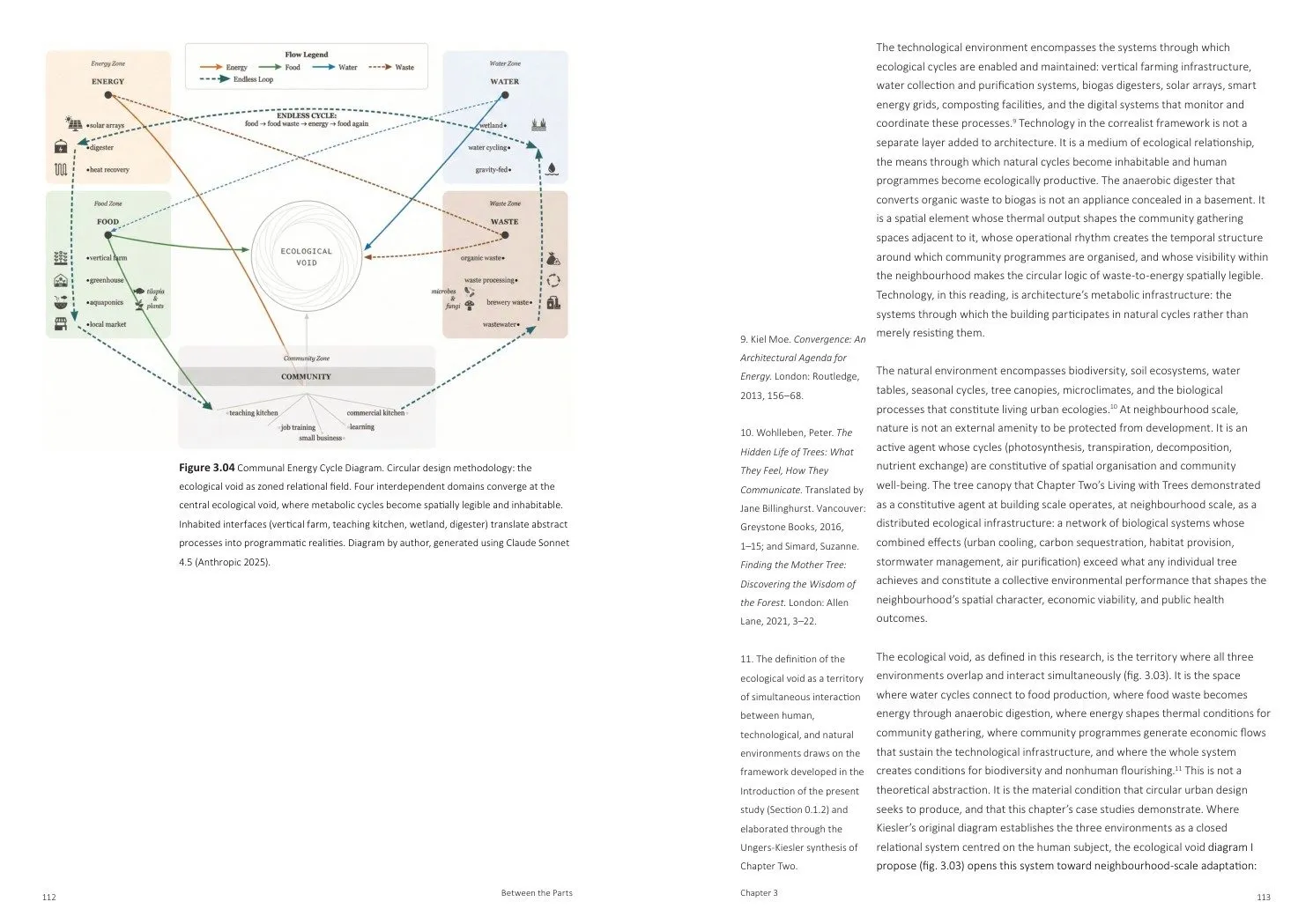
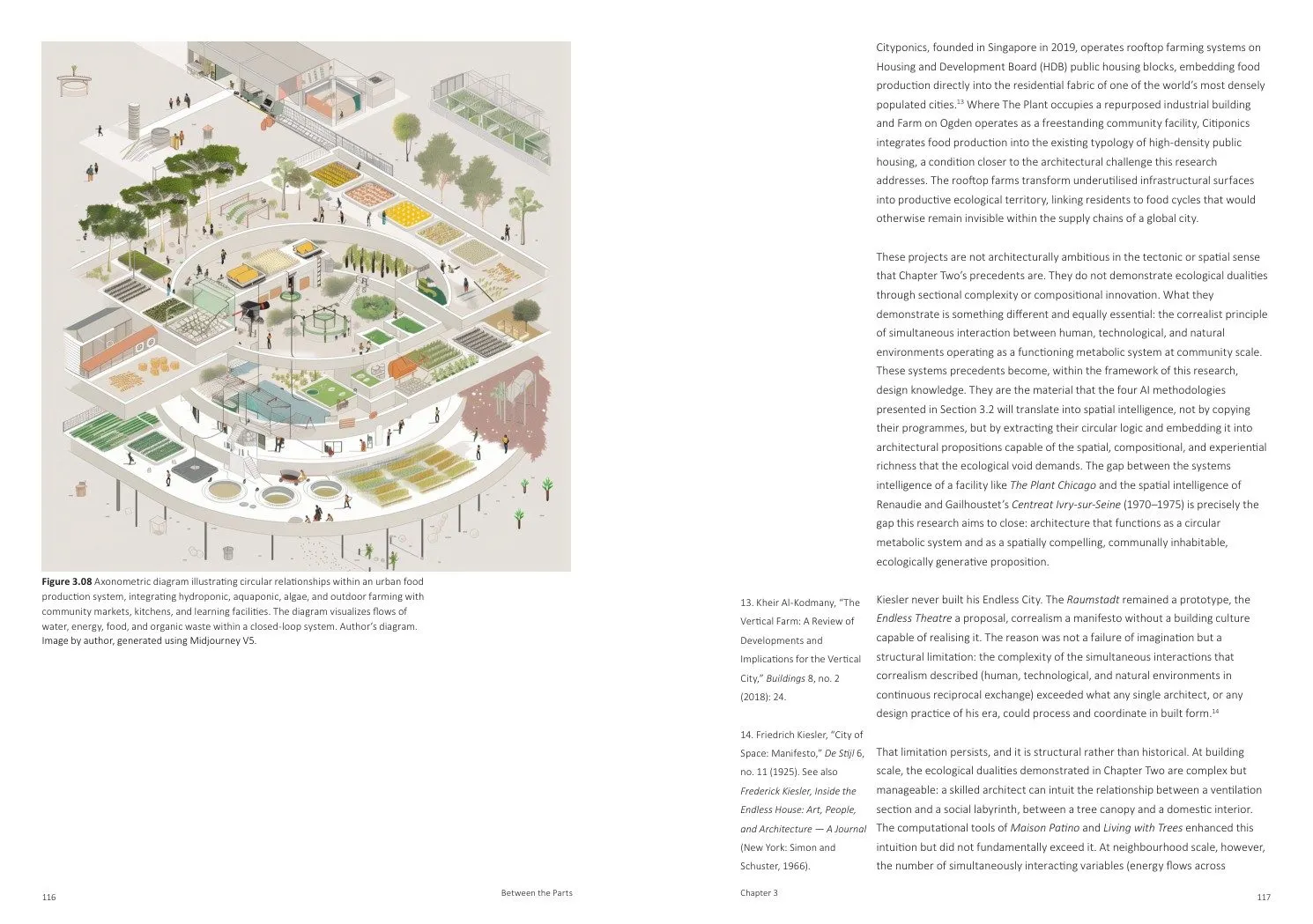
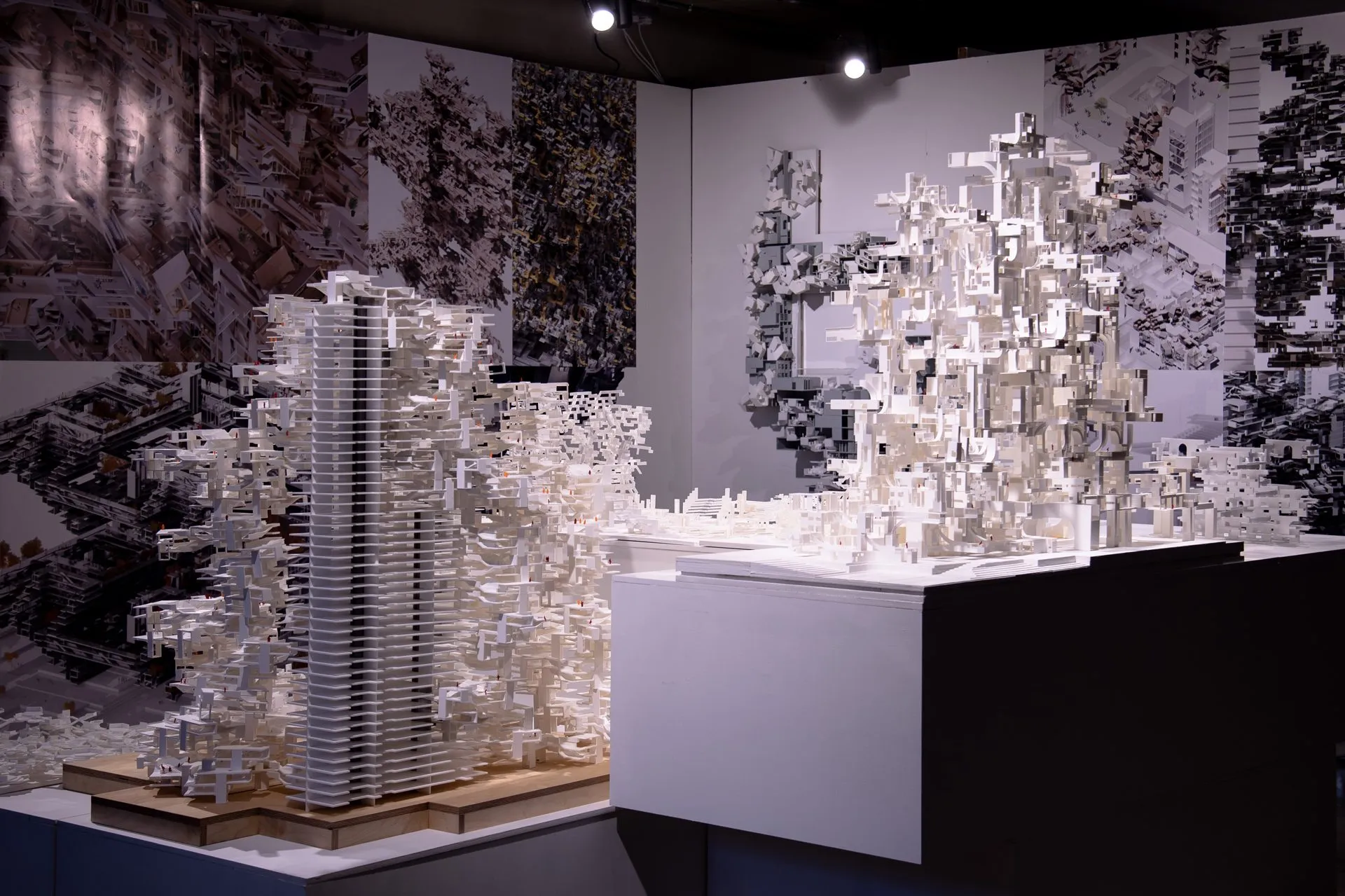
Between the Parts: A Relational Methodology for Ecological Design is my doctoral dissertation, developed at the University of Innsbruck between 2020 and 2026 and defended in May 2026, with research stays at the Bartlett School of Architecture and at The University of Texas at Austin. Kristina Schinegger and Kathy Velikov supervised the work. The dissertation develops the concept of the ecological void, the interstitial space where environmental, social and technological systems meet and produce new spatial possibilities.

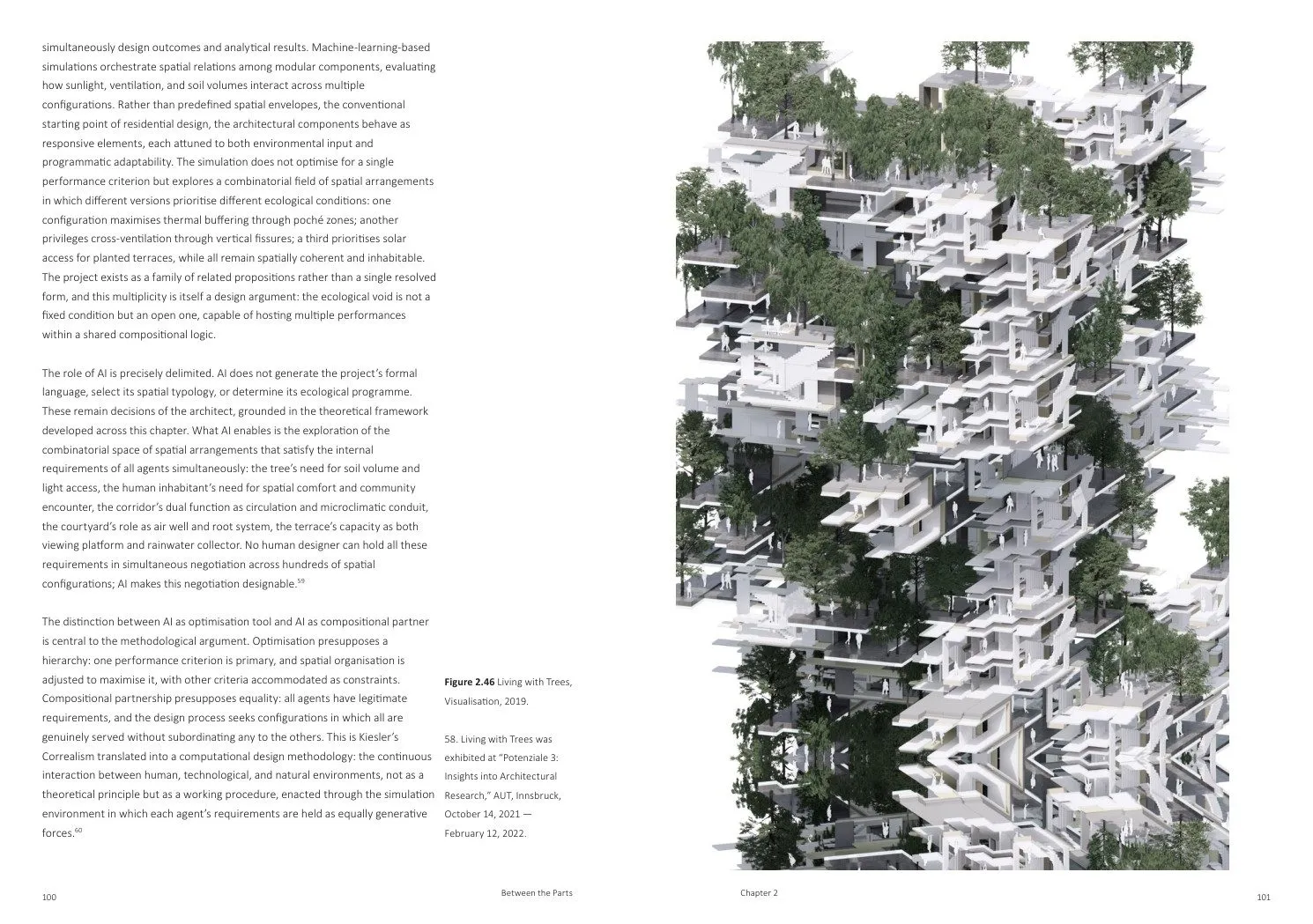
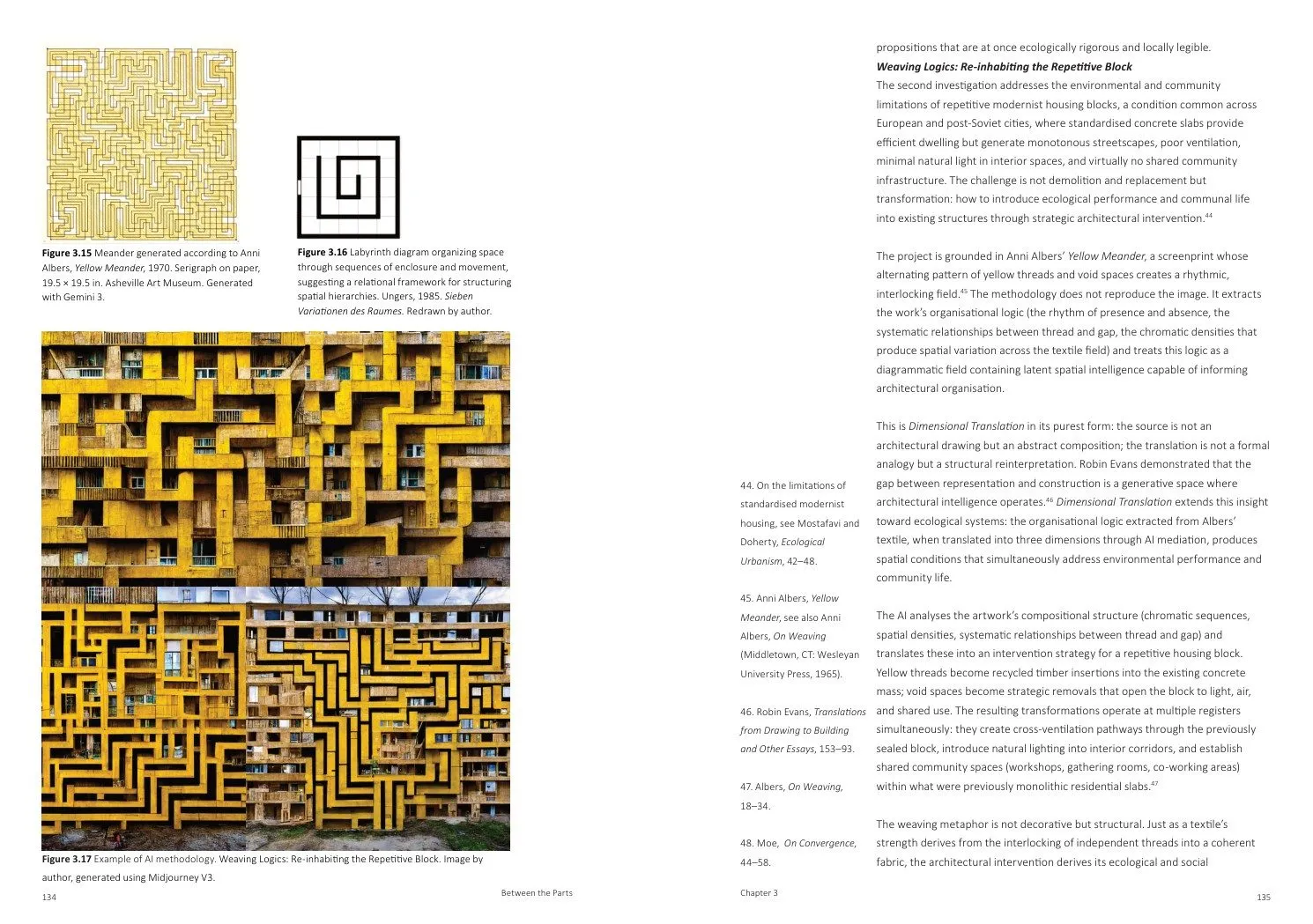
The project understands the architectural work as a relational field. Not the single object but the relationships between functions, material flows and actors stand at the center. Four coordinated design operations, typological variation, dimensional translation, synthetic multiplicity and interdisciplinary integration, generate spatial cycles out of these relationships. Artificial intelligence serves as a compositional instrument, one that produces variants not randomly but as a steered design space. Where these cycles overlap, a new spatial type emerges. It is not drawn, but forms wherever material flows of sufficient density converge. In this in-between space of technology and nature, community arises as a result of encounter and use.

The dissertation argues across three scales, from composition to building to city, and its material feeds directly into my teaching and into the circular design studios documented on this site. Building on the doctoral work, my research now develops circular design strategies, such as circular plazas and technology-supported community hubs, that make water, energy and food cycles visible and public.

plates

Gallery

7 plates · click to enlarge
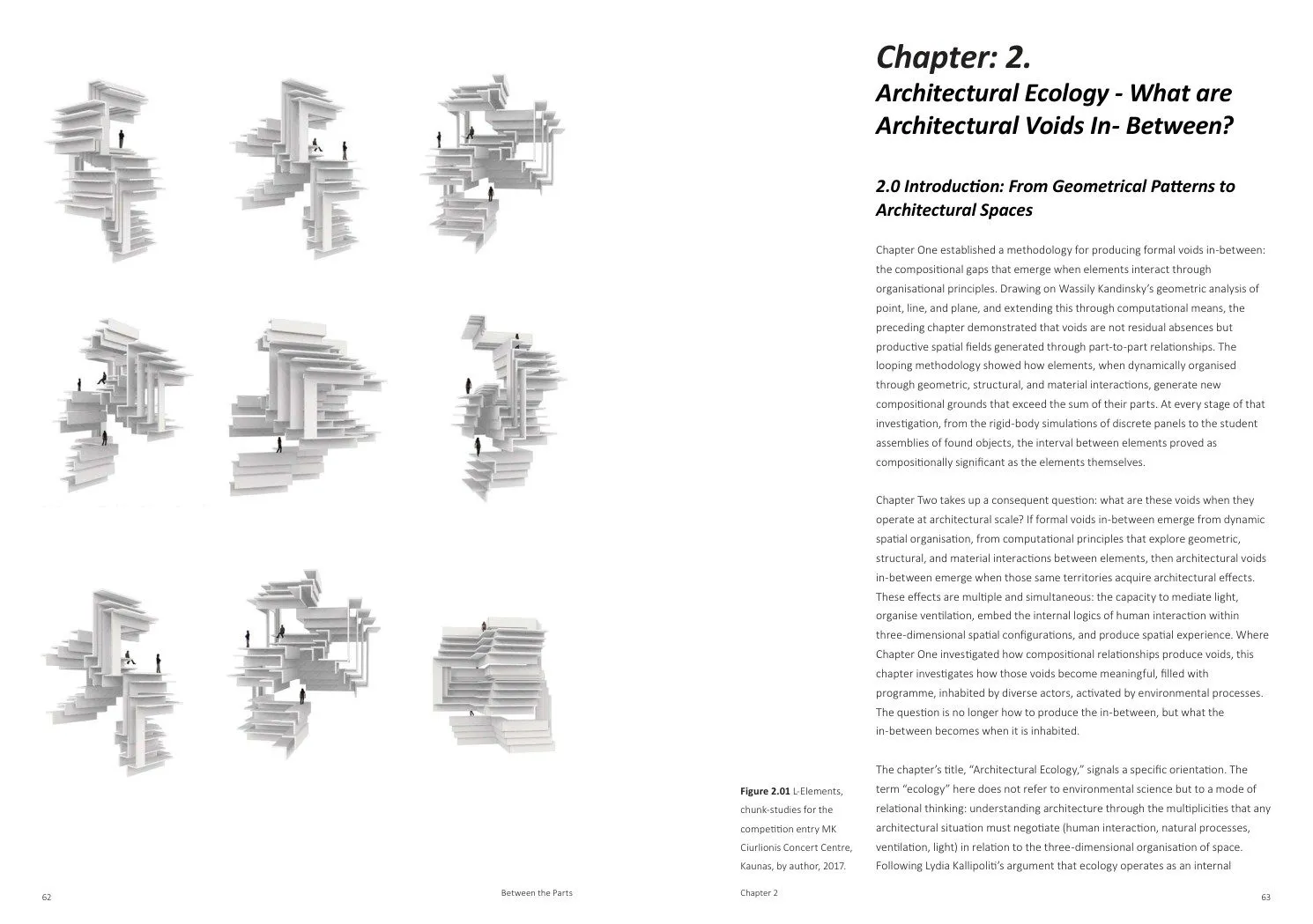
  • Pages 76 and 77 of the dissertation Between the Parts
    Between the Parts, dissertation · pages 76 to 77 · 2026
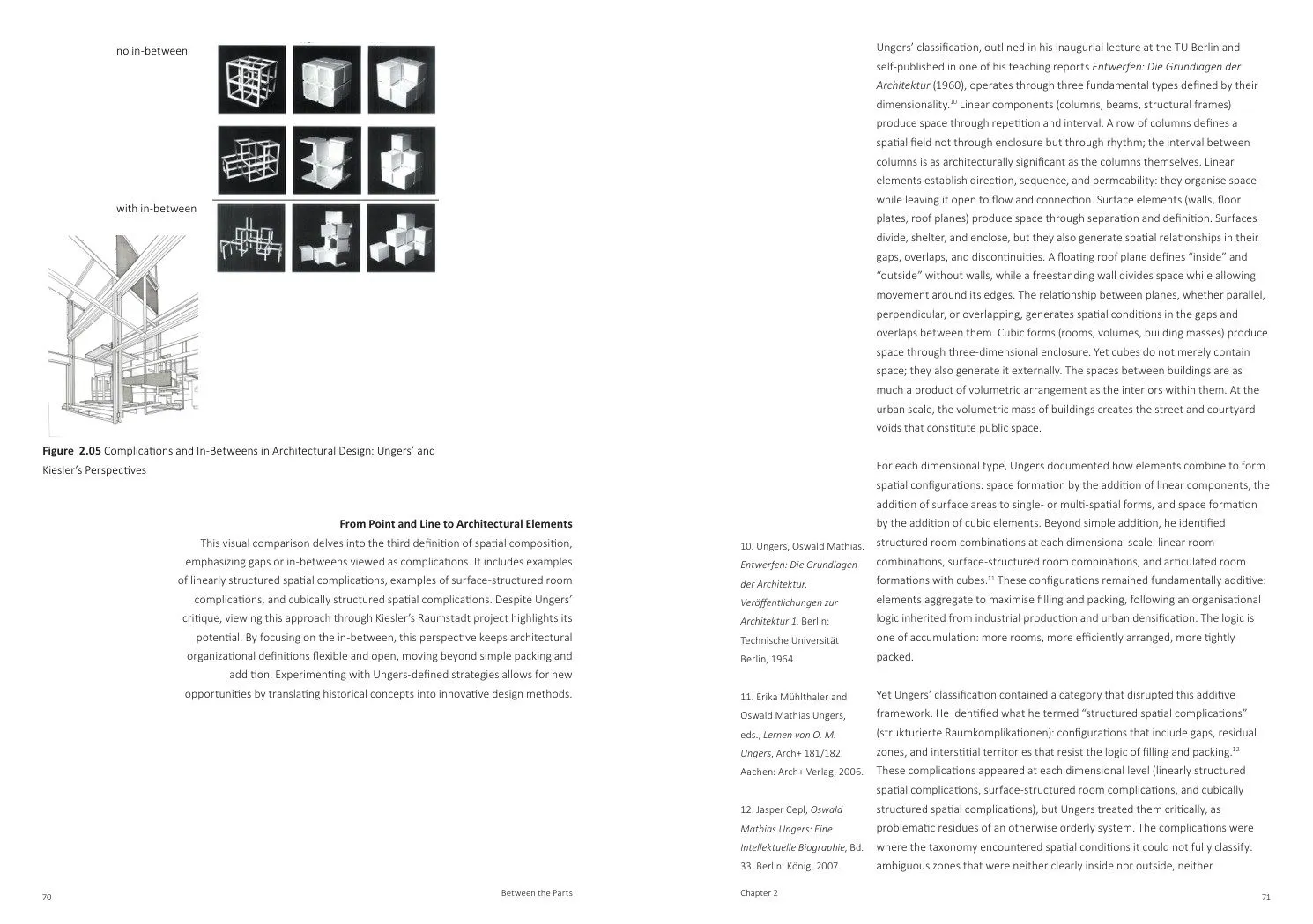
1 / 7 · Between the Parts, dissertation · pages 76 to 77 · 2026
adjoining sheets

Related

4 entries
§ work

More work

34 entries
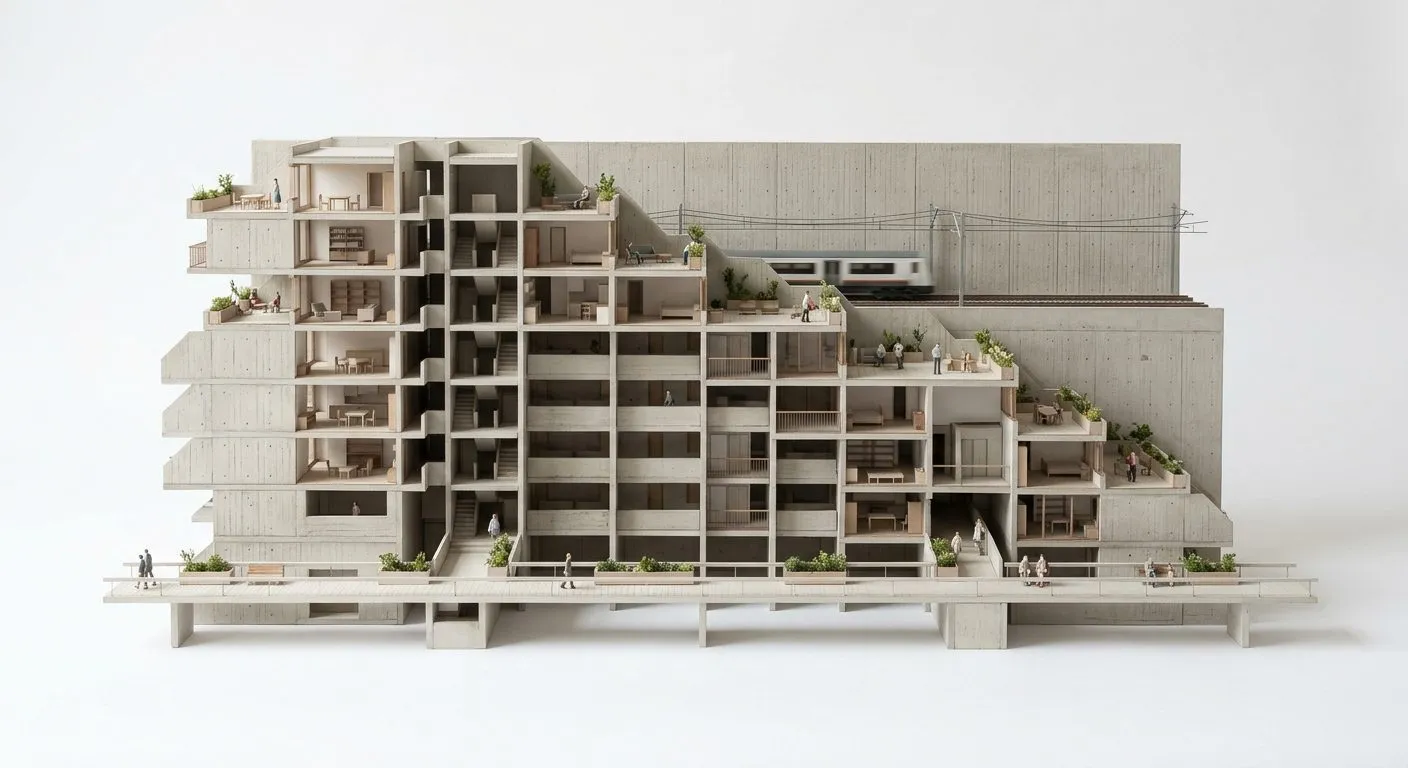
A generated model photograph of a stepped housing section with planted terraces, cut open to show its rooms
2026 · research · The University of Texas at Austin
Daylight as Form
245 case studies of how architecture has shaped daylight in the dense city, from the Roman atrium to the winter garden, classified by formal family and culture of light and browsable as a slide library: the research catalogue of a UT Austin design studio.
D. Koehler
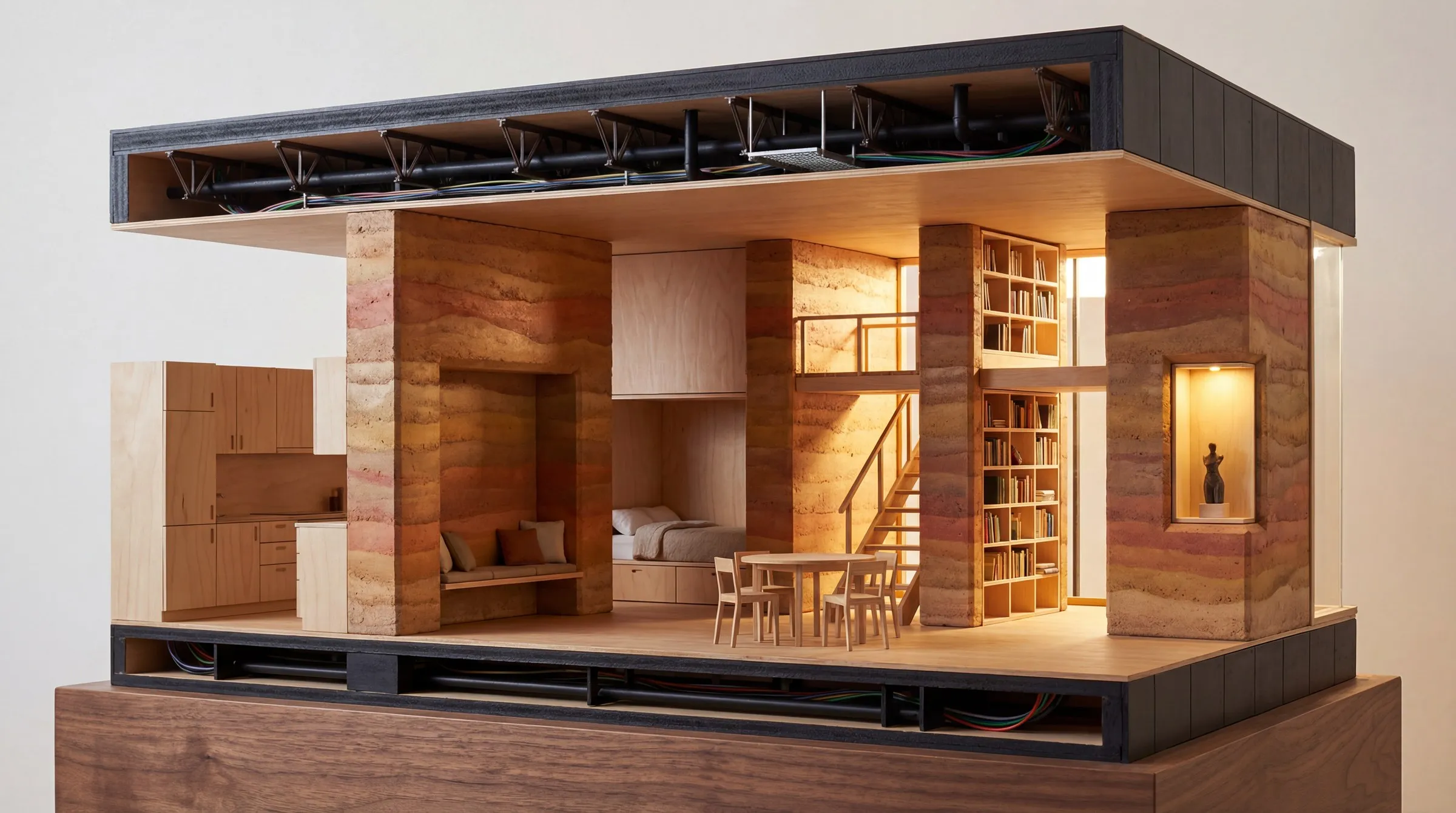
Sectional model view of the Gießhof: warm inhabited rooms in rammed earth alternating with dark truss floors
2026 · research · Stuttgart
The Gießhof
A projective design study for Stuttgart: urban soil read as ore, iron cast on site, clay rammed into piers, and a cooperative that owns the result. Six grounds, one section, six institutions; developed alongside the studio Synthetic Types, 2026.
D. Koehler
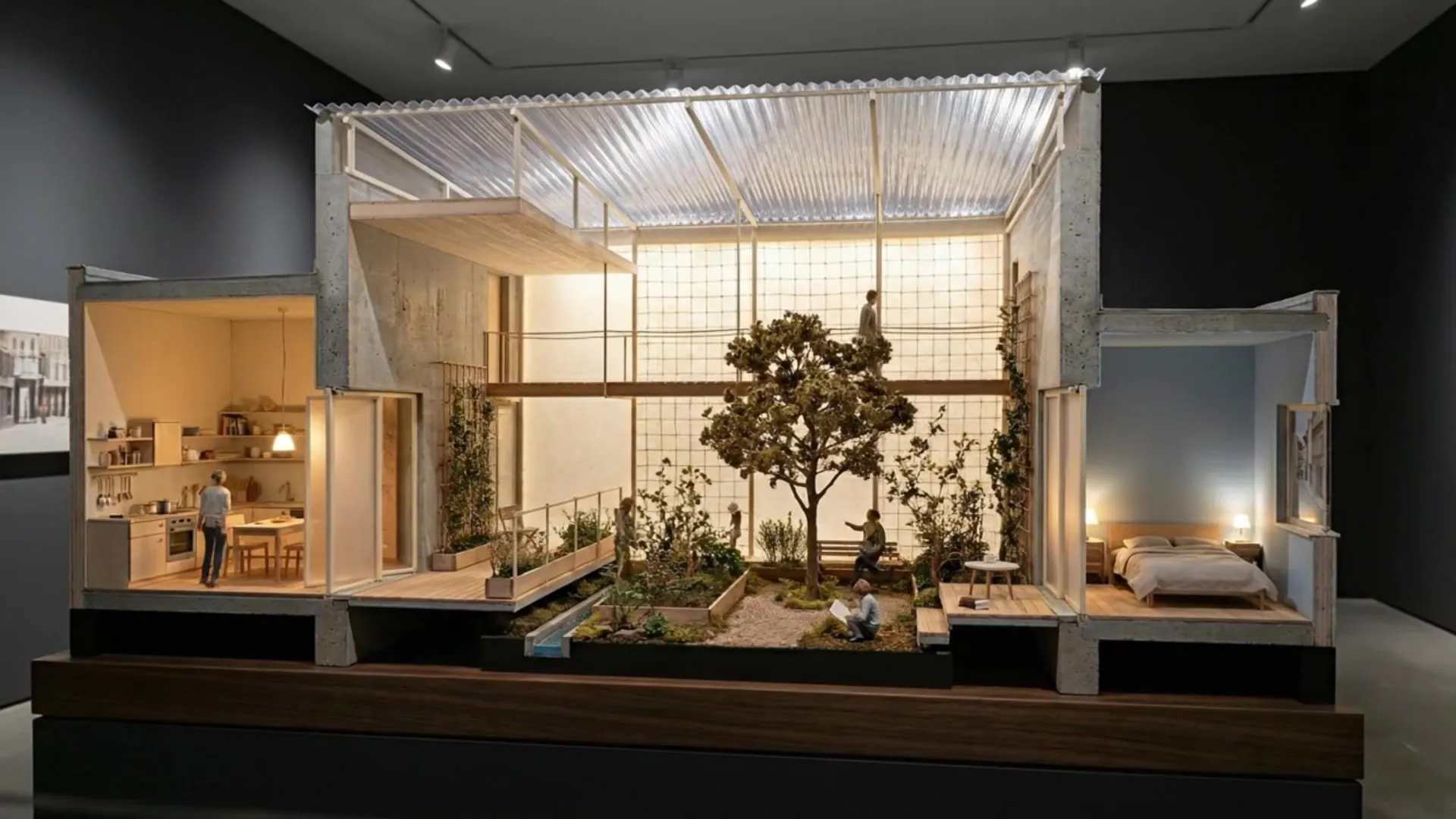
A section model of a house with a translucent roof, a tree in the courtyard and rooms on two levels
2026 · research · Stuttgart
Cellulose
A design study for a housing type made from what a block throws away: a container-sized mill turns kitchen scraps, cuttings and paper into rope, tubes and a translucent membrane that robots stretch over the gaps, courtyards and roofs of an existing block. Film and images generated; 2026.
D. Koehler
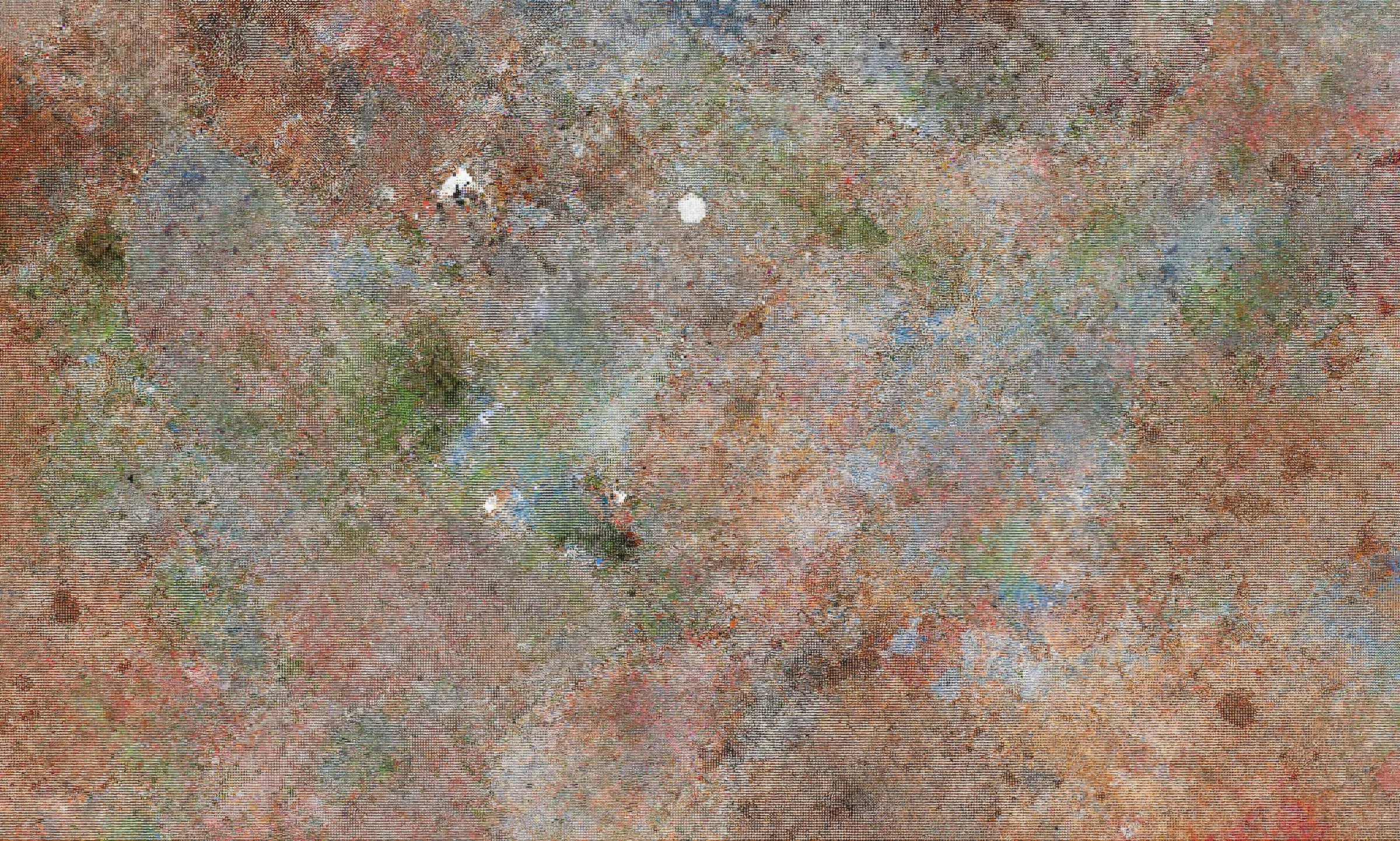
The Latent Earth wall: 160,000 generated images arranged as one continuous mosaic whose colour fields emerge from the sort
2026 · research · Frankfurt
Latent Earth
200,000 images of 40,000 places on Earth, each rendered by one image model from nothing but the place's name and sorted by the model's own internal representations. Not a picture of the world but a probe of the model.
D. Koehler
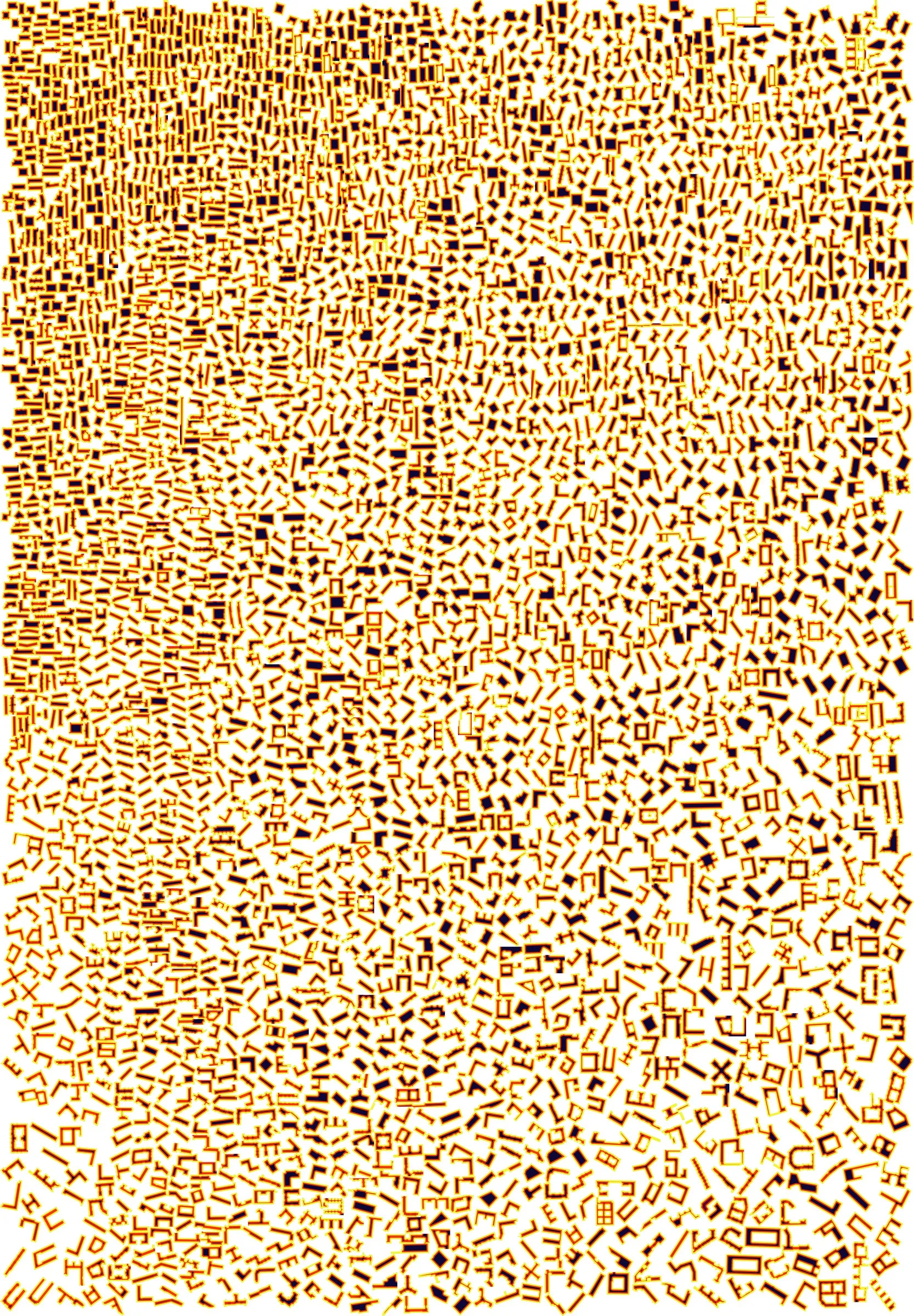
A grid of windowless building types across US cities, sorted by type
2025 · research · Austin
Dark Spots
About one per cent of US residential buildings have rooms without adequate daylight; because those buildings are large apartment complexes, roughly one household in ten lives with one. Maps and plans made with the University Tenants Union, Austin, 2025.
D. Koehler
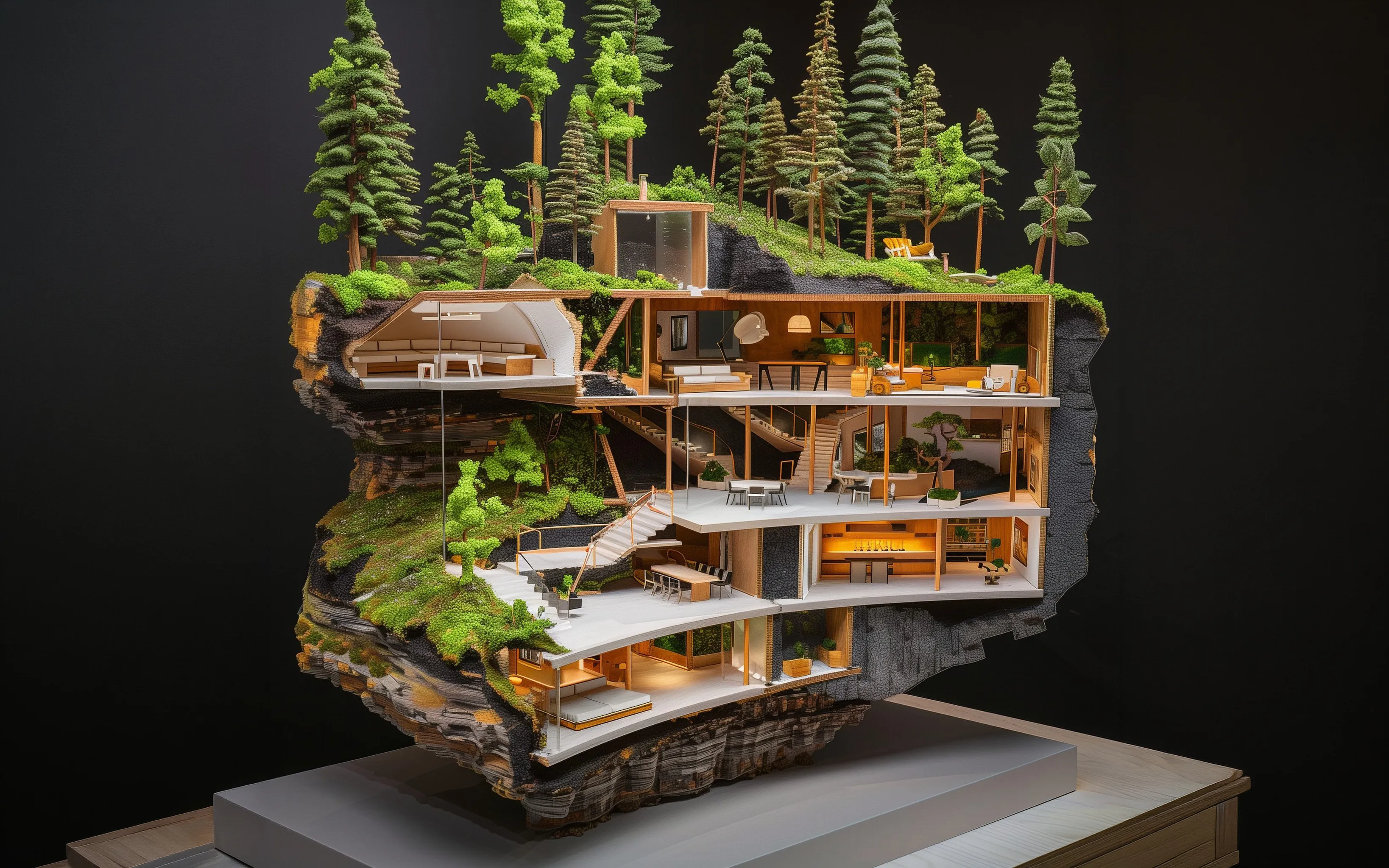
A generated building type grown from rock, soil and vegetation, with rooms cut into the strata
2025 · exhibition · Brooklyn
Geological Types
A four-minute film of building types grown rather than drawn: terraces cut into strata, rooms hollowed from the block, gardens on every ledge. Generated with Stable Diffusion 3 Medium and animated with Midjourney; shown in Transductions at Pratt Institute, Brooklyn, 2025.
D. Koehler
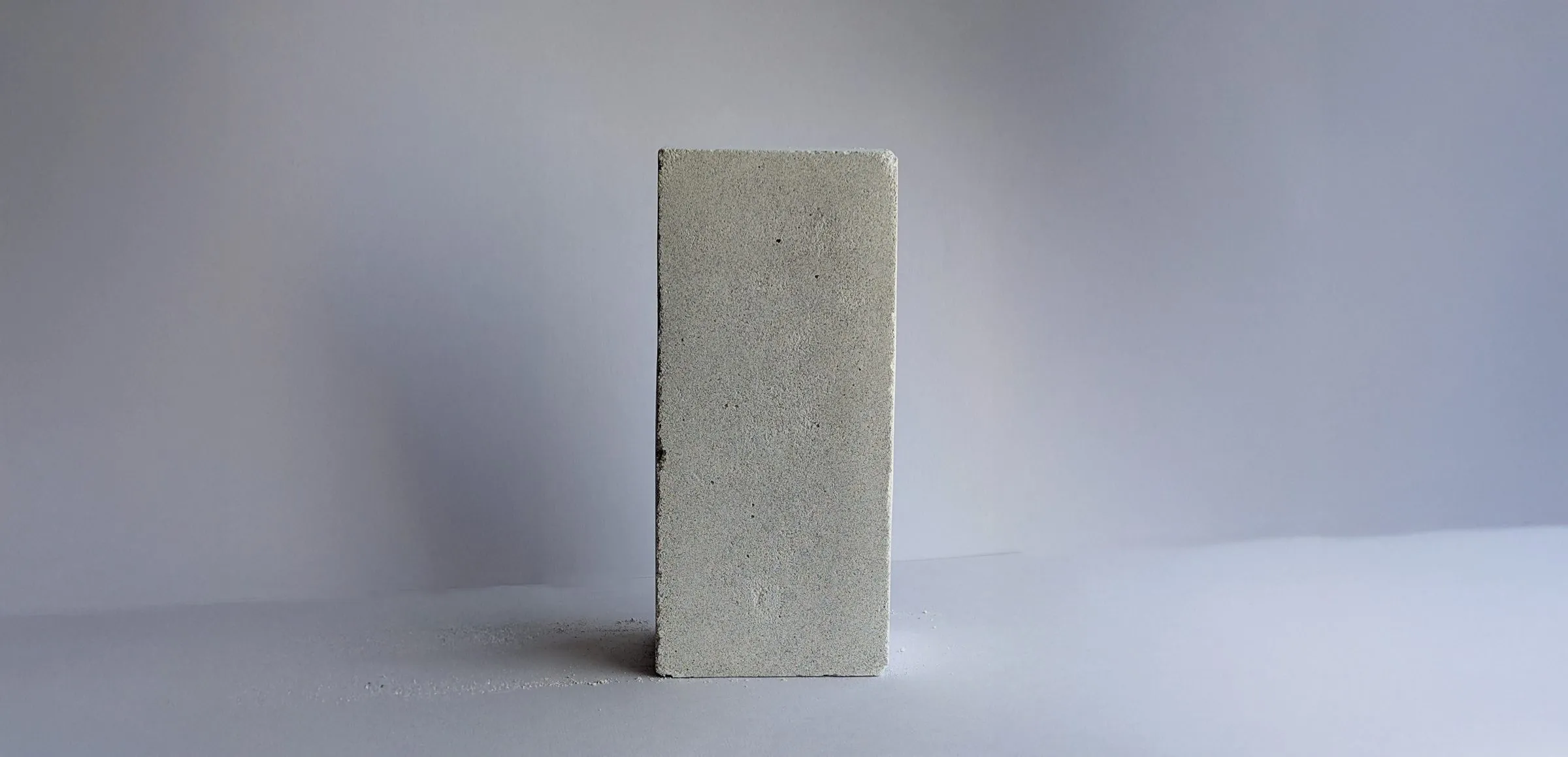
A pale sun-cured brick of the calcium silicate standing upright on a white surface
2023–2025 · research · The University of Texas at Austin · Academy of Fine Arts Stuttgart
Generative Matter
DeepMind's GNoME predicted 380,000 stable compounds. This pipeline filtered them to 13,638 building-material candidates with machine-readable synthesis protocols, released them openly, and made several of them physically, with students, in ordinary workshops.
D. Koehler
The drawing installed in the Drawing Codes exhibition
2025 · exhibition
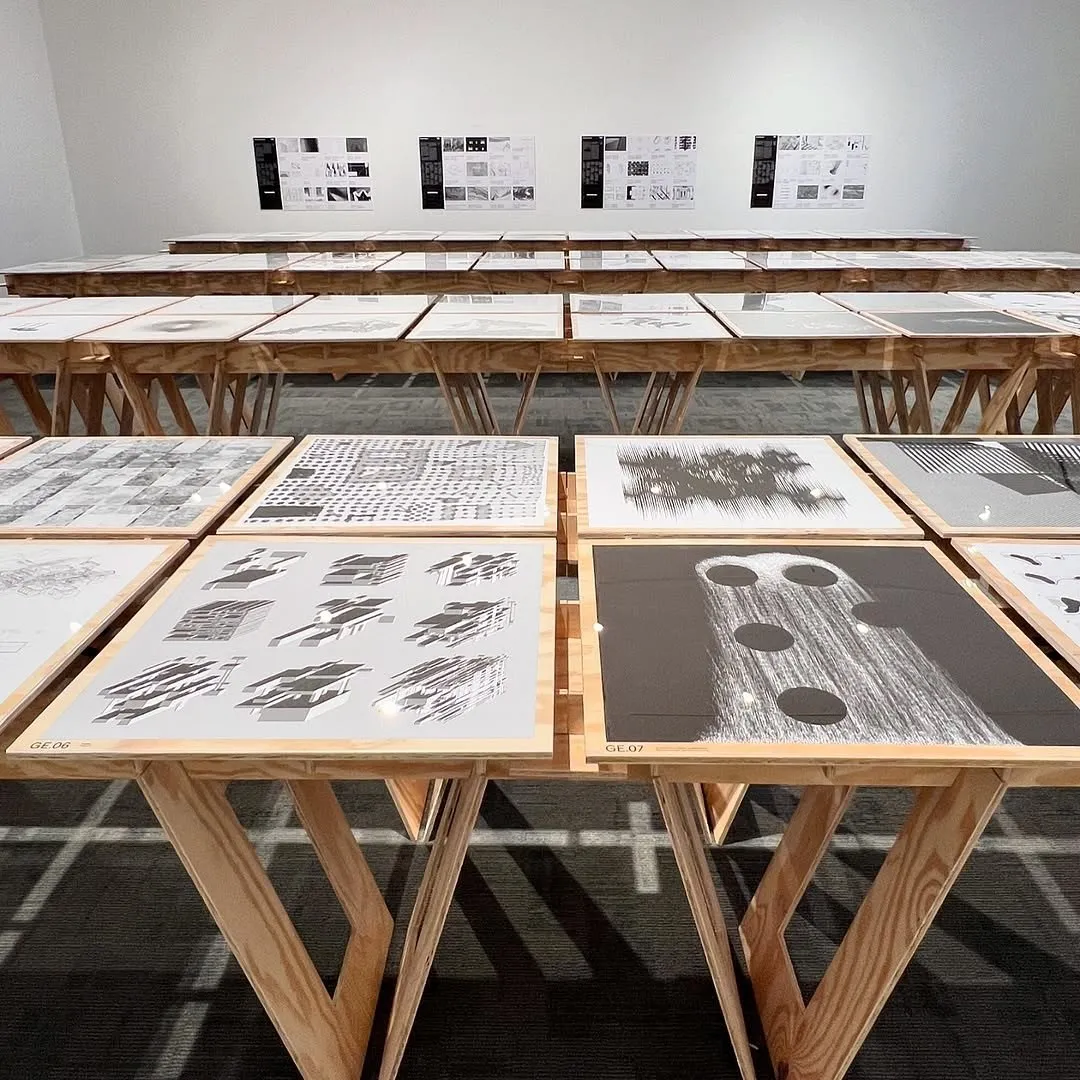
Complicit Code
A drawing shown in Drawing Codes: instead of beginning with setbacks and height limits, the buildings are designed through consent and complicity governed by blockchain algorithms. Mashburn Gallery, Houston, and Richardson Memorial Hall, New Orleans, 2025.
D. Koehler
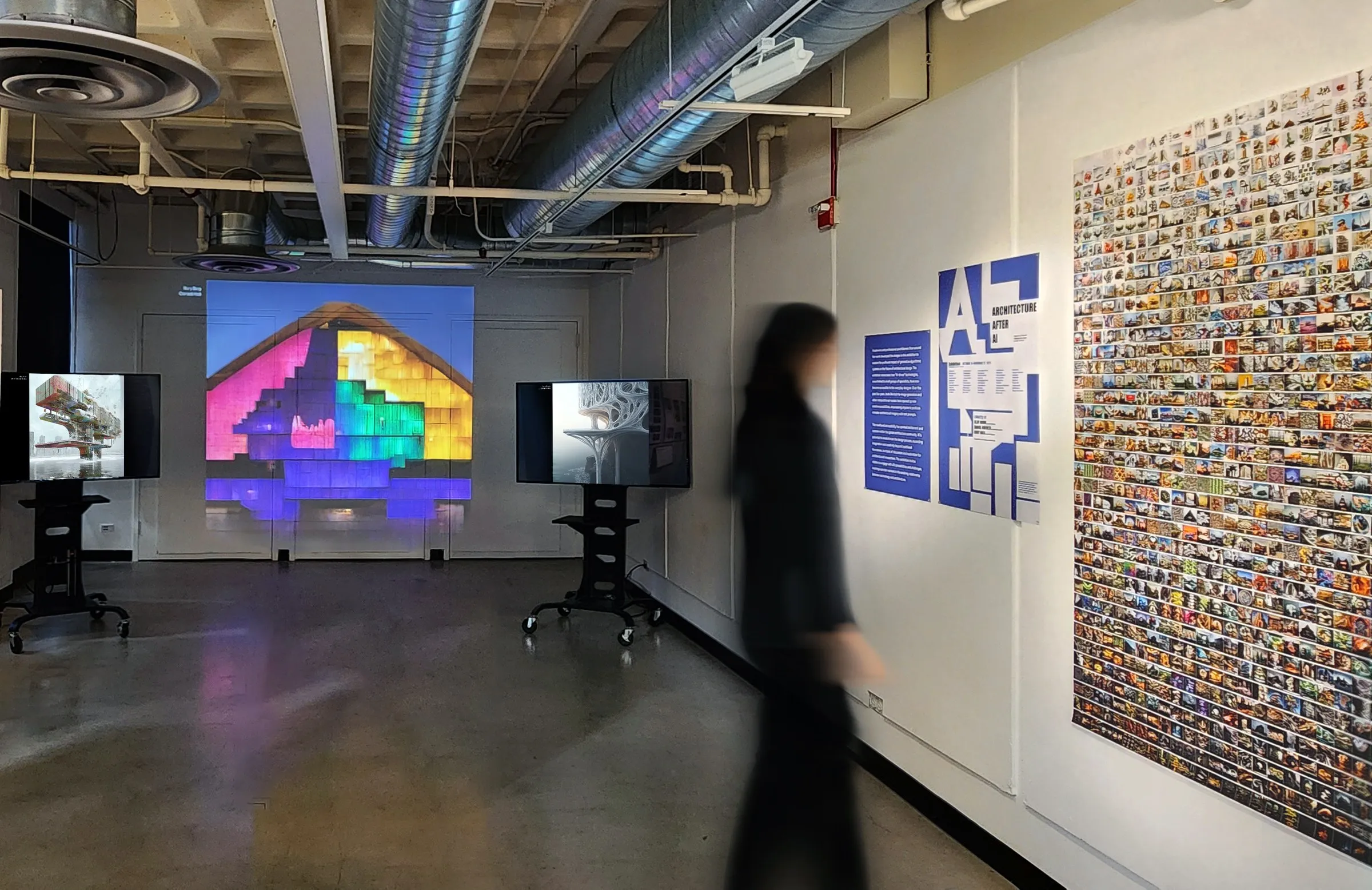
The projector display of Architecture After AI in the Mebane Gallery
2023–2024 · exhibition
Architecture After AI
The first overview of generative AI in architecture: more than 2,000 works by 80 architects and artists, shown at the Mebane Gallery in Austin in 2023 and twice in Boulder in 2024 and 2025. Curated with Kory Bieg and Clay Odom.
D. Koehler

All work entries →